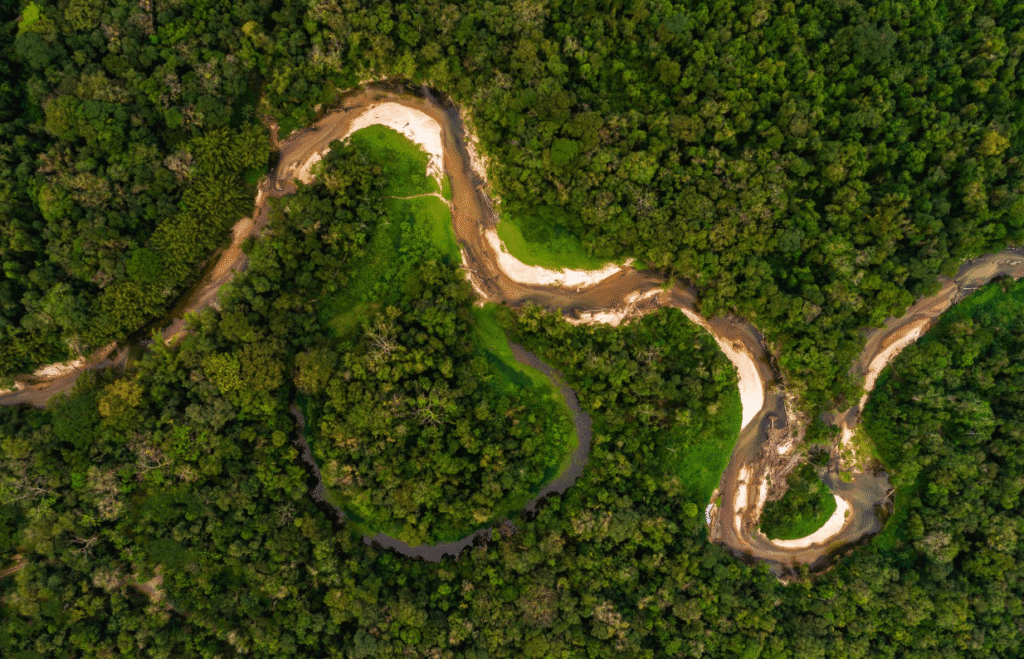
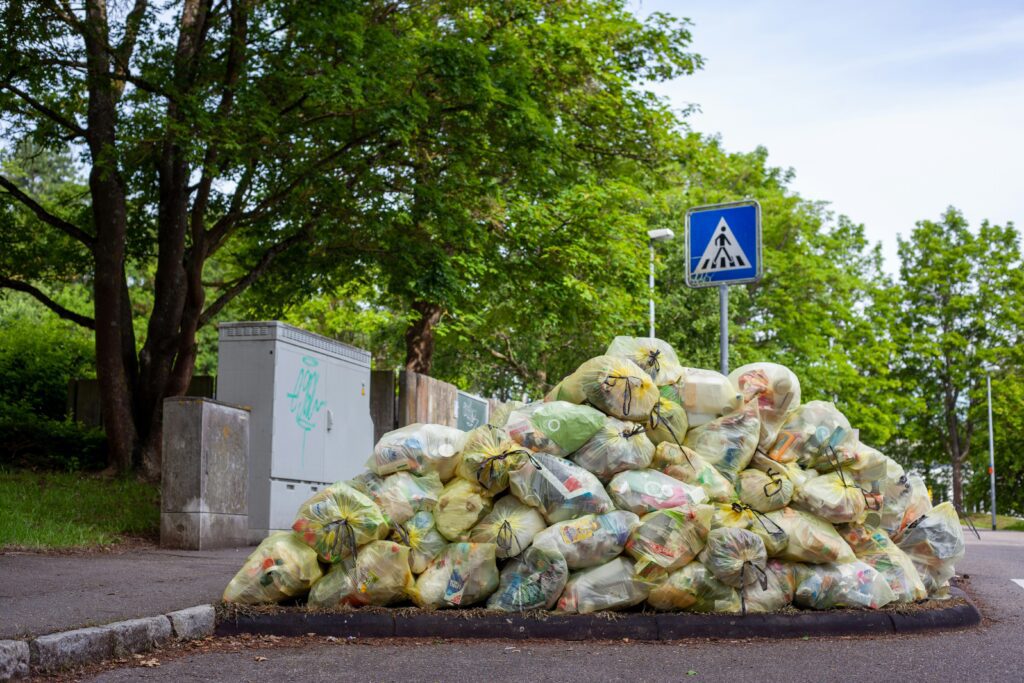
Moving beyond “doing less harm” toward “doing more good”

For years, the gold standard of corporate sustainability was sustainability itself or in other words reaching Net Zero,  minimizing footprints, or achieving neutrality. But we have reached a tipping point. In a world where we have already overshot several planetary boundaries, merely sustaining a degraded status quo is no longer enough.

At Quest, we are seeing a fundamental shift in the boardroom: the move from being “sustainable” to being regenerative. But as the term gains traction, it’s vital to strip away the buzzwords and understand the strategic mechanics behind it.

What is Regeneration?

In biological terms, regeneration is the process of renewal, restoration, and growth that makes genomes, cells, and ecosystems resilient to natural fluctuations. It is how nature heals itself.

In a business context, going “regenerative” means designing your company to function like a living system. It is the intentional transition from a Degenerative model (extracting more value than you replace) to a Net Positive model, where your business operations actively return more value to the social and ecological systems they rely on.

The Three Pillars of a Regenerative Mindset

Nature as a Stakeholder

Regenerative companies don’t just “use” resources; they treat nature as a silent partner at the table. This means moving beyond carbon offsets toward insetting, in other words investing directly in the health of the soil, the local watersheds, and the biodiversity of the specific landscapes where you operate. If your supply chain relies on land, your strategy must include the restoration of that land.

Systemic Resilience

Traditional models often optimize for short-term efficiency and lean “just-in-time” supply chains. Regenerative models, however, optimize for long-term health. They recognize a hard truth: a business cannot be healthy on a sick planet. By fostering diversity, both in biological ecosystems and in supply chain partners, regenerative businesses build a buffer capacity against climate shocks and resource scarcity.

Human Wellbeing

Regeneration isn’t just “green.” A system cannot be healthy if the people within it are burning out or marginalized. This pillar focuses on restoring the social fabrics by ensuring fair wages, fostering community equity, and creating work environments where employees can truly thrive, not just survive. It is about moving from “human resources” to “human potential.”

Why it matters to you

The shift toward regeneration isn’t just a moral choice; it is increasingly a regulatory and financial imperative.

  • Regulatory landscape: Frameworks like the TNFD (Taskforce on Nature-related Financial Disclosures) and the CSRD are making nature-related risks impossible to ignore. Investors are now looking for “Nature-Positive” metrics that prove a company isn’t just depleting its natural capital.
  • Risk mitigation: In an era of climate volatility, regenerative practices—such as regenerative agriculture—create more resilient crops and more stable supply costs.
  • Brand authority: As consumers become more sophisticated, they are looking past “carbon neutral” labels toward brands that can prove they are actively healing the environments they touch.

From Machine to Living System: The Journey Starts Here

Regeneration requires a shift in the corporate “operating system”, moving away from the industrial, linear logic of “take-make-waste” and toward a logic of circularity and renewal.

Step 1: Map your dependencies and impacts. Identify where your business relies most heavily on natural and social capital, and where your greatest influence lies.

Step 2: Redesign for Nature Positive. Look for opportunities where your operations can leave a positive footprint (e.g., returning cleaner water to the source than you took).

Step 3: Measure what matters. Shift KPIs from pure volume to systemic health and resilience.

Sustainability is about survival; it’s about reaching “zero.” Regeneration is about thriving. It is the realization that the most successful companies of the next decade will be those that don’t just take from the world, but build the capacity for the world to grow alongside them.

Are you ready to become regenerative?

We can help you on your journey!

Quest joins Luxembourg Task Force on Finance for Biodiversity

At COP30 in Belém, Brazil, biodiversity once again sat at the intersection of ambition and reality. While global targets continue to multiply, the mechanisms to finance nature at scale remain fragile. Quest and our nonprofit Habitats joined the Luxembourg Task Force on Finance for Biodiversity at COP30 to help push the conversation beyond pledges and frameworks, and toward practical, financeable solutions that can deliver real biodiversity outcomes alongside climate and social benefits.

What happened at COP30?

As part of the Luxembourg Pavilion programme, the Luxembourg Task Force on Finance for Biodiversity hosted a dedicated session titled Mobilizing Private Finance for Biodiversity: From Local Innovations to Scalable Models Delivering on the Rio Conventions’ Targets.” The session brought together financial institutions, impact investors, project developers, and biodiversity practitioners to explore how instruments such as blended finance, biodiversity credits, conservation trust funds, and payments for ecosystem services can support real-world conservation and restoration projects, while remaining credible and investable.

Alongside these discussions, the Task Force also highlighted the role of emerging tools — including AI marketplaces — in helping close the biodiversity finance gap by making biodiversity projects more visible, comparable, and investable through data, AI, and standardised metrics that better connect project developers with financiers.

Why does the Taskforce exist? 

The Luxembourg Task Force on Finance for Biodiversity was created to address a persistent gap between biodiversity goals and financial reality. Despite global commitments such as the Kunming-Montreal Global Biodiversity Framework, private capital still struggles to engage due to unclear risk profiles, weak project pipelines, and a lack of shared language between finance and conservation. The Task Force exists to bridge this divide by connecting capital with high-integrity projects and translating biodiversity impact into structures that financial actors can work with.

What did we learn?

One message stood out at COP30: biodiversity finance does not fail for lack of innovation, but for lack of execution. Participants converged on the need for better project design, stronger governance, credible impact measurement, and policy environments that reduce uncertainty rather than shift risk onto ecosystems or communities. COP30 did not deliver a breakthrough deal on biodiversity finance, but it reinforced what is needed to move from pilots to scale.

What does this mean for organizations?

For organisations, biodiversity finance is quickly becoming a strategic issue rather than a voluntary exercise. Expectations are rising for companies and financial institutions to move beyond disclosure and actively contribute to nature-positive outcomes. Those that engage early — by supporting credible projects, aligning capital with real ecological impact, and building internal capacity on biodiversity risks and dependencies — will be better positioned as biodiversity becomes a core dimension of business resilience and long-term value creation.

For Quest, participating in the Luxembourg Task Force on Finance for Biodiversity at COP30 was about helping turn intention into action. The challenge now is to continue building pathways that allow capital to flow where it is most needed, without compromising ecological integrity or social equity. Biodiversity finance will only succeed if it becomes operational, scalable, and grounded in reality. That is where our work continues.

COP30 in Review: A turning point or missed opportunity?

The 30th UN Climate Change Conference (COP30), held in Belém, Brazil, in November 2025, was pitched as the “COP of Truth” — a moment to shift from raising ambition to implementing climate action a decade after the Paris Agreement. Against the backdrop of intensifying climate impacts, record participation of Indigenous voices and civil society, and growing multi-stakeholder momentum, the world was ready for a breakthrough. But did COP30 deliver?

In this piece, we explore what we at Quest believe came out of COP30, what was missing or disappointing, and what gives us genuine encouragement moving forward.

What came actually out of it?

COP30 did not deliver headline-grabbing breakthroughs, but it did quietly reinforce the architecture of climate action. The conference strengthened the role of the Global Stocktake by formally linking it to future national climate plans, clarified expectations that upcoming NDCs must align with 1.5°C pathways, and pushed countries toward more sector-specific transition planning.

Adaptation also moved from rhetoric toward measurability, with agreement on shared indicators and reporting frameworks. A long-overdue step that brings adaptation closer to the accountability logic long applied to mitigation. On climate finance, COP30 improved transparency and tracking mechanisms and reaffirmed commitments to scale adaptation finance over time, yet once again fell short on ambition, binding targets, and delivery at the scale required. Finally, the Just Transition agenda was further embedded into the climate process, recognised as a necessary pillar of national climate strategies but remained largely conceptual, with limited funding and weak links to industrial and economic policy.

From our perspective, COP30 markets progress in process rather than progress in pace: better rules, clearer frameworks, and stronger expectation but still insufficient urgency, enforcement, and resourcing to match the reality of the climate crisis. 

What went missing?

What was most striking about COP30 was not what was said, but what was deliberately left unresolved. Despite growing consensus and explicit support from a large group of countries, the conference once again failed to agree on binding language to phase out fossil fuels. Yes, the single biggest driver of the climate crisis. Instead, the final outcomes leaned on voluntary pathways and non-committal formulations, reinforcing a system where responsibility is diffuse and accountability optional.

At the same time, updated national climate plans collectively remain far off track from what climate science requires, locking the world into warming trajectories well beyond 1.5°C. This ambition gap was compounded by geopolitical fragmentation and weak leadership from major emitters, which limited the scope for transformative agreements.

From our perspective, this is where COP30 fell short: it strengthened processes but avoided the hard political decisions, postponing the inevitable reckoning and increasing the cost (economic, social and environmental) of delayed action.

What gives us hope?

Despite its shortcomings, COP30 did offer signals that the global climate effort is slowly maturing. The conference continued a clear shift away from abstract ambition toward concrete implementation, strengthening the frameworks needed to track progress, structure finance and operationalise action (particularly on adaptation and just transition)

Beyond the formal negotiations, momentum is also increasingly coming from smaller coalitions of countries willing to move faster than the multilateral consensus allows, pushing ahead on fossil fuel phase-out and more ambitious climate pathways. Finally, hosting COP30 in the Amazon reinforced the inescapable link between climate, nature and broader systemic transformation, reminding negotiators that climate action cannot be isolated from land use, ecosystems and long-term resilience.

From our perspective, this is where cautious optimism lies: not in sweeping agreements, but in the growing capacity and willingness among some actors to act even when the global process moves too slowly. This movement cannot and will not stop.

What comes next and what does it mean for organizations?

COP30 wasn’t the decisive pivot moment that science demanded: it didn’t lock in a fossil fuel exit nor close the ambition gap. But it also wasn’t a failure. It laid important groundwork: clearer implementation frameworks, stronger expectations on transparency, and more mature tools to track progress.

At Quest, we believe real climate action will not come from a single summit, but from the persistent scaling of solutions between COPs, grounded in measurable impact, accountability and collaboration across systems.

For organisations, this marks a clear shift: the direction of travel is now unmistakable. Climate action is moving from voluntary positioning to structured expectations, embedded in regulation, finance, supply chains and stakeholder scrutiny. Waiting for perfect global consensus is no longer a viable strategy. The organisations that move now by aligning strategy, operations and investment decisions with where policy and markets are heading will be far better positioned than those that treat COP outcomes as distant political signals.

The real challenge, and opportunity, lies in turning the frameworks agreed in Belém into concrete decisions on the ground. Making the magic happen and be being part of the change.

Are you ready to take action?

Reach out to find out more!

The 2026 World Cup: The most sustainable tournament ever?

The 2026 FIFA World Cup is here. Forty-eight teams. Sixteen cities. Three countries. Three billion viewers expected. And according to independent researchers, the largest carbon footprint of any sporting event in history.

FIFA would like you to think otherwise. Its official sustainability strategy promises to “reduce environmental impacts, deliver best-practice solutions, and raise climate awareness.” So which is it: a genuine step forward or the most expensive greenwash in sport?

What FIFA is actually promising

To give credit where it’s due, FIFA’s sustainability plan has real content. Several host venues have made genuine investments: 

  • Atlanta’s Mercedes-Benz Stadium runs on renewable energy and hosts over 4,000 solar panels on site. 
  • Seattle’s Lumen Field diverts between 90–95% of waste from landfill through composting and recycling programmes. 

FIFA has committed to biodiversity conservation requirements across host city areas affected by the tournament, and has embedded circular economy principles into temporary infrastructure planning (even though they have now even disallowed refillable water bottles inside stadiums!). At the venue level, this is among the more detailed environmental planning seen at a major tournament.

Whether we speak about climate, human rights, diseases or disabilities, we are committed to play our part, in respect of the fact that FIFA has 211 member associations, representing the entire world.
Gianni Infantino, FIFA President

The problem that the sustainability plan doesn’t touch

Here’s what FIFA’s strategy does not address: the roughly 7.7 million tonnes of CO₂ projected from spectator air travel alone. A figure that could represent between 160% and 325% higher flight emissions than previous tournaments.

When researchers from Scientists for Global Responsibility calculated the total projected footprint of the 2026 edition, they arrived at more than 9 million tonnes of CO₂ equivalent across the full tournament. That makes it, by a significant margin, the most climate-damaging World Cup in the event’s history.

The dominant driver isn’t the stadiums or the logistics, but the fact that millions of fans are flying enormous distances between cities that are themselves spread across three countries and thousands of kilometres. No, there is no Eurostar between Kansas City and Vancouver.

The structural contradiction at the heart of it

FIFA pledged in 2021 to halve its emissions by 2030 and reach net-zero by 2040. In the same period, it expanded the tournament from 32 to 48 teams and spread it across the widest geographic footprint in the event’s history. These two decisions are in direct conflict.

This is not a coincidence or an oversight. It is a structural tension that the current sustainability framework cannot resolve. A sustainability plan that addresses energy use and waste management at stadiums, but does not set a cap on total tournament emissions and does not directly address spectator travel, the largest source of impact by far.

The precedent here is not encouraging. In 2023, Switzerland’s advertising regulator ruled that FIFA’s claim that Qatar 2022 would be the first “fully carbon-neutral World Cup” was unsubstantiated. The first formal greenwashing ruling against a global sports organisation. FIFA’s own climate pledges were later found to be misaligned with the decisions being made about how to design the tournament.

What a credible approach would look like

The contrast most often cited by sustainability researchers is Paris 2024. The Summer Olympics was designed from the outset with a constrained footprint as a design requirement (compact geography, heavy use of existing venues, a host city accessible by rail from across Europe, and a genuine commitment to halving emissions versus previous Games). The result was not perfect, but the strategic logic was sound: the environmental constraint shaped the design decisions, not the other way around.

For a World Cup, this would mean asking hard questions at the bid and design stage:

  • Can the tournament be hosted in a geographically compact region?
  • Can host cities be chosen partly on the basis of low-carbon travel connectivity?
  • Can the number of long-haul fans be reduced through ticketing structures or travel incentives?
  • Can total tournament emissions be capped, not just measured?

None of those questions appear to have shaped the design of 2026. The result is a tournament with genuinely good operational sustainability practices grafted onto a fundamentally high-impact structure.

Why this matters beyond football

For sustainability professionals, the 2026 World Cup is a useful case study in a challenge that appears in organisations across every sector: the difference between operational sustainability and strategic sustainability.

Operational improvements such as renewable energy, waste reduction, and efficient logistics are necessary and worth pursuing. But they cannot compensate for strategic decisions that drive the majority of actual impact. A company can have best-in-class Scope 1 and 2 performance while its Scope 3 footprint ( the emissions embedded in supply chains, customer travel, or product use) grows unchecked.

The question FIFA’s critics are asking is not whether the recycling bins matter. Yes, they do. The question is whether an organisation can credibly claim to be addressing its environmental impact while the decisions that drive 87% of that impact, which in this case is how fans travel, remain entirely outside the sustainability framework.

Enjoy the football!

Ready to take action?

Quest is already working with companies to make events greener and ensure that operational sustainability matches strategic sustainability. Are you next?

Empathy – our core weapon: a reaction do Dr. Jane Goodall’s final message

A few days ago, I watched Dr. Jane Goodall’s final message to the world — recorded to be released only after her death. Even after a lifetime of conservation work, she chose to leave us not with despair, but with a plea for hope.

That struck a chord.

If you’ve dedicated your career to positive impact, you’ve probably felt this too, the fatigue that comes from caring deeply in a world that seems to care less. It’s easy to grow cynical. To question whether individual effort still matters.

But Jane’s message reminded us that hope is not the absence of pain — it’s the decision to act despite it.

And many of us are still doing exactly that.

Don’t lose hope. If you lose hope, you become apathetic and do nothing.
Dr. Jane Goodall,

Still in the trenches

At Quest, we continue helping organizations lead positive change rather than chase it — translating purpose into tangible strategies, products, and partnerships that make sustainability not just a value, but a competitive advantage.

And with Habitats, we’re still launching wildly ambitious nature conservation and restoration projects.

Are we sometimes idealistic? Maybe.
But I’d argue it’s actually naïve not to act.

Empathy as our core weapon

Everyone’s talking about the need to “invest in defence.” I think we should, just not the kind that relies on walls or weapons.

Our defence is empathy.

Empathy is what keeps us listening, adapting, and collaborating when things get tough. It’s what allows us to see systems, not silos. To build bridges between business and biodiversity, between purpose and performance.

When empathy becomes your core weapon, every reason to give up becomes your reason to act.

I want to make sure that you all understand that each and every one of you has a role to play. You may not know it, you may not find it, but your life matters — and you are here for a reason.
Dr. Jane Goodall,

That reason, for many of us, is to keep showing that hope is not passive.
Hope is a practice.
It’s the daily choice to believe that what we do still matters. Because it does.

So yes, it’s been a hard few years.
But we’re still here. Still building. Still believing.
And that, I  hope, would make Jane smile.

Picture credit: Jane Goodall Institute

Sportswashing: Green claims & dirty money

When we talk about sportswashing, the conversation usually lands on geopolitics: authoritarian regimes using football clubs or Grand Prix races to launder their international reputation. Saudi Arabia buying Newcastle United. Qatar hosting the World Cup. China staging the Winter Olympics.

But there is a second, equally serious dimension to sportswashing that receives far less attention: the use of sport to obscure environmental damage. And the actors here are not only states. They are some of the world’s largest fossil fuel companies — and the sports governing bodies that take their money.

What is Sportwashing?

Sportswashing, in its original sense, is the use of sport’s emotional power and global visibility to redirect attention away from harmful conduct. The same mechanism that allows a government to rehabilitate its human rights image also allows a corporation to rehabilitate its environmental one.

Sport generates goodwill at a scale almost nothing else can match. When a fossil fuel company’s logo appears courtside, trackside, or on a shirt worn by a global superstar, it does not appear in the context of oil spills, lobbying against climate regulation, or decades of documented emissions. It appears in the context of excitement, excellence, and human achievement. That association is precisely what is being purchased.

Shell (one of the largest corporate emitters in history), held liable by a Dutch court in 2021 for its contribution to climate change, has spent tens of millions annually on sports sponsorship: motorsports, American football, basketball. The environmental record does not change. The public perception is managed.

Formula 1

The sport has marketed a “Net Zero 2030” target prominently across events, broadcast and brand communications. It has no binding commitment to this target, no independently audited delivery plan, and no penalties if it fails. Its “sustainable fuel” roadmap, presented as the sport’s environmental pivot, remains largely theoretical. Meanwhile, the sport continues to expand its calendar, adding races in Gulf states that pay promoter fees of $40–60 million annually precisely because hosting an F1 race in Bahrain or Saudi Arabia tells a different story about those countries to a global audience.

Gulf nations have a financial incentive to retain fossil fuels as the basis of both their economies and F1’s operations, and a reputational incentive to associate themselves with the sport’s glamour rather than their role as oil suppliers. F1 enables both simultaneously while marketing itself as a sport on a journey toward sustainability.

FIFA and the Aramco partnership

In 2024, FIFA announced a four-year partnership with Aramco — the Saudi state-owned oil company, and one of the single largest contributors to global carbon emissions in history — worth an estimated $100 million annually. Aramco is now a Major Worldwide Partner of FIFA, with full sponsorship rights for the 2026 Men’s World Cup and the 2027 Women’s World Cup. This is the same FIFA that pledged in 2021 to halve its emissions by 2030 and reach net-zero by 2040. It is the same FIFA whose Qatar 2022 “carbon neutral” claim was ruled unsubstantiated by Switzerland’s advertising regulator in 2023. And it is the same FIFA that is now asking sustainability professionals to take seriously a tournament sustainability strategy that does not address spectator travel — the source of 87% of the tournament’s projected emissions.

The Winter Olympics

The Milano-Cortina 2026 Winter Olympics was presented in many quarters as a model of environmental responsibility: 100% certified renewable electricity, reduced construction footprint, a high-profile commitment to sustainability. The IOC pointed to it as evidence that major events could be designed differently. Then Greenpeace pointed out that Eni — one of Italy’s largest oil and gas corporations — was an official premium partner of the Games. The same Eni whose annual fossil fuel emissions, according to Greenpeace’s calculations, could melt enough glacier ice to fill 2.5 million Olympic swimming pools. The same Winter Olympics whose mountain venues are being directly threatened by the accelerating glacier retreat that burning fossil fuels is causing.

What can be done?

The test for any major sporting organisation claiming environmental leadership is the same test that applies to any corporate sustainability strategy: does the commitment constrain the decisions that actually drive impact, or does it only apply to the ones that are easy to address?

When the answer to that question is honest, sport has the potential to be a genuine platform for environmental leadership. It reaches billions of people. It shapes culture. Researchers consistently find that athletes have significant influence on sustainable behaviour choices among fans. Sportwashing, in its environmental form, is greenwashing with a much larger audience. And that audience is paying closer attention than it used to.

Are you ready to take action?

We can help you on your journey!

Nature loss is officially a business risk

Bee on flower

The Intergovernmental Science-Policy Platform on Biodiversity and Ecosystem Services (IPBES) has recently released a new report. For the first time in its history, it published a landmark assessment focused entirely on business. The message? Unambiguous. Every business depends on nature. Every business impacts nature. And every business needs to act.

What is the IPBES Business and Biodiversity Assessment?

The IPBES Methodological Assessment Report on the Impact and Dependence of Business on Biodiversity and Nature’s Contributions to People (yes, that’s a mouthful) was released on 9 February 2026, following the 12th Plenary of IPBES held in Manchester, UK. It was developed over three years by 79 leading experts from 35 countries and was approved by representatives of more than 150 member governments.

This is the first IPBES report directly aimed at business, specifically designed to push companies to assess and disclose their impacts and dependencies on biodiversity.

The loss of biodiversity is among the most serious threats to business. Yet the twisted reality is that it often seems more profitable to businesses to degrade biodiversity than to protect it.
Prof. Stephen Polasky, Co-chair of the IPBES Assessment

The hard truth: Every business depends on nature. 

The report doesn’t pull any punches. Biodiversity loss, driven largely by economic activity, now poses what IPBES calls “a critical and pervasive systemic risk” to the economy, financial stability and human wellbeing. Businesses depend on nature more than most realise:

  • Agriculture for food or our clothes needs healthy soils, pollinators and reliable rainfall
  • Pharmaceuticals rely on genetic diversity found in ecosystems to develop new medicines. 
  • Construction depends on timber, minerals and stable land. 
  • Tourism needs functioning coastlines, forests and wildlife. 

Even the most digitally-focused company relies on a supply chain that somewhere, somehow, touches the natural world from the raw materials in server hardware to the energy used to power data centres.

The industry’s dependence on nature is deep, structural and largely invisible in most corporate strategies. That invisibility is exactly the problem the new science is asking us to fix.

Why are businesses not acting?

The enabling environment is missing: Governments continue to direct enormous subsidies toward nature-destructive industries, while incentives to protect or restore nature remain weak. The policies, regulations and market signals needed to make nature-positive behaviour the profitable choice largely don’t exist yet.

Insufficient data and knowledge: Scientific literature on biodiversity isn’t written for a business audience. Most companies don’t have the tools or frameworks to quantify their impacts on, or dependencies upon, biodiversity. Lack of transparency across value chains makes it even harder.

Short-term thinking dominates: The emphasis on quarterly earnings and annual reporting cycles is fundamentally misaligned with ecological timescales. Nature doesn’t operate on a fiscal year.

So what can businesses actually do?

  • At a corporate level: businesses should embed biodiversity into governance and strategy with clear targets that reflect the company’s real-world impacts and dependencies on nature.
  • At an operational level: businesses should focus on where their activities physically meet nature by managing sites and operations in ways that benefit local ecosystems and implementing the mitigation hierarchy: avoid, minimise, restore, offset.
  • At a value chain level: businesses need to understand where biodiversity risks and dependencies sit across their full supply chain. Mapping and traceability is a practical starting point, and crucial part of the process. 
  • At a portfolio level: financial institutions hold significant leverage. Shifting capital away from nature-destructive activities and towards nature-positive businesses is one of the highest-impact actions available to the financial sector. 


Where does your business stand?

At Quest, we’ve been helping companies turn nature from an abstract concept into a strategic priority. The IPBES report confirms what we’ve been working on with our clients: the question is no longer whether biodiversity belongs in your business strategy. It’s how to make that strategy credible, measurable and aligned with science.

Whether you’re taking your first steps towards understanding your nature-related impacts, or you’re ready to build a full biodiversity roadmap, we’re here to help you navigate it.

Ready to take action?

Quest is already working with companies in construction, mobility and finance to map out the risk, dependencies, and impacts in line with TNFD. Are you next?

From waste to value: Why circularity is a business imperative

The linear economy—take, make, use, waste—is no longer sustainable. It extracts finite resources, creates stranded value, and generates emissions and pollution businesses can no longer ignore. In a world shaped by resource scarcity, rising costs, regulatory pressure, and changing consumer expectations, circularity isn’t just a sustainability trend: it has become a strategic imperative.

Circular business models offer a smarter way forward. They reduce dependency on virgin materials, design waste out of systems, unlock new revenue streams, and build resilience across the value chain. For businesses ready to lead, circularity isn’t about doing less harm but about creating more value.

Waste is a design flaw and a business opportunity

Most waste is not inevitable. It’s the result of linear design such as products built for single use, packaging that can’t be reused, systems that fail to capture value after first use. Circularity flips this thinking: waste becomes a design challenge, and solving it unlocks operational savings, customer loyalty, and sustainability impact. Companies that rethink design—of products, services, and systems—can identify untapped value streams, from resale and reuse to resource recovery and regenerative sourcing.

The Circular Economy builds resilience

Linear supply chains are fragile. They rely on global networks of virgin materials that are increasingly volatile, from minerals and metals to water and textiles. Circular models help businesses reduce risk, secure supply, and better navigate market shocks. In many ways, it reduces the reliance on extraction and long-haul logistics, aligning business continuity with planetary boundaries.

Circular business models drive innovation

Circularity isn’t just a sustainability strateg but a business model innovation opportunity. It enables new ways to deliver value, from product-as-a-service to sharing platforms, resale channels, and circular inputs. Applying design thinking and circular principles leads to creative solutions that serve real user needs while extending product life and reducing impact. These models also build stronger customer relationships, loyality, and retention.

Policy and markets are shifting

Regulations like the EU Green Deal, ESPR, and CSRD are moving circularity from voluntary to expected. Specific sectors such as food and fashion, now even have specific rules to drive towards circular business models. Additionally, investors, clients, and procurement teams increasingly demand proof of circular action, be it material reuse, waste minimization, or circular design. Early movers will not only be more compliant but also more competitive. Companies that embed circularity now are shaping the standards others will have to follow.

Why do organizations struggle?

Despite growing momentum, many companies struggle to activate circularity. Silos between departments, short-term KPIs, lack of supplier visibility, and unclear ROI often hold back innovation.

At Quest, we help businesses design, test, and scale circular strategies that are grounded in real systems, real people, and real value. Whether you’re just starting out or scaling an existing initiative, we can support you!

Are you ready to take action?

Reach out to find out more!

EcoVadis: From scorecard to impact

EcoVadis used to be something only sustainability teams or procurement departments had on their radar. Not anymore.

With over 100,000 companies assessed in more than 175 countries, EcoVadis has become one of the most influential platforms in the global business world. Whether you’re in supply chain, sales, marketing, HR, EcoVadis might already be shaping the way your company operates, communicates, and grows. So why should everyone care? Here’s what makes it matter.

 It reflects your company’s values and impact

At its core, EcoVadis evaluates how well your business is managing environmental, social, and ethical issues. That includes climate action, human rights, diversity, sustainable procurement, anti-corruption, and more.  The real value lies in using EcoVadis as a diagnostic tool. It shows where you’re strong, where you’re falling short, and how to get better. If your company says it’s committed to sustainability or responsible business, EcoVadis helps verify whether that’s true with evidence.

Your score builds (or breaks) trust

Buyers increasingly use EcoVadis ratings to decide which suppliers to keep, partner with, or reward. A low score can put contracts at risk, while a strong score signals credibility, transparency, and leadership. This means the rating can influence customer relationships, PR positioning, and even recruitment.

 It forces you to connect the dots

EcoVadis looks at how sustainability is managed and pushes you to write clear policies, set measurable targets, and track progress with data. Most importantly, it forces you to involve suppliers and integrate ESG across all departments. Everyone plays a part.

Why Investing in EcoVadis Pays Off

Investing in EcoVadis isn’t just about getting a higher score—it’s a strategic investment in:

  • Revenue opportunities through access to new clients and markets
  • Operational efficiency by reducing duplicated audits
  • Brand credibility and stakeholder trust
  • Continuous ESG improvement through clear feedback loops
  • Supply chain risk management in a complex regulatory landscape

At Quest, we help businesses go beyond surface-level compliance to build meaningful, integrated sustainability systems. We guide you in understanding the methodology, gathering and preparing the right documentation, and Identifying gaps and improvement areas.

We believe EcoVadis can be more than just a score. It can be a catalyst for credible change if approached with the right mindset and support.

Are you ready to get certified?

We can help you on your journey!

Food waste myths that need busting

Food waste is one of the most overlooked problems in our global food system. We throw away nearly a third of all food produced worldwide, wasting not just meals but also the water, energy, labor, and land that went into growing it. Yet much of what we think we know about food waste is wrong. From misplaced blame to “quick fixes” that don’t actually solve the issue, myths around food waste keep us from making real progress. It’s time to set the record straight and focus on what truly makes a difference.

So what are the most common misconceptions?

Myth #1:  Most food waste happens in households

It’s true that households waste a significant amount of food, but a large share of food never even makes it to people’s kitchens. Across the supply chain, food is lost during production, transport, storage, and preparation. Restaurants, hotels, and other large-scale kitchens often overproduce to meet unpredictable demand, leading to waste long before consumers are involved. Focusing only on household waste ignores a huge opportunity to cut food waste earlier in the system, where prevention measures can have the biggest impact.

Myth #2:  Composting is the ultimate solution

While composting is far better than sending food waste to landfill, it’s not a real solution to the problem. It’s a way of dealing with waste after it’s already happened. The environmental resources used to grow, process, and transport that food are still lost. The biggest win comes from preventing food waste in the first place, followed by redistributing surplus to feed people. Composting should be a last resort, not the first thing businesses and households think of when dealing with excess / surplus food.


Myth #3: Buffets are the main culprit

Buffets often get a bad reputation for waste, but overproduction is a much larger issue that affects many types of kitchens. Hotels and restaurants frequently prepare more food than needed to avoid running out or to meet guest expectations of abundance. Even à la carte menus and events with plated service can lead to high levels of waste if forecasting is inaccurate. Buffets can be redesigned to reduce waste, but focusing only on them ignores systemic inefficiencies throughout professional kitchens. Capacity building and training plays a big role in getting everyone aligned!


Myth #4: Food waste is unavoidable

Many people believe food waste is simply the cost of doing business in kitchens or a natural part of cooking at home. In reality, proven strategies can reduce waste by 30–50%. From better inventory tracking and smarter menu planning in restaurants and hotels, to improved storage and portion management at home, food waste can be cut drastically. The tools and best practices exist. The only thing missing is awareness and widespread adoption of these solutions.


Myth #5: Expired food is always unsafe

The confusion between “best-before” and “use-by” dates is one of the biggest drivers of avoidable food waste globally. Best-before dates are about quality, not safety. Food is often still perfectly good days or weeks after this date. You can instead use your sense look, smell, and taste whether that food is still edible or not. Use-by dates, on the other hand, indicate food safety and should be respected. This misunderstanding leads to massive amounts of edible food being discarded every day, both in homes and in large-scale kitchens, contributing to unnecessary waste and lost resources.

There is so much that can be done!

Food waste isn’t inevitable. It’s a problem built on misconceptions, outdated practices, and habits we’ve come to accept as normal. By busting these myths, we open the door to better solutions: smarter planning, redistribution, education, and a mindset shift that values food as the precious resource it is. Whether you’re cooking at home, running a hotel kitchen, or managing large-scale events, reducing food waste is possible. It all starts with challenging what we think we know, and as food waste experts we can support you on that journey!

Are you ready to take action on food waste?

We can help you on your journey to towards zero waste!