Page content
Designing systems for a regenerative economy
We help organizations navigate the complex transition from extractive models to regenerative ones. Whether you are a global corporation looking to decouple growth from resource consumption, or a nonprofit/social enterprise seeking to transition from aid-dependency to a self-sustaining business model, we provide the strategic blueprints to make impact scalable.
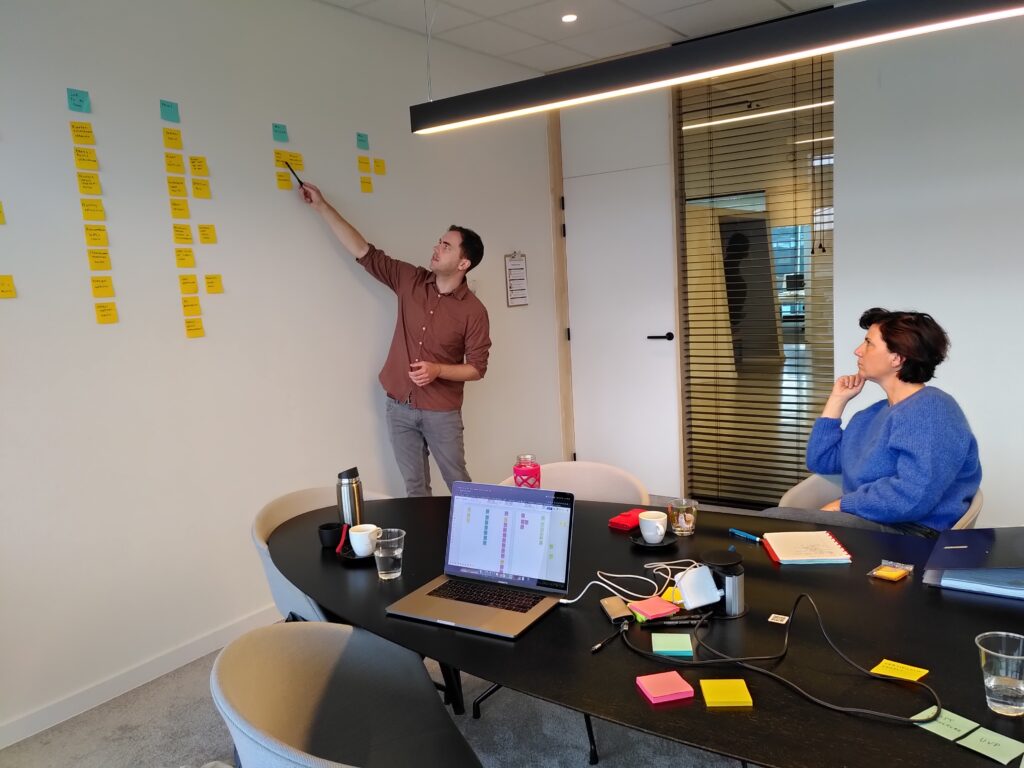
Our approach is rooted in human & planet-centric design. We don’t design for stakeholders; we design with them. By facilitating co-creation between corporations, NGOs, and local communities, we ensure that every solution is culturally grounded, ecologically sound, and commercially viable.
All Items
Our sustainable innovation services

Sustainable business models
We redesign the logic of value creation to align with planetary boundaries, from circular business model design to helping corporations integrate social equity into their core operations.

Social innovation
We help NGOs and social enterprises to bridge the gap between social mission and economic sustainability and to make sure they solve the actual problems of their target groups in the most effective way possible.

Research & blueprints
We work with governments, NGOs, industry associations, and EU-funded consortia to produce the research, frameworks, and blueprints that move entire fields forward.
Rooted in human and planet-centric design
Innovation fails when it solves a human problem by creating an ecological one.
At Quest, we believe in the power of human and planet-centric design to bring innovation that accounts for the needs of people, the health of our biosphere, and the viability of the business model simultaneously. Our process is not a linear path, but a dynamic cycle of co-creation:
- Radical inclusion: We move beyond the boardroom to co-design solutions alongside those most impacted. By facilitating dialogue between corporations, NGOs, and local communities, we ensure that every solution is culturally grounded and community-owned.
- Nature as a stakeholder: We treat nature as a silent partner in every workshop. We analyze the “invisible architecture” of our solutions to ensure that solving for the present doesn’t compromise the future of the ecosystem.
- Systemic feasibility: We bridge the gap between social purpose and corporate rigor. Using our Impact Design Thinking Methodology, we rigorously validate the desirability for humans, the viability for business, and the regenerative potential for the planet.
By uniting these perspectives, we move from incremental fixes to systemic blueprints that turn global challenges into scalable opportunities for impact.

All Cases
Relevant case studies

RegioGreenTex
Developing the blueprint for a Circular Garment and Value Circle
As part of the European RegioGreenTex initiative, Quest led The Circular Garment project.

Cool Chain Association
Writing a report on food loss in the perishable cold chain
Investigating where the perishable supply chain is losing food and what the industry needs to do about it.

Vlaamse Overheid
Setting up a Green Deal on Sustainable Supply Chains in Flanders
Mapping, engaging, and aligning stakeholders around a common framework.
Why work with Quest?
We bring a unique blend of scientific rigor, sustainability knowledge and human/planet-centric design to your processes.
- Strategic pragmatism: We don’t live in ivory towers. Our team has spent years in the field—from rural agricultural communities to high-density urban centers—understanding how to build solutions that work for everyone and survive the complexities of the real world.
- Our unique team composition: We’re a small team with very diverse cultural backgrounds (Europe, Middle East, Latin America). Our multitalented team — covering six languages — has helped clients in eleven countries since 2018. We combine deep sustainability expertise with solid experience in coding, service and UX/UI design, making sure all our solutions are fueled by data and actual stakeholder needs.
- We walk the talk: With our non-profit Habitats, we constantly put the local communities at the heart of all our nature conservation and restoration efforts. All our actions are tailored to benefit both nature and the people living there.

All Cases
Relevant content
Circular vs. Regenerative business models: Why you need both

From waste to value: Why circularity is a business imperative

Circular by design: Rethinking business models
All Cases
FAQ
Quest works with a wide range of organizations — from global corporations and SMEs to NGOs and social enterprises seeking financial self-sustainability. We also collaborate with governments, industry associations, and EU-funded consortia.
Unlike conventional approaches that optimize for business outcomes alone, Quest’s methodology simultaneously validates solutions for human desirability, business viability, and ecological regenerativity, treating nature as a stakeholder in the process.
Co-creation is central to our approach. Quest facilitates dialogue and workshops between corporations, NGOs, and local communities to ensure solutions are culturally grounded and community-owned, not just designed for stakeholders but with them.
Contact us
Let’s co-create the inclusive and regenerative models that ensure a just transition for people and planet.