Page content
Why you should focus on it
For most businesses, the supply chain is where the vast majority of their environmental and social impact occurs. It is also where the greatest risks lie and where the greatest opportunities for improvement are hiding. But a sustainable supply chain is not just about risk management. The companies that are building truly sustainable supply chains are also building more efficient, more resilient, and more competitive businesses — ones that are better prepared for the disruptions and demands of the decade ahead.
Getting it right is no longer optional. Investors are scrutinising and customers as well as partners increasingly expect transparency as a baseline condition of doing business. Most important of all: The regulatory landscape is shifting fast.
- CSRD requires large companies to disclose the social and environmental impacts of their full value chain.
- CSDDD goes further, placing a legal duty of care on companies to identify and address human rights and environmental risks throughout their supply chain.
- Extended Producer Responsibility schemes are expanding across sectors, and procurement requirements from major buyers are increasingly including sustainability as a selection criterion.

All Cases
Our Services

Supply Chain Readiness for Suppliers
Our sustainability experts are at your disposal, ready to help your business understand, prepare for, and respond to the sustainability demands coming from your customers and partners.

Supply Chain Due Diligence
It is time for you to take the lead and improve your own operations and supply chain to become more sustainable

Circular Business Models and Value Chains
Waste is not just an environmental issue — it is a missed opportunity. Our circularity experts are at your disposal, ready to help your business transition from linear thinking to circular systems that keep materials in use, unlock new value, and build long-term resilience.
Our sector-specific expertise
Supply chain sustainability is never one-size-fits-all. Quest brings deep, hands-on experience in two of the most complex and scrutinised sectors: fashion and food.
- Fashion & Textiles: Quest works with brands, retailers, manufacturers, and suppliers to build more transparent, circular, and resilient value chains from mapping material flows to redesigning products for end-of-life recovery. Our work is grounded in real projects within projects such as RegioGreenTex and organisations including Fashion For Good, Cascale, and the Organic Cotton Accelerator.
- Food & Agriculture: Quest’s food practice is led by Philippe Schuler, who brings over eight years of experience including as Global Impact Manager at Too Good To Go. We help food businesses identify where loss is happening, develop reduction strategies, and find ways to valorise surplus rather than write it off.


All Cases
Food Loss and Waste Management
Our food waste experts are at your disposal, ready to help hospitality businesses measure and reduce food loss and waste

Circular Fashion & Textile Recovery
Our fashion circularity experts are at your disposal, ready to guide you on your journey to understand, measure, and reduce textile waste. Quest helps you unlock the value hidden in your materials and develop circular fashion solutions.
Our Approach
- Start with visibility: You can’t manage what you can’t see. We map your suppliers first — who they are, where they operate, and what they produce.
- Assess your risks and impacts: We now assess them against environmental and social risk factors such as geography, commodity type, labour conditions. This tells you where to focus your effort.
- Engage your suppliers: We work collaboratively rather than just pushing requirements down the chain. Through interviews and capacity-building we dive into the needs and requirements.
- Measure your Scope 3 emissions Your supply chain is almost certainly where most of your carbon footprint sits. We have the in-house knowledge to help you with this.
- Address the hotspots: We don’t try to fix everything at once but instead identify the highest-impact areas and build your action plan from there.
- Build circularity in with our Value Circle: We look for opportunities to reduce waste, recover materials, and extend product lifespans.
Whether you are a large company looking to meet your due diligence obligations or a supplier looking to respond to the demands coming from your customers, the right approach will depend on your sector, your size, your position in the value chain, and where you are on your sustainability journey.

The Value Circle
The value circle goes beyond the traditional supply chain. Where a supply chain moves in one linear direction from raw material to finished product, a value circle closes the loop, ensuring that materials are recovered, reused, and reintroduced at the end of a product’s first life.
To demonstrate what this looks like in practice, Quest developed a replicable blueprint for a circular garment as part of the European RegioGreenTex initiative. By aligning stakeholders across every stage from design and production to communication and recovery, we turned a fragmented process into a cohesive, open framework that any fashion business can use to accelerate their own transition. The result is not just one garment. It is proof that circular fashion is achievable, scalable, and worth pursuing.

All Cases
Case Studies and Results
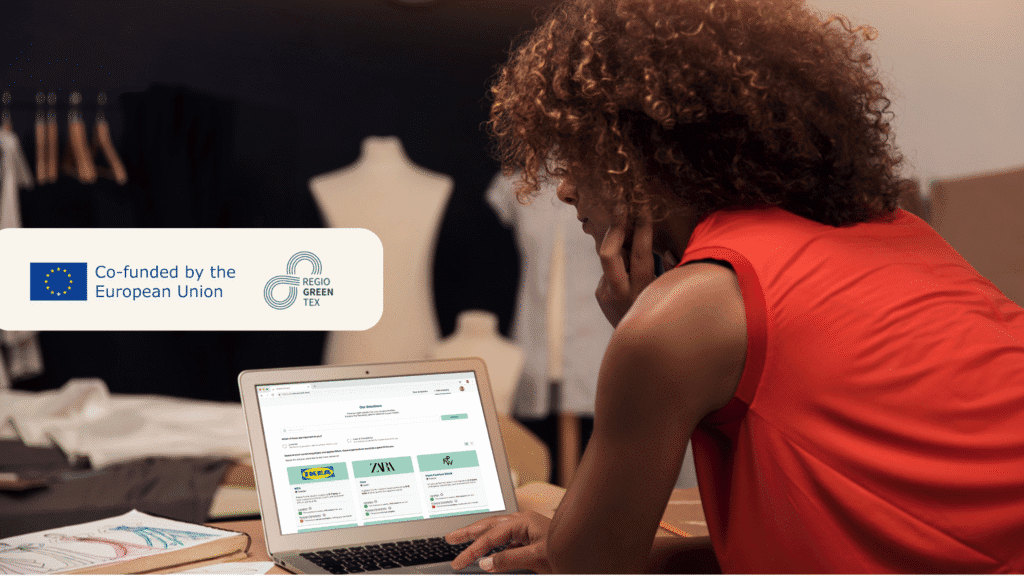
RegioGreenTex
Designing and building a matchmaking tool for textile surplus
As part of the European RegioGreenTex initiative, Quest took part in The Waste Wizard project.

Vlaamse Overheid
Setting up a Green Deal on Sustainable Supply Chains in Flanders
Mapping, engaging, and aligning stakeholders around a common framework.

RegioGreenTex
Developing the blueprint for a Circular Garment and Value Circle
As part of the European RegioGreenTex initiative, Quest led The Circular Garment project.
All Cases
Trusted by



All Cases
Relevant content

Tackling Scope 3: Your supply chain climate priority

The hidden risks lurking in your supply chain

Why supply chain due diligence matters
All Cases
FAQ
Supply chain due diligence is the process of identifying, assessing, and addressing risks — both environmental and human rights related — across your value chain. It is not a one-off exercise but an ongoing process of mapping, engaging suppliers, monitoring performance, and taking action where problems are found.
The best place to start is with clarity by understanding what is actually happening in your supply chain before jumping to solutions. That means mapping your suppliers, assessing risk by geography and sector, and identifying the areas that need the most attention.
The Corporate Sustainability Due Diligence Directive (CSDDD) is an EU law that places a legal duty of care on companies to identify and address actual and potential adverse human rights and environmental impacts, not just in their own operations, but across their supply chains.
The CSDDD applies to EU companies with more than 5,000 employees and €1.5 billion in revenue, and to non-EU companies with more than €1.5 billion in EU revenue. The first wave of companies will need to comply from 2029. Companies must focus on their own operations, subsidiaries, and direct business partners. Indirect value chain assessments are only required where there is objective and verifiable information indicating a specific risk
Supply chain risk is shaped by a combination of factors: where your suppliers are located, what sector they operate in, what materials or commodities are involved, and how deep your supply chain goes.
The starting point is always mapping: understanding who your suppliers are, where they operate, and what the risk profile of those locations and sectors looks like. From there, you can prioritise where to focus your due diligence effort. Quest can help you build that map and make sense of what it means for your business.
A sustainable supply chain is one where environmental, social, and governance considerations are integrated at every stage — from raw material sourcing to end-of-life product management. It means knowing where your materials come from, how they are produced, and what happens to them when their first life is over.
Contact us
Let’s turn your compliance burden into a roadmap for systemic leadership.