Page content
Picture carousel
Key challenges we tackle
Why is it a strategic opportunity?
The linear economy — take, make, dispose — is running out of road. Resource scarcity, waste regulation, and growing pressure from investors and customers are making it increasingly costly to operate as if materials have no value beyond their first use. It is time to unlock new revenue streams, stronger supplier relationships, and more resilient operations.
-
Recover value from waste and by-products
Every discarded material, unsold product, or inefficient process represents embedded cost that never had to leave. Circular models turn those losses into opportunities and create new sources of revenue that did not exist before. -
Reduce exposure to resource risk
Dependence on virgin raw materials leaves businesses vulnerable to price volatility, supply disruption, and regulatory change. Designing circularity into your value chain reduces that exposure and makes your operations more predictable and resilient over time. -
Get ahead of regulation
The EU’s Waste Framework Directive, Extended Producer Responsibility schemes, Ecodesign Regulation, and CSRD reporting requirements are all tightening the rules around how companies manage materials and waste. Building circular foundations now means you are prepared when compliance becomes unavoidable. -
Strengthen stakeholder relationships
Circularity requires collaboration with suppliers, customers, and partners. Companies that build circular ecosystems across their value chain often find that the process itself deepens relationships, surfaces shared efficiencies, and creates the kind of alignment that linear supply chains rarely produce.
How we can help
We support businesses in shifting from waste management to resource optimisation, embedding circularity into their operations, products, and value chains. Our approach combines data-driven insight, circular design thinking, and practical implementation support to help you turn waste into value.
-
Waste identification and material flow mapping
We map and analyse your waste streams and material flows, identify inefficiencies and circular potential, and benchmark your performance against industry best practices, giving you a clear picture of where to act first. -
Circular business model design
We help you explore and develop circular business models suited to your sector and context from product-as-a-service and leasing models to remanufacturing, upcycling, and closed-loop systems. We stress-test ideas for commercial viability, not just environmental ambition. -
Identifying new revenue streams from waste and by-products
We help you see your waste differently by mapping what can be recovered, repurposed, or sold, and connecting you with the solution providers, partners, and markets that can make those opportunities real. -
Stakeholder engagement and value chain collaboration
Circularity cannot happen in isolation. We design engagement strategies that bring your suppliers, customers, and partners into the circular model, building shared accountability for material flows and unlocking collaboration that creates value for everyone in the chain. -
Regulatory alignment
We ensure your circular strategy is aligned with existing and upcoming regulations, and support your reporting requirements under CSRD (ESRS E5), EPR schemes, and other relevant frameworks, helping you communicate progress in a way that is credible, consistent, and audit-ready. -
Capacity building and internal awareness
If you are making a significant shift in how your business operates, your team needs to understand why and how. We design and deliver tailored training and capacity-building sessions that build genuine circular literacy across your organisation.
All Items
Key outcomes
Lower waste, higher efficiency
Reduce waste generation, improve material recovery, and strengthen financial performance by identifying and acting on the circular opportunities already present in your operations.
Turn waste into value
Unlock new revenue streams and business opportunities from materials that previously went to landfill or were written off as cost and ensure circular ideas translate into solutions that are desirable, viable, and feasible.
Stronger stakeholder relationships
Build circular ecosystems with suppliers and partners, creating the kind of value chain collaboration that makes your business more resilient, more competitive, and more aligned with where markets and regulation are heading.
All Cases
Client results

RegioGreenTex
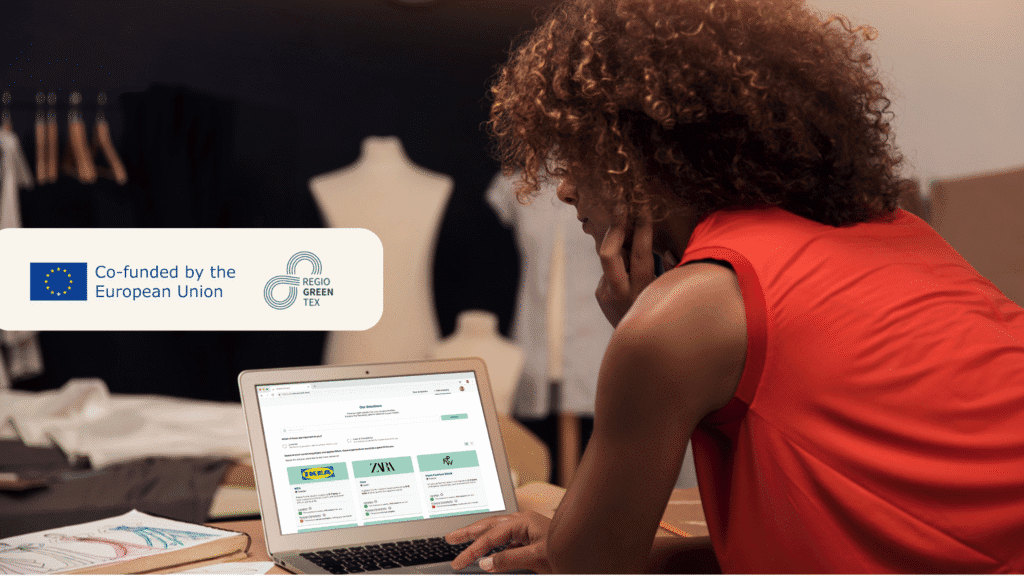
Developing the blueprint for a Circular Garment and Value Circle
As part of the European RegioGreenTex initiative, Quest led The Circular Garment project.
RegioGreenTex
Designing and building a matchmaking tool for textile surplus
As part of the European RegioGreenTex initiative, Quest took part in The Waste Wizard project.
All Cases
Trusted by




What about training?
Our capacity building sessions are typically delivered by subject matter experts and trainers from the Quest team. With expertise across a range of disciplines, our team can deliver tailored training to match your organisation’s sustainability maturity level and operational requirements.
What exactly are you looking for? Please reach out to us with more information and we would be happy to inspire and empower your team, on-site or remote.

All Cases
Relevant Content

From waste to value: Why circularity is a business imperative

The hidden risks lurking in your supply chain

Circular by design: Rethinking business models
Contact us
Ready to measure, communicate & maximize your impact? We can’t wait to drive positive change forward together. Fill out the form or