What will shape sustainability in 2026

If 2025 was the year sustainability became unavoidable, 2026 will be the year it becomes decisive. The next phase of sustainability will not be driven by new slogans, frameworks, or commitments, but by a growing mismatch between how organisations operate today and the realities they face tomorrow. Regulatory pressure, environmental limits, market expectations, and internal constraints are converging, forcing sustainability out of the margins and into the core of decision-making.

Let’s break down what we think will be key trends in sustainability for 2026.

From compliance to concrete action

One of the defining forces of 2026 will be the shift from sustainability as a compliance exercise to sustainability as a performance issue. Reporting alone does not reduce emissions, restore ecosystems, or make supply chains resilient. In 2026, organisations will increasingly be judged not on the sophistication of their reports, but on whether sustainability meaningfully influences investment decisions, procurement choices, and operational priorities. This shift is inevitable because regulators, investors, and stakeholders are now better equipped to distinguish activity from impact.

Biodiversity moves from awareness to risk

Biodiversity will emerge as one of the most underestimated forces and hot topics shaping sustainability in 2026. While climate has dominated the agenda for years, biodiversity loss directly affects land use, water availability, raw material supply, and long-term business continuity. What changes in 2026 is not awareness, but relevance: biodiversity is increasingly framed as a material risk and dependency. As nature-related risks translate into operational disruption, higher costs, and regulatory exposure, organisations will be forced to assess where they depend on ecosystems and how their activities contribute to degradation or restoration.

Integration into core functions will be non-negotiable

Another key force shaping 2026 is the integration of sustainability into core business functions. In many organisations, sustainability still operates as a parallel track, disconnected from finance, risk management, and strategy. Sustainability managers are lonely figures that no one listens to nor includes in discussions. This separation is becoming untenable. As sustainability impacts financial performance, insurance, access to capital, and long-term resilience, it can no longer sit outside governance structures. Organisations that fail to integrate sustainability into budgeting, capital allocation, and strategic planning will struggle to prioritise effectively and will increasingly face internal friction, rising costs, and external pressure.

Supplier engagement becomes imperative

In 2026, sustainability performance will increasingly be judged beyond a company’s own operations and across its entire supply chain. Customers, regulators, and investors are demanding greater transparency into where products are made, under what conditions, and with what environmental impact. This goes beyond responsible sourcing and requires businesses to ensure ethical labour practices, fair wages, and environmentally sound production across suppliers, manufacturers, and distributors. This level of transparency is only possible when suppliers are equipped to meet rising expectations. As a result, companies are shifting from enforcement to enablement by investing in training, collaboration, and incentives that build supplier capacity. Those that do will strengthen trust, reduce risk, and improve resilience. Those that do not will face growing scrutiny, reputational exposure, and regulatory pressure.

Communications will become a strategic opportunity

In 2026, sustainability communication will no longer be a branding exercise, but a strategic risk management function. As scrutiny around greenwashing intensifies, organisations are being forced to confront a simple reality: what they communicate must be defensible, traceable, and aligned with how decisions are actually made inside the organisation. Overclaiming, selective storytelling, and vague ambitions are increasingly exposed by regulators, civil society, and informed stakeholders. At the same time, saying nothing is not a viable option either. The organisations that will succeed are those that treat sustainability communication as a strategic discipline, grounded in materiality, data, and governance.

Technology will be a key enabler

Technology, including AI and data platforms, will play a growing role in sustainability in 2026, but with a more sober understanding of its limits. The initial hype around digital solutions is giving way to a more pragmatic use of technology as an enabler of better decisions rather than a substitute for them. In 2026, organisations will increasingly use digital tools to improve data quality, identify priorities, model scenarios, and connect sustainability insights to operational choices.

What this means for organizations?

These forces are not predictions based on trends alone. They are consequences of systems already in motion. Regulatory frameworks are tightening, environmental pressures are intensifying, and organisational complexity is increasing. At the same time, patience for superficial sustainability is wearing thin. The direction of travel is clear: sustainability is becoming more demanding, more strategic, and less forgiving of incoherence. Organisations that adapt early will gain resilience and credibility, while those that delay will face rising costs, growing risk, and shrinking room to manoeuvre.

For organisations, 2026 is not about doing more sustainability, but about doing it differently. Success will depend on the ability to integrate sustainability into decision-making, focus on what is truly material, and translate ambition into action. This requires leadership, clarity, and a willingness to confront uncomfortable trade-offs. At Quest, we see 2026 as a turning point. Not because sustainability suddenly becomes important, but because it becomes unavoidable.

Are you ready to take action in 2026?

We can help you on your journey!
How to prepare for B Corp Certification in 2026

Let’s not sugarcoat it. If you’re planning to certify as a B Corp in 2026 or opt B Corp recertification under the new standards, you’re not looking at a questionnaire. You’re looking at a transformation process. B Lab published its most significant overhaul in 19 years on 8 April 2025, and the message is clear: the days of gaming the points system are over. That’s a good thing, but It’s also a significant amount of work.
This is your practical guide to navigating what changed in the B Corp certification process, what it means for your organisation, and how to actually get prepared.

What changed and why does it matter? 

For years, B Corp certification worked on a points system. Score 80 or more on the B Impact Assessment across five impact areas, and you were in. The problem? A company could score poorly on environmental performance and still certify by overachieving elsewhere. It was exactly the kind of loophole that critics used to question the credibility of the whole certification.

B Lab heard it. So did the EU. With the Empowering Consumers for the Green Transition (ECGT) directive tightening requirements on sustainability claims, staying with the old model wasn’t just reputationally risky, it was becoming legally untenable for companies operating in European consumer markets.

The core shift: no more points. Instead, every certified B Corp must now meet mandatory minimum requirements across seven Impact Topics, with a phased improvement roadmap stretching from Year 0 to Year 3 to Year 5. You don’t just achieve certification. You commit to getting better over time.

At a time when other leaders are stepping back, business must drive progress. This isn't merely an update; it's a complete reimagining of business impact to respond to the challenges of our time.
Clay Brown, Co-Lead Executive at B Lab Global

The new structure: Foundation Requirements + seven Impact Topics

Before you even get to the impact topics within the B Impact Assessment , you need to clear the Foundation Requirements. Think of these as the table stakes or the basic eligibility checks every business must pass before the real assessment begins.

Foundation Requirements cover three areas: eligibility (you’re a for-profit entity, operating for at least 12 months, not involved in ineligible industries like fossil fuels, tobacco, or weapons), the legal requirement to adopt stakeholder governance in your corporate documents, and a risk assessment using B Lab’s new Risk Tool (14 questions that determine whether your business model triggers additional due diligence requirements).

Once you’ve cleared those, the seven Impact Topics are where the real work lives. You can pick and choose, but instead every topic has mandatory sub-requirements, and the specific requirements that apply to your company depend on your size, sector, industry, and geography.

The phased timeline: Year 0, Year 3, Year 5

One of the most significant structural changes is the shift to continuous improvement as a certification condition. Under the old model, you could recertify every three years without any requirement to have progressed. That’s gone.

The new model uses a three-phase timeline. Year 0 is the baseline and the minimum requirements you must meet to achieve certification. Year 3 and Year 5 layer in additional obligations as your organisation matures. This isn’t only theoretical as B Lab will verify that you’ve moved the needle.

Key deadlines for 2026

  • 1

    From January 2026: All new applicants certify under the new standards

    No more version 6 certifications for first-time applicants. The new standards are the only path in.
  • 2

    2026 Recertifications: SMEs get a 12-month extension — but transition is mandatory

    The extension was automatically issued in August 2025. It buys you time, but not the option to avoid the new standards.

  • 3

    September 27, 2026: ECGT compliance deadline for EU B2C companies

    If your business communicates sustainability claims to European consumers, old certifications won’t hold up. This is a hard deadline.

  • 4

    From 2027: All recertifications under new standards, no exceptions

    Regardless of company size or classification, version 6 is fully retired.

What’s genuinely new and what’s harder?

Some requirements will feel familiar if you’ve been through B Corp before. The legal requirement, transparency commitments, and governance structures build on version 6. But several areas represent a genuine step change.

  • Human Rights as a standalone topic is entirely new. Where version 6 touched on supply chain practices, the new standards require a formal assessment of salient human rights issues across your operations and value chain as well as evidence that you’re taking action to prevent and mitigate negative impacts. For many SMEs, this will mean building due diligence processes from scratch.
  • Climate Action is more demanding at every size tier. A public Climate Action Plan is required at Year 0. For larger companies, annual third-party verification of your GHG inventory is non-negotiable from day one. The days of vague commitment language are over.
  • Purpose & Stakeholder Governance now has teeth. A public purpose statement isn’t enough. It needs to be embedded in your governance, and larger companies must conduct regular materiality assessments, formally engaging stakeholders on their most significant social and environmental impacts.
  • The verification process has changed too. All assessments are now handled externally, specifically to meet EU greenwashing regulations. This is no longer self-assessed and filed. An independent third party will verify your claims.

Is B Corp still worth it?

The short answer is yes. But only if you mean it. The new standards have done something important: they’ve made that question harder to dodge. You can no longer certify on the strength of a good HR policy and a recycling programme. You need a climate plan, a human rights assessment, governance that actually reflects your stated purpose, and a demonstrated commitment to getting better over time. For companies that have been doing the real work, that’s finally good news because the certification will actually mean something again. For companies that were coasting on the badge, 2026 is a wake-up call. B Corp has always stood for business as a force for good and the benefits of a B Corp certification are tremendous. The new standards now make sure you can back it up.

Ready to kickstart your certification process or improve your B Corp score?

At Quest, we’ve guided organisations through B Corp certification across multiple sectors and geographies. We’ll help you run your gap assessment, build your multi-year roadmap, and make sure your certification reflects the impact you’re actually creating.

Rani joins Quest

Our journey toward meaningful impact is shaped by the people behind it. With her natural ability to bring clarity, empathy, and purpose into everyday work, we’re excited to welcome Rani to the Quest team. Driven by a deep love for nature and a passion for sustainability, she joins us to help create positive impact for both people and the planet.

Rani joins Quest: new team member

Welcome Rani!

At Quest, we believe meaningful impact starts with people – how we work together, how we communicate, and how we turn intention into action. That’s why we’re excited to welcome Rani to the Quest team.

With a background in communication, project management, and customer success, Rani brings a rare combination of structure and empathy to everything she does. She’s known for creating environments where people feel seen, supported, and motivated to do their best work, because clarity and kindness are not opposites, but partners.

How did your personal and professional journey lead you to sustainability, and why does fashion sustainability resonate so strongly with you?

My journey into sustainability didn’t start as a clear career goal, it grew organically over time. I’ve always felt deeply connected to nature, and being outdoors has been a constant source of grounding and inspiration for me. But it was through my work at Yuma Labs that sustainability truly became part of how I think, work, and make decisions every day.

Working at a circular eyewear design and production agency opened my eyes to the impact the fashion industry has on the planet, but also to its potential to be a force for positive change. I saw firsthand how design, material choices, supply chains, and communication can either contribute to waste or help build more conscious systems.

In my role, I worked closely with brands that wanted to do better, not just in how they looked, but in how they operated. That experience taught me that sustainability isn’t only about products; it’s also about relationships, transparency, and long-term thinking.

Fashion sustainability, in particular, resonates with me because it sits at the crossroads of creativity, identity, and responsibility. What we wear tells a story, and I believe those stories can reflect care for both people and the planet. Over time, my passion evolved into a clear purpose: to help create systems, experiences, and collaborations that make conscious choices feel natural, accessible, and genuinely impactful.

Recycling clothes as a symbol of circular fashion and sustainable practices

What are three things your experience at Yuma Labs taught you that will shape how you work at Quest?

First, I learned how powerful clear and human communication really is.

At Yuma Labs, sustainability was embedded in every decision we made. Designing conscious, values-based client journeys taught me that transparency and clarity build trust, and trust is what turns short-term projects into long-term partnerships. I’d love to bring that same human-first approach to communication at Quest.

Second, I learned the importance of bridging people and disciplines.

My role sat at the intersection of marketing, project management, and customer success, which meant constantly aligning designers, product teams, and clients. Acting as that bridge helped ideas move smoothly from concept to reality while staying true to purpose, impact, and beauty. At Quest, I want to keep supporting collaboration in a way that feels structured, but never rigid.

And finally, I learned that systems can support mindful growth.

Using tools like Notion and Monday, I coordinated timelines, deliverables, and cross-functional work, but the real lesson was designing processes that help people work better together without burning out. Sustainable impact starts internally, and I’m excited to apply that mindset at Quest by helping create clarity, collaboration, and space for meaningful work.

Overall, my time at Yuma Labs deepened my connection to sustainability. What began as a lifelong love for nature evolved into a clear purpose: to create impact for both people and the planet, and that’s something I’m excited to continue building at Quest.

What do you like to do when you’re not working?

Outside of work, I recharge in nature as much as possible. You’ll usually find me running along the Portuguese coast, flowing through yoga, or spending time at the beach with the people I love.

Being close to nature is where I reconnect with myself, and it’s also what continues to motivate me to create positive impact for both people and the planet.

Portuguese coastline

Why does Quest feel like home for you?

Quest feels like a very natural fit for me. The mission truly aligns with my values and with how I believe work should be experienced – purposeful, human, and grounded in impact. I strongly believe that everyday work should feel good, and I see that same mindset reflected in the way Quest approaches sustainability, innovation, and collaboration.

I’m excited to bring my experience in aligning teams, strengthening communication flows, and supporting meaningful projects – always leading with empathy and intention. For me, impact isn’t just about outcomes, but also about how we work together along the way.

Why biodiversity matters to business

Biodiversity isn’t just a conservation topic: it’s the invisible foundation of modern business. From supply chain stability and risk exposure to brand resilience and innovation, the loss of nature jeopardizes operations and growth. More than 50% of global GDP is dependent on biodiversity – and biodiversity loss impacts all industries. 

Yet, most companies still treat biodiversity as abstract or external. The reality is clear: biodiversity loss is a pressing business issue with direct operational, financial, and reputational consequences. Here are four reasons nature belongs at the center of your strategy, and why waiting is no longer an option.


So why is it so crucial for organizations?

Operational Dependence on Nature

Businesses rely on soil, water, pollinators, and healthy ecosystems. Disruptions like pollinator collapse or soil degradation can immediately impact yield, input costs, and supply reliability. Yet these dependencies often go unnoticed in supply chain planning until it’s too late to respond effectively. Ignoring them leaves businesses exposed; acting on them builds long-term resilience and competitive edge.


Supply Chain Risk & Resilience

Nature degradation such as deforestation, water stress, or habitat damage can derail sourcing from key regions. Companies must anticipate environmental stressors to build resilient supply lines. Biodiversity-aware sourcing allows businesses to proactively manage risk and reduce vulnerability to local ecosystem shocks.


 Investor Expectations & Regulatory Pressure

Frameworks like TNFD, the EU Green Deal, and CSRD are elevating biodiversity in ESG reporting. Businesses without clear biodiversity strategies may face regulatory risk and investor scrutiny. Forward-looking companies are already aligning with nature-related frameworks to future-proof their reporting and stakeholder trust. Nature-related disclosures are quickly becoming a non-negotiable part of sustainability governance.


 Innovation & New Business Models

Biodiversity strategies unlock regenerative sourcing, circular design, and new value chains, fostering innovation, collaboration, and long-term resilience.  Nature-inspired innovation opens up new markets and opportunities, strengthens supplier partnerships, and encourages cross-sector collaboration. Forward-thinking companies are already turning nature-positive models into real competitive advantage.


Why do organisations struggle and what can they do?

Nature is often not embedded into core business decision-making and processes such as procurement or risk management, limiting effective action. Businesses often stall on biodiversity because it’s complex to measure, context-based, and outside traditional metrics like carbon. Without clarity on where to start or how to track progress, nature stays on the sidelines of strategy. Worst of all, t is a new concept that many fail to fully grasp or wrap their heads around.

At Quest, we turn biodiversity from an abstract concept into a strategic business asset. We begin by identifying where your operations depend on and impact nature. From there, we co-create a clear, actionable biodiversity roadmap with measurable targets, priority interventions, and stakeholder alignment. We help simplify complexity into decision-ready insight, integrating biodiversity into operations, reporting, and innovation. With this approach, biodiversity becomes a source of business resilience, not risk.

Are you ready to take action for nature?

We can help you on your journey to nature-positivity.

Unlocking digital accessibility and inclusivity with alt tags

In the ever-evolving digital landscape, where inclusivity and accessibility are more important than ever, one small but mighty tool often gets overlooked: the alt tag. Alt tags, also known as alt text, play a crucial role in making the web more accessible to everyone, including individuals with visual impairments, and also contribute to better search engine optimization (SEO).

What are alt tags?

Alt tags are brief descriptions embedded within an image’s HTML code that describe what the image depicts. These descriptions serve multiple purposes: they provide essential information to people who cannot see the images, ensure that search engines understand the content of the images, and appear on the page when images fail to load due to connectivity issues.

To put it simply, alt tags are the key to making sure that images are not just decorative elements but informative and accessible to all users.

The role of alt tags in digital accessibility

The web should be a place where everyone can access information equally. For people with visual impairments, screen readers are essential tools that interpret web content. However, without alt tags, screen readers cannot convey what an image represents, effectively leaving users in the dark. This exclusionary practice can harm a brand’s reputation and alienate a significant portion of the audience.

Alt tags ensure that visually impaired users can fully engage with content by providing descriptions of images that might otherwise go unnoticed. For instance, instead of a screen reader announcing “image,” it can convey “man doing yoga in front of the ocean”, offering context and meaning. But if you run a company focused on personal workout coaching, for instance, you might want to add which muscle(s) this person is stretching and how he’s doing that.

Man doing yoga in front of the ocean

The SEO benefits of alt tags

Beyond their accessibility advantages, alt tags also serve as a vital component of SEO strategies. Search engines like Google use alt text to understand the content of images, which can help improve a website’s ranking in search results. For example, if you run a blog about travel gear, including the phrase “best carry-on luggage” in your alt text can make your site more discoverable for related searches.

This dual function of alt tags — as a tool for accessibility and a means to enhance SEO — makes them indispensable in modern web design.

Best practices for writing effective alt tags

Creating alt tags that are both descriptive and concise is an art. Here are some best practices to ensure your alt tags are impactful:

  1. Prioritize context: Describe the image in a way that adds value to the surrounding content. For example, “labrador playing in the park” might be appropriate for a pet care blog, whereas “adopt a labrador puppy” could be more relevant for an adoption site.
  2. Avoid redundancies: Skip phrases like “image of” or “photo of,” which are unnecessary. The alt tag should go straight to the point, focusing on what’s essential about the image.
  3. Incorporate keywords thoughtfully: While it’s important to include keywords to boost SEO, they should be used naturally within the description. Keywords should not compromise the clarity and usefulness of the alt text.
  4. Omit decorative images: Not all images need alt text. If an image is purely decorative, it’s better to use an empty alt attribute (alt=””) so that screen readers can skip over it. This prevents confusion and keeps the focus on content that adds value.

Conclusion: alt tags as a pillar of digital inclusivity

In today’s digital age, where inclusivity is no longer just a buzzword but a necessity, alt tags are a simple yet powerful tool to ensure that your content is accessible to everyone. By thoughtfully crafting alt text, you can make your website more welcoming to users with visual impairments and improve your visibility in search engine results.

Incorporating alt tags into your content strategy is not just a technical task, it’s a commitment to making the web a more inclusive space. As you build and grow your digital presence, remember that accessibility starts with the details, and alt tags are one of the most important details you can focus on.

Is Net Zero the right goal to set?

Net zero. You may have heard, read or spoken about it so many times already, and yet it may still raise a few eyebrows here and there. A rallying cry that is not only gaining in popularity but one that is synonymous to a world drastically in need of shifting gears. A world that needs to mitigate and adapt to the adverse effects of climate change. 

Ever since the Paris Agreement came into fruition almost ten years ago, worldwide consensus has been to remove carbon from the atmosphere whilst reducing our greenhouse gas (GHG) emissions with the hope of reaching net zero by the middle of the century. It is our beacon of hope in transitioning towards a more regenerative and renewable future. With the largest chunk of GHG emissions associated with climate breakdown coming from business-driven economic activities, it is clear that organizations across sectors have a massive role to play today and tomorrow.

But what does net zero even mean?

In a nutshell, net zero represents a state in which GHG emissions from human activities and the removal of these gases are balanced over a given period of time. This entails removing as many emissions as we produce. While it may seem like a great idea in principle, achieving net zero remains challenging for many companies in practice as it requires innovative technologies and cooperation across the entire value chain.

How do we achieve net zero?

As more companies are exposed to risks imposed by the climate crisis and other external pressures, more and more of them are adopting specific targets and strategies to do something about it. They set targets and bold ambitions with a combination of different approaches to reach net zero

  • Actions to reduce their own emissions as well as those across their value chain
  • Actions to directly remove greenhouse gasses from the atmosphere
  • Actions to offset their emissions by purchasing carbon credits

Why is it a problem to solely focus on GHG emissions?

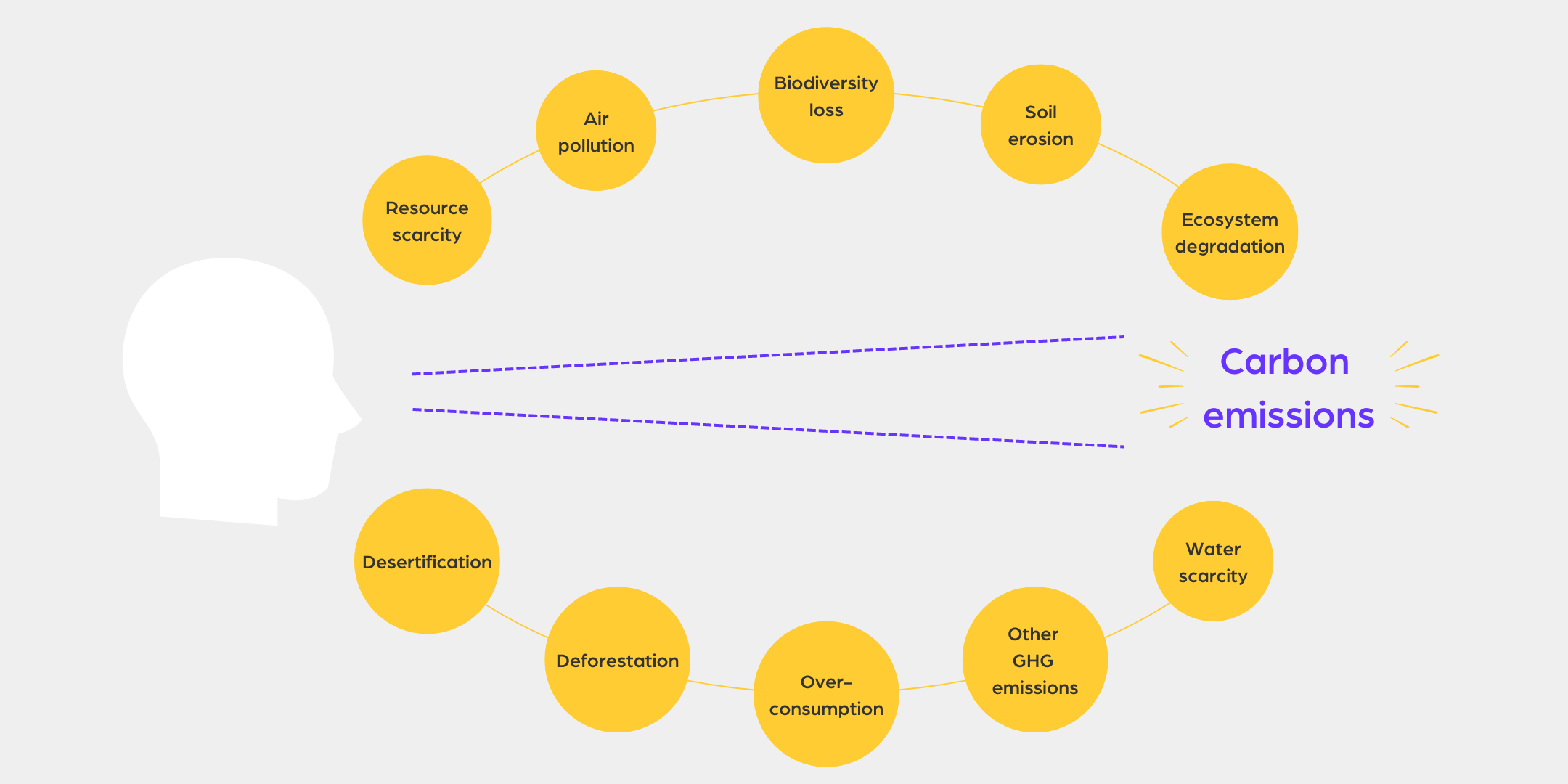
Today it often appears that GHG emissions are the only source of damage inflicted by humanity on our planet. It causes all efforts to be focused on that rather than looking at the bigger picture. It diverts attention from other pressing environmental issues that need our attention. This prompts the question: has net zero purely become a misleading and unhelpful badge that companies strive for? Time to look at three key issues behind net zero.

Issues with net zero summed in an infographic

Issue #1 – Setting a target with no concrete action

Net zero claims vary enormously in terms of credibility. To date, there is no binding regulation requiring a transition to net zero, meaning that commitments and targets are purely made on a voluntary basis with little to no accountability, transparency or enforcement. Despite numerous promises and goals made in the past, few have been achieved. While some companies embark on clearly-defined pathways to reduce GHG emissions like Science Based Targets, even these initiatives have come under recent scrutiny for allowing the offsetting of Scope 3 emissions.  Now more than ever, companies are jumping on the bandwagon making ambitious pledges to reach net zero emissions by 2050. Yet, many are uncertain where to even get started…

Issue #2 – Compensating emissions through offsets

Many companies have embarked on a sustainability journey that requires the bare minimum. They base their efforts on continuing with business as usual and to instead rely on carbon offsets to make amends for the damage they cause. They compensate for their emissions by investing in projects that remove greenhouse gasses from the atmosphere, such as tree planting . The classic ‘burn now, pay later’ approach undermines the urgency of emission reductions by actively postponing action. 

To set the record straight here, not all offsetting schemes lack positive impact. However, the real issue is the lack of measurement and quality control coupled with companies’ over-reliance on doing what they have always been doing without prioritizing the reduction of emissions. They instead compensate and feel that they are off the hook without having to change their own operations.

Issue #3 – Falling into the carbon tunnel vision trap 

There is no doubt that limiting GHG emissions is imperative to fighting the climate crisis. GHG emissions are the primary contributor to global warming, making their reduction imperative for our future. It is therefore understandable that they are a common feature in most sustainability strategies out there. 

However, this focus can lead to some misunderstandings. A comprehensive sustainability strategy should not solely focus on a narrow concept of net zero, but instead encompass a broad range of challenges, risks, and implications. A narrow focus on carbon emissions can limit our ability to  drive impactful action by narrowly emphasizing on one metric alone: GHG emissions. This blind spot causes us to overlook other significant aspects integral to sustainability and ESG.

How can we adopt systemic thinking?

To achieve widespread and lasting impact, we must adopt holistic and system thinking in our approach to sustainability. Broadening horizons will not only allow us to explore new opportunities but also address present and future risks comprehensively. 

There are a myriad of complex and interrelated factors that go far beyond GHG emissions. From soil degradation to desertification, from water pollution to biodiversity loss, our planet is facing a range of inextricably intertwined issues all related to net zero emissions. By overwhelmingly focusing on emissions, we have neglected our greatest ally in taking out CO2e from the atmosphere and storing it away: nature. Without nature, achieving net zero is unattainable.

Using double materiality to focus your priorities

The question that arises now is: what should we prioritize instead? For actionable steps and a comprehensive sustainability approach, we can turn to a double materiality assessment. A strategic and impactful way of addressing the most pressing ESG risks and opportunities that your business may face. Instead of providing a long list for you to tackle, double materiality checks for interdependencies by clustering them into well-defined factors to consider. It looks at the impact that your business has on the planet and society, whilst also unfolding the potential impact a changing planet will have on your operations. By taking into account all stakeholders, a business can then prioritize which issues to focus on first and therefore not overlook new potential possibilities to drive meaningful, impactful action.

Conclusion

The need to go beyond GHG emissions does by no means downplay the value of reducing and removing emissions. Instead, it highlights the necessity of  taking comprehensive and holistic action across various sustainability dimensions. The planetary crisis we face is multifaceted and interconnected, and so should also be our approach to combating it.

How can we help?

Our Double Materiality Assessment not only analyzes the external impact on your finances but also scrutinizes the impact your company has on the planet and people. We help you shape a relevant, multidimensional sustainability strategy by looking at all essential ESG aspects of your business.

Why supply chain compliance starts with EcoVadis

Today’s supply chains aren’t just judged by efficiency or cost: they’re judged by their sustainability, ethics, and resilience. As new laws and customer expectations emerge, companies are under pressure to prove that their suppliers are responsible, compliant, and aligned with environmental and social goals. At the heart of this transformation? EcoVadis. Whether you’re a supplier responding to requests or a buyer managing third-party risks, EcoVadis has become the global go-to system to turn supply chain sustainability into a measurable, reportable reality.

green buildings

Why compliance is moving upstream

Across industries, regulations like the EU Corporate Sustainability Due Diligence Directive (CSDDD) and Corporate Sustainability Reporting Directive (CSRD) are forcing companies to look beyond their direct operations. This means understanding—and taking responsibility for—impacts and risks across your entire value chain.

For many businesses, that means grappling with:

  • Lack of visibility on Tier 2+ suppliers
  • Unclear labor and human rights risks
  • Unverified environmental practices
  • Inconsistent documentation across regions

EcoVadis offers a solution by helping companies systematically assess, score, and improve supplier sustainability performance across environment, labor & human rights, ethics, and procurement.

How EcoVadis supports supply chain due diligence

EcoVadis helps companies meet growing compliance demands by providing a standardized framework for assessing supplier sustainability across 175+ countries, tailored to industry and company size. It enables businesses to identify ESG risks based on geography, sector, and maturity, while offering auditable evidence of policies, practices, and performance, critical for aligning with regulations like CSRD and CSDDD. The platform not only delivers clear, actionable improvement plans that suppliers can implement, but also ensures continuous progress through annual reassessments. For buyers, this builds trust and transparency across complex value chains; for suppliers, it offers a clear and credible roadmap to meet expectations, reduce risk, and stay competitive in sustainability-driven markets.

Why it’s not just about compliance

EcoVadis isn’t just a reporting tool. It’s a driver of operational change. It helps businesses:

  • Embed sustainability in procurement
  • Make smarter supplier selections
  • Streamline supplier communication
  • Align reporting across CSRD, SBTi, and SDG frameworks
  • Avoid greenwashing through verified third-party assessments

Companies using EcoVadis gain a competitive advantage by being proactive, rather than reactive, when it comes to ESG transparency. At Quest, we don’t just help you get a score. We help you turn that score into a meaningful step toward compliance, resilience, and sustainability leadership. 

Are you ready to take action within your supply chains?

We can help you on your journey!

Tackling Scope 3: Your supply chain climate priority

Many businesses have committed to net zero, but few are looking in the right place. That’s because Scope 3 emissions (those embedded in your value chain) are the blind spot in most climate strategies, even though they often account for over 70% of total emissions. For companies serious about climate action, decarbonizing the supply chain is non-negotiable. From purchased goods and materials to transportation, packaging, waste, and product use, Scope 3 emissions reveal the full environmental cost of how a business sources, produces, and delivers value. Addressing them is difficult but also where climate impact, innovation, and competitive advantage converge.

What makes Scope 3 so complex?

Scope 3 emissions are indirect and often lie outside your operational control, making them harder to track, verify, and reduce. Organizations typically face challenges such as:

  • Incomplete or poor-quality supplier data
  • Lack of visibility across tiers 2 and 3 of the supply chain
  • Low supplier engagement or buy-in
  • Limited internal resources or technical capacity
  • Confusion around emissions factors, assumptions, and tools

And yet, tackling Scope 3 is what regulators, investors, and customers increasingly expect especially under CSRD, SBTi, and other ESG frameworks that demand full value chain transparency.

Why the supply chain holds the key

For most businesses, Scope 3 is dominated by upstream activities primarily purchased goods and services, which fall directly under the responsibility of procurement, supply chain, and category managers.

That makes supply chain decarbonization the most strategic and the most immediate lever for meeting net zero targets. Key hotspots often include: Raw materials such as metals or plastics, suppliers using fossil-fuel intensive energy, long-distance logistics and shipping, packaging materials, and end-of-life treatment.

This isn’t just about carbon. It’s about building resilient, responsible, and future-fit supply chains that deliver value beyond compliance.

What businesses can do: From mapping to action

You don’t need perfect data to start. Instead you need a clear roadmap, smart prioritization, and supplier collaboration. Here’s how to move forward:

  1. Screen and prioritize Scope 3 categories
    Focus on emissions hotspots based on spend, material intensity, and strategic importance.
  2. Map your supplier landscape
    Identify critical suppliers and clusters with the biggest footprint or influence.
  3. Engage suppliers early
    Launch awareness campaigns, capacity-building sessions, and supplier scorecards.
  4. Request relevant emissions data
    Start with spend-based estimates, then move toward activity-based reporting or primary data.
  5. Embed sustainability into procurement
    Use circularity, low-carbon materials, and lifecycle impact as decision-making criteria.
  6. Co-create reduction plans
    Work with suppliers to identify reduction levers e.g. renewable energy use, packaging redesign, or transport optimization.
  7. Track and iterate
    Build a dashboard or reporting mechanism to monitor Scope 3 progress over time and feed it into CSRD, SBTi, or ESG reports.

Scope 3 emissions are where your climate story becomes real. They are complex, distributed, and harder to control but also where your biggest emissions and opportunities lie. If you’re not decarbonizing your supply chain, your net zero target is only a partial promise.

Start with what matters. Start with Scope 3.

Are you ready to take action towards net zero?

We can help you on your journey!

Circular by design: Rethinking business models

Most businesses treat circularity as a waste or material issue. But the truth is, it’s a business model challenge. To build circular systems, we need to rethink how we create, deliver, and capture value—from the first sketch to the final use. That’s where design thinking meets the circular economy. Circularity isn’t about doing less harm. It’s about doing things differently. It’s about designing smarter, longer-lasting systems that regenerate rather than extract. And for companies ready to lead, it’s not just a sustainability move but also a growth opportunity.

 Why circularity needs business model innovation

Linear business models—take, make, use, waste—are no longer fit for the future. They create stranded value, rising costs, and systemic risk. Circular business models flip that script. They focus on keeping products, materials, and value in the loop through reuse, repair, reuse, and regeneration.

But circularity isn’t just an operational tweak. It requires a shift in how your business works, how you engage customers, how you price and deliver value. And that’s exactly what design thinking enables: systems-level creativity rooted in real user needs.

Circular Business Models in Action

There’s no one-size-fits-all model, but here are five proven circular strategies businesses are adopting:

  • Product-as-a-Service: Instead of selling a product once, you lease or subscribe—generating recurring revenue and retaining ownership of valuable materials.
  • Sharing Platforms: Unlock underutilized assets by enabling peer-to-peer or B2B sharing (think tools, vehicles, equipment).
  • Resource Recovery: Capture waste from production or post-use and turn it back into feedstock or new products.
  • Product Life Extension: Use repair, refurbishment, or resale to extend the life of products and build customer loyalty.
  • Circular Inputs: Shift to renewable, recycled, or biodegradable materials that minimize resource depletion and pollution.

How to get started?

Design thinking gives companies the mindset and methodology to build circular models from the ground up. It starts with understanding real user needs to ensure circular solutions are desirable and functional. From there, businesses can identify where waste occurs and value is lost across their systems whether through materials, processes, or customer journeys. Prototyping different business model shifts, such as changing ownership structures, delivery methods, or return loops, allows companies to test what truly works. Finally, by piloting, learning, and adapting, companies can scale circular innovation with real-world insights.

At Quest, we guide businesses through the exciting yet often complex transition toward circularity starting with strategy and ending with practical implementation. We combine systems thinking, business model innovation, and hands-on facilitation to help organizations identify circular value opportunities, reimagine their product-service offerings, and co-create solutions with users and suppliers. Our approach includes building and testing circular prototypes and pilot programs, while ensuring alignment with broader ESG goals and reporting frameworks. Whether you’re launching a new circular initiative, developing a regenerative roadmap, or embedding circular principles across your operations, Quest is your partner in making circularity real and actionable.

Are you ready to kickstart circularity?

We can help you on your journey!

B Corp strengthens its position as a trustworthy label

It is fair to say that we are bombarded with adverts across various media channels almost every day, all day. They fill our news feed, appear on our commute to work, and interrupt our favourite TV show. Still today, a significant amount of those adverts stem from fossil fuel companies that want to green their image by making us believe that they are part of the solution towards a green economy. In an unprecedented move, one media agency has now been uncovered in helping fossil fuel companies push false claims to the eyes and ears of consumers.

What exactly happened?

Media agencies have been working with all sorts of ‘dirty’ industries for a very long time. And yet, when Shell’s selection of Havas, a major French media agency, came to light in Mid-September 2023, many people raised their eyebrows. How could a marriage between an agency with B Corp status and a fossil fuel company go unnoticed or be tolerated by society in times like these? Fast forward to the summer 2024, after sustained pressure and complaints from a coalition of other agencies condemning this partnership, four agencies owned by French advertising group Havas were stripped of their B Corp status. While it may not be the first time that B Lab strips companies of their B Corp status (remember the BrewDog case), this still remains an unprecedented move that may forever change the rules of the game.

What is the B Corp certification and how does it help?

The B Corp certification is today one of the most renowned sustainability labels that distinguish businesses acting as a force for good. Organisations that act for, rather than against, people and the planet. And the process to become certified is by no means easy. Analysed and assessed by B Lab, businesses have to showcase how they minimise their negative impact and embed sustainability within their core operations. While the certification is open for all profit-making corporations, one thing that the certification has been firm about for a long time is its stand on prohibiting controversial industries such as fossil fuels to become part of this exclusive community. The certification can by no means be used to cover persistent greenwashing. 

However, this has not stopped fossil fuel companies from working closely with other B Corp companies, such as Havas, that claim to be ethical and environmentally-friendly. A move that breaches B Lab’s core values expressed in its Declaration of Interdependence. In order to ensure its long-term viability and to overcome public scrutiny, B Lab is now evolving its standards to include more rigorous due diligence for environmental impact and human rights. They are due to be released later in 2025.

B Corp logo

What are governments doing about it?

‘The godfathers of climate chaos.’ That is what fossil fuel companies are in the words of António Guterres, UN Secretary General. Like many other people around the world, he is calling for an end to fossil fuels and particularly addresses those that continue to aid and abet them. In other words: advertising and PR companies.

While many governments restrict or prohibit advertising for products that harm human health, just like tobacco, almost none have taken concrete action in protecting us against fossil fuels. In 2022, France became the first country in the world to ban adverts for fossil fuel companies, even though its law doesn’t come without loopholes. Cities such as Amsterdam have also kickstarted initiatives to ban fossil fuels advertising in public spaces such as public transport, but it is clear that so much more needs to be done.

So, what next?

It’s worth noting that Havas is not the only media agency group to have fossil-fuel clients. On the one side they portray themselves as climate champions, while behind the curtain they continue to simultaneously advance the interests of fossil fuel companies. As more and more of us are demanding full transparency, many more will be uncovered and questioned for ethics, integrity, and malpractice. Facing this reputational risk, there is no doubt that agencies can also become the catalysts of change that use their power and ability to influence people’s behaviour to make more environmentally friendly choices, rather than inflicting further harm to people and the planet. We therefore call all agencies to not be seduced by the lucrative deals offered by fossil fuels, but to instead make a genuine commitment to divest from working with them. It is everyone’s responsibility to move away from fossil fuels and embark on a journey towards regeneration.

To B Corp or not to B Corp? As a B Corp certified consultancy, we truly believe that businesses have a responsibility to amplify their positive impact. By coaching and training businesses on their road to certification, we ensure that every eligible business can become a reason for hope and a force for good.


Need help on your journey towards B Corp certification?

It is time to reduce your negative impact, and most importantly make a positive change. We are here to help you on that journey.