The EU’s bold move against food waste: Will It be enough?

Every second, nearly 2,000 kilograms of food are wasted in the EU. Food that could nourish communities. Food that required land, water, labour, and energy to grow. Food that—more often than not—ends up in landfills, accelerating climate change.

But now, the EU is taking action and Quest was among the panel of 70+ experts that pushed them in the right direction. 

European policymakers have reached a deal on legally binding food waste reduction targets, aiming to cut waste by 30% per capita in retail, restaurants, and households by 2030. It’s an important step. A long-overdue one. But will it be enough?

The Reality of Food Waste in Europe

In 2022, the EU generated 59.2 million tonnes of food waste. That’s 132 kg per person—roughly the weight of a grown adult. The biggest culprit? Households, responsible for over half of all food waste. But restaurants, supermarkets, and food manufacturers also play a significant role.

And the cost is staggering:

  • Financially, food waste costs EU consumers and businesses billions annually.
  • Environmentally, it contributes to nearly 10% of global greenhouse gas emissions.
  • Ethically it’s an undeniable injustice in a world where one in ten people still face food insecurity.

The EU is for the first time setting ambitious food waste reduction targets, for more sustainable food systems in the EU.
Paulina Hennig-Kloska, Polish Minister for Climate and Environment

So what’s changing and what will be the impact?

The new EU agreement sets legally binding targets to cut food waste by 10% in manufacturing and processing and by 30% per capita in retail, food services, and households by 2030. Large food businesses will be required to donate surplus food rather than discard it, ensuring more edible food reaches those in need.

Businesses will need rethink how they manage waste and redesign their operations to minimize losses and improve efficiency across production and distribution. They will also be the ones to bear financial responsibility for waste collection, sorting, and recycling.


Will it be enough?

While this agreement is a step in the right direction, several challenges remain:

  1. Will countries enforce the rules effectively? Policy is one thing—implementation is another.
  2. Are the targets ambitious enough? Food waste campaigners argue that we need even more aggressive reductions.
  3. How will businesses react? Will they truly embrace change, or look for loopholes?

 

A much-needed turning point?

The EU’s new deal is a sign of progress. It acknowledges that waste isn’t just an unfortunate byproduct—it’s a system failure. It pushes businesses and consumers alike to rethink how food is produced, consumed, and valued.

But regulation alone won’t solve this crisis. We need businesses that lead by example, citizens who demand better, and a collective shift in mindset—where food is cherished, not wasted.

Because at the end of the day, food is meant to be eaten, not thrown away.

Ready to take action on food waste?

It is time to reduce your negative impact, and most importantly make a positive change. We are here to help you on that journey.

Nature-positive: The next frontier of sustainability

Nature-positive isn’t a buzzword. It’s a shift in how business views the living world. A planet we do not just see as a backdrop or resource, but as a system we depend on and shape.

While “net zero” has become mainstream, nature-positive is the next frontier. It goes further: from reducing harm to regenerating ecosystems. From doing less damage to leaving things better than you found them. Simply put, nature positive is when nature is restored rather than degraded. Some even argue that net zero is impossible without nature-positive outcomes. So what does this mean in practice and why should your business care?

Net Zero was just the beggining

For years, companies have focused on reducing emissions. That work matters but carbon is only one part of the system. Nature-positive thinking widens the lens. It asks:

  • What ecosystems does your business rely on?
  • What habitats are impacted across your supply chain?
  • What role can your company play in restoring, not just avoiding, loss?

If carbon is the atmosphere, biodiversity is everything else: land, water, food, materials, resilience.

So What Does Nature-Positive Look Like?

Global frameworks like the Kunming-Montreal Global Biodiversity Framework are setting nature-positive targets for governments and industries. The TNFD, CSRD, and future EU biodiversity regulations are moving fast. In short: nature-related disclosure is coming and those who are ready will lead.

Being nature-positive touches nearly every aspect of modern business strategy. Nature loss increases risk by disrupting sourcing, pricing, and operational continuity across supply chains. It also exposes companies to growing scrutiny, where stakeholders (investors, consumers, and regulators) expect genuine action, not greenwashing. At the same time, nature-positive thinking unlocks opportunities for innovation, enabling circular design, regenerative sourcing, and smarter, more collaborative partnerships. Ultimately, it builds resilience: a healthy planet underpins a stable economy, and by investing in nature, businesses invest in their own long-term viability.

It starts with a shift in mindset, but it becomes real through:

  • Understanding your impacts and dependencies on nature through baseline measurements
  • Setting context-based goals that go beyond offsets
  • Restoring ecosystems connected to your footprint through action-driven implementation.
  • Building nature into decision-making from sourcing to reporting and embedding it into your governance.

This isn’t about planting trees to tick a box. It’s about embedding nature into how your business operates, grows, and gives back.

Avoid and Reduce

To support ecosystem recovery, businesses need to shift from extractive practices to those that sustain and restore the natural systems they depend on. This begins with minimizing harm, reducing negative impacts through regenerative methods and more efficient resource use. That could mean cutting freshwater consumption, diversifying material choices to ease pressure on ecosystems, eliminating toxic substances, or committing to deforestation-free supply chains. These actions should address both direct operations and upstream or downstream partners.


Restore and Regenerate

Equally important is the need to actively invest in ecological regeneration. This involves supporting restoration initiatives and embracing nature-based solutions tailored to local contexts—such as rehabilitating wetlands for natural water filtration, preserving forest buffers to reduce flood risk, or revitalizing coastal ecosystems to improve climate resilience. Success depends on engaging local communities and Indigenous groups in respectful and collaborative ways to ensure efforts are fair, culturally sensitive, and rooted in place-based knowledge.

Ready to take action on nature?

It is time to reduce your negative impact, and most importantly make a positive change. We are here to help you on that journey.

ChangeNOW 2025: A Decade on, turning commitments into action

From April 24–26, the Grand Palais in Paris (yes, what a venue!) transformed into a global hub of climate innovation for ChangeNOW 2025. Marking the 10th anniversary of the Paris Agreement, this year’s edition gathered over 40,000 participants from 140 countries, including 10,000 companies and 1,200 investors, all united to accelerate the ecological and social transition. And yes, we were part of it!

What were some of the key takeaways? 

A Decade Since The Paris Agreement: Reflecting and Recommiting

ChangeNOW 2025 commemorated the 10-year milestone of the Paris Agreement, bringing together key figures like Laurent Fabius, former President of COP21, and Patricia Espinosa, former UN Climate Chief. Their presence underscored the urgency to translate past commitments into tangible actions, especially in light of recent challenges such as record global temperatures and geopolitical shifts affecting climate policy.

Even with so many negative headlines making the news, we truly believe that the movement towards a more sustainable future is already under way and cannot be stopped.


Showcasing over 1000 Innovative Solutions

The event featured an extensive exhibition of over 1,000 groundbreaking solutions across sectors like clean energy, biodiversity, sustainable cities, and the circular economy. Startups and established companies alike presented innovations aimed at addressing pressing environmental challenges. ​

Quest was present to showcase our latest developments on the Impact Scan — a tool that gives an all-around picture of the current state of sustainability in any company and a key reference point to help them become more sustainable.


Biodiversity: From Crisis to Regeneration

Biodiversity was a central theme at ChangeNOW 2025, emphasizing the urgent need to protect and restore ecosystems. Innovative solutions showcased included nature-based approaches and the application of AI for conservation efforts.

As co-founders of Habitats Foundation, we were happy to see that so many people are now raising the flag for biodiversity action and are willing to take the conservation, protection, and restoration of our planet seriously.


AI for Impact: Innovations Meets Responsibility

AI was spotlighted as a transformative tool for environmental and social solutions. Dedicated sessions addressed AI’s potential in health, climate, and education, while also confronting challenges like its carbon footprint and ethical implications.

At Quest, we see AI not just as a tool, but as a powerful enabler of systemic change. When guided by human values and planetary boundaries, it can amplify our impact—from identifying biodiversity loss hotspots to optimizing circular supply chains. But we also believe that its deployment must be rooted in justice, transparency, and sustainability, ensuring that technological progress doesn’t deepen inequalities or ecological harm.

Our Final Thoughts

ChangeNOW 2025 wasn’t just another climate conference—it felt more like a giant meetup of people who actually care and are ready to roll up their sleeves. Yes, we’ve come a long way since the Paris Agreement, but let’s be honest…there’s still a ton to do. We need to walk the talk.

The real takeaway? Change doesn’t happen overnight. It takes teamwork, fresh ideas, and a whole lot of sticking with it. As we look ahead to COP30 and beyond, let’s hold onto the energy from Paris and keep pushing, building, testing, and learning with and from each other. It is not about having all the answers, it’s about building them together through radical collaboration — ditching silos, having the courage to co-create, and realizing that we’re stronger (and faster!) when working together.

Are you ready to join this Movement?

Only together can we turn good intentions into real-world impact at scale!

The EU’s Omnibus Proposal: Setback or a step forward?

The European Commission’s Omnibus Proposal aims to simplify sustainability regulations and boost business competitiveness. While these changes reduce administrative burdens, they also weaken transparency, corporate accountability, and environmental oversight.

With revised reporting thresholds, diluted due diligence, and relaxed carbon policies, the EU risks stepping back from its global leadership in sustainability. But what do these changes really mean for businesses, investors, and the planet? Let’s dive in.

So, what is it all about?

The proposal modifies critical aspects of sustainability legislation, including the Corporate Sustainability Reporting Directive (CSRD), the Corporate Sustainability Due Diligence Directive (CSDDD), the Carbon Border Adjustment Mechanism (CBAM), and the EU Taxonomy. While some argue these changes will make regulations more business-friendly, others see them as a retreat from the EU’s leadership in sustainability.

So, what exactly has changed, and what does it mean for businesses, investors, and the planet?

Simplification promised, simplification delivered! This will make life easier for our businesses while ensuring we stay firmly on course toward our decarbonisation goals.
Ursula von der Leyen, President of the European Commission

Revised Reporting Thresholds – Who’s off the hook?

Under the CSRD, the employee threshold for mandatory sustainability reporting has been raised from 250 to 1,000 employees. This shift exempts approximately 80% of previously covered businesses, significantly reducing the number of companies required to disclose their sustainability impacts.

By narrowing the scope of sustainability reporting, the EU risks weakening corporate accountability and creating a loophole where smaller but still impactful businesses can avoid disclosure.


Weakened Due Diligence – A Loophole for Supply Chain Risks?

The Corporate Sustainability Due Diligence Directive (CSDDD), initially designed to hold businesses accountable for human rights and environmental risks across their supply chains, has been postponed to 2028. Additionally, the frequency of supplier assessments has been drastically reduced—from annual evaluations across entire supply chains to only once every five years for direct suppliers.

This delay and dilution raise concerns that businesses may deprioritize sustainability and human rights due diligence, reducing the pressure to adopt responsible sourcing practices.

A Simpler Carbon Border Levy – But at what cost?

The Carbon Border Adjustment Mechanism (CBAM)—the EU’s tool to level the playing field by taxing high-carbon imports—now introduces a 50-ton annual import threshold. This means that approximately 182,000 importers will be exempt from compliance.

With this exemption, CBAM may lose its bite as a deterrent against high-carbon imports, reducing its effectiveness in incentivizing cleaner global supply chains.


EU Taxonomy Dilution – Less Data, More Greenwashing?

The EU Taxonomy, designed to define what qualifies as a sustainable economic activity, is now set to be simplified—reducing the number of required data points by about 70%.

By cutting back on the data required to assess sustainability performance, the EU may be inadvertently lowering the bar for green investments, undermining efforts to direct capital toward genuinely sustainable activities.

Final Thoughts: A Step Back for Sustainability Leadership?

While the Omnibus Proposal is designed to simplify compliance and enhance competitiveness, it risks undermining corporate accountability, sustainability transparency, and environmental progress.

These changes raise questions whether the EU is now prioritizing business-friendly policies at the expense of environmental and social commitments.At a time when climate action and supply chain transparency should be a ccelerating, not slowing down, these rollbacks could allow businesses to sidestep accountability and delay much-needed action

Ready to step up?

It is time to reduce your negative impact, and most importantly make a positive change. We are here to help you on that journey.

It is time to stand up for Nature

You may have heard or read about it, but just in case you missed it: On June 17, 2024, the European Union Environmental Council (EUEC) gave the final green light for the Nature Restoration Law. A day that will go down in history as a turning point for nature and society. The first law of its kind in the EU to protect and restore Europe’s forests, land, coastlines, lakes, oceans, and overall biodiversity is not only a massive win for nature but also for people. Let’s break down what it is all about.

The making of the Nature Restoration Law

It all started back in June 2022 when the European Commission proposed a law under the biodiversity strategy. After four years of divisive political debate, absurd disinformation campaigns aimed at destroying the proposed law, and mass public mobilizations across numerous sectors defending the integrity of the EU Green Deal, the lengthy process finally concluded with a joyful outcome. The EUEC’s final approval marked the last step for this long-awaited proposal to become law.

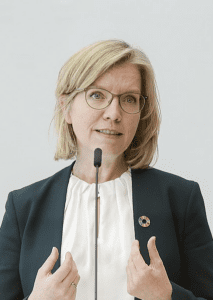
Years of twists and turns led to a nail-biting outcome until the very end. Delayed by persistent resistance and lacking a majority vote, it risked being jeopardized after lengthy negotiations. One woman in particular saved the day, as it all came down to a single vote. Leonore Gewessler, Austria’s environment minister, selflessly went against her conservative coalition partners by pledging to back the policy as a last-minute act to achieve a majority vote. Member states followed through with their commitments, and with a majority of 20 countries representing 66.07% of the population, the law was officially endorsed.

I know I will face opposition in Austria, but I am convinced that this is the time to adopt this law.
Leonore Gewessler, Austrian Minister for Climate Action, Environment, Energy, Mobility, Innovation and Technology

So what’s next?

Now that the law is in place, we need all hands on deck. The next step for member states is to allocate the necessary budgets and resources to implement the law’s legally binding restoration targets for the long-term recovery of nature. Additionally, they will outline comprehensive Nature Restoration Plans to meet these obligations, taking their national contexts into account. These plans will be subject to monitoring and reporting before being reviewed by the European Commission.

What does it mean for nature?

Today, over 80% of European habitats are in poor shape—a staggering number that should make us question why past efforts to reverse this worrying trend have been unsuccessful. With this new law, Europe is now poised to lead the way in tackling the climate and biodiversity crises by rehabilitating at least 20% of its land and sea areas by 2030 and all degraded ecosystems by 2050. The EU Nature Restoration Law also includes obligations to:

  • Improve urban green spaces
  • Increase pollinator numbers
  • Enable free-flowing rivers by removing artificial barriers
  • Plant 3 billion additional trees throughout the EU

It is clear that this law is not only about preserving nature but also about ensuring a sustainable future where people and nature thrive together. We cannot fight the climate crisis without addressing the health of our natural environments. Preserving and restoring our unique ecosystems and species is crucial to overcoming the greatest challenges of our time. The question that therefore arises is: what can we do to make a difference?

Do you know about Habitats?

As an impact-driven organization, we’re always looking for ways to maximize our direct and indirect impact. After thorough research on CO2 neutrality, we decided to invest our financial and human resources in what truly matters: our biodiversity. Partnering with other organizations, we launched Habitats, a non-profit network on a mission to start, fund, and scale biodiversity conservation and restoration projects, the number one strategy to mitigate climate change.

The scale and urgency of current global challenges call for effective systemic change. We specialize in identifying and addressing key biodiversity challenges by partnering with a dynamic ecosystem of local organizations and communities. Whether you want to donate as an individual or contribute as a business, we can create or find a tailor-made project based on your needs, geographical scope, and strategy. Reach out if you want to hear more about it!

Ready to stand up for nature?

It is time to reduce your negative impact, and most importantly make a positive change. We are here to help you on that journey.

Why most sustainability strategies fail

Sustainability is now a business imperative — driven by rising regulations, shifting consumer expectations, supply chain pressures, and the undeniable reality of the planetary crisis. A solid sustainability strategy helps you stay compliant, competitive, and credible. It aligns your vision with long-term value, reduces risks, and unlocks opportunities for innovation and resilience.

But here’s the problem: most sustainability strategies still fail. Not because people don’t care — but because the process is broken.

Why Do They Fail?

Let’s name the elephant in the room: most strategies fail because they’re…

  • Too high-level. Broad ambitions with no link to operations.
  • Too siloed. Sustainability lives in one department while the rest of the org carries on as usual.
  • Too reactive. Built for compliance, not opportunity or competitive advantage.
  • Too static. The world changes — your strategy should too.
  • Too focused on symptoms, not root causes. Measuring emissions is useful — but if you don’t rethink what’s driving them, you’re just managing the problem, not solving it.

And often, they fail because they weren’t built with the people who are supposed to implement them.

What Does A Good One Look Like?

At Quest, we help organizations design sustainability strategies that are bold, actionable, and embedded. Here’s what that looks like:

1. Start with Systems Thinking: Don’t jump to solutions, but instead zoom out — mapping the full system around your business. Explore dependencies, impacts, leverage points, and feedback loops. Our Impact Scan is our indispensable tool to ensure that all factors are kept in mind.

2. Engage People Early: Real change happens when the whole organization is involved. Work with your teams — not just top leadership — to understand what’s possible, what’s blocking progress, and where the energy lies.

3. Ground It in Materiality: It is essential to use double materiality to find out what really matters. Not just to regulators or investors, but to the health of your business, your communities, and the planet. This is where risks meet opportunities.

4. Design for Action, Not Just Aspiration: You can’t stop at the vision. It is about co-creating roadmaps with clear roles, milestones, and resources — built to be embedded across teams, not shelved in a PDF.

5. Keep It Alive: A good strategy isn’t static — it listens, learns, and grows. It is crucial to build in feedback loops and capacity-building moments to keep momentum going, ensuring you to constantly evolve and adapt.

6. Build Accountability from the Top Down: Did you know that, according to Planet Tracker, over a quarter of companies have no link between executive pay and sustainability performance? Sustainability must be owned — by everyone. That’s why we always work with leadership to align ESG goals with governance, decision-making, and even incentives. Visible commitment from the top creates clarity and credibility across the whole organization.

A Better Way Forward

You don’t need another “strategy document.” You need a process that helps your organization shift its mindset, engage its people, and take smart, systemic action.

That’s what we do at Quest.

We guide teams through materiality, co-creation, and systems thinking to build strategies that don’t just tick boxes — they create real impact.

 Curious how this could work for your organization?

We are here to help you on that journey.

COP29: Top or Flop?

The 29th United Nations Climate Change Conference (COP29), held in Baku, Azerbaijan, has left the world divided over its outcomes. While some hailed the agreements reached as a step forward in the global fight against climate change, others criticized the conference for its lack of ambition, controversies, and missed opportunities. Let’s delve into the key outcomes, highlights, and challenges that defined COP29, exploring whether it was indeed a “Top” or a “Flop.”

Key Outcomes

1. Climate Finance

One of the most significant agreements at COP29 was a commitment from developed nations to mobilize $300 billion annually by 2035 to support developing countries in addressing climate change. This funding aims to help vulnerable nations adapt to climate impacts, transition to renewable energy, and build resilience against climate-related disasters. Even though it may be seen as a step forward, it is simply not enough. The $300 billion pledge falls short of the $1.3 trillion demanded by developing countries. Many nations from the Global South expressed disappointment, arguing that the agreed amount barely scratches the surface of their financial needs. 

The walkout staged by developing countries during negotiations underscored the frustration over what they perceive as a persistent lack of equity in climate finance and insufficient financial commitments from wealthy nations. This dramatic moment highlighted the deep divisions between the Global North and South, a recurring theme in COP negotiations.

2. Global Carbon Market Standards

A long-awaited breakthrough under Article 6 of the Paris Agreement was achieved, as delegates agreed on global standards for carbon markets. These standards aim to ensure that emissions reductions are real, transparent, and verifiable, paving the way for a UN-backed global carbon trading system.

This development is significant as it provides clarity for businesses and countries looking to trade carbon credits, potentially unlocking billions of dollars in climate financing. Yet, critics worry about potential loopholes that could allow “greenwashing” by corporations and nations.

3. Loss and Damage Funding Mechanism

Building on the establishment of the Loss and Damage Fund at COP28, this year’s conference operationalized the fund, outlining how it would be governed and financed. While this is a critical step for countries already grappling with severe climate impacts, questions remain about the sufficiency and accessibility of these funds.

Planet Earth is in critical condition. We have already crossed six planetary boundaries. There is still a window of opportunity for a safe landing for humanity, but this requires a global climate policy process that can deliver change at exponential speed and scale. We need a shift from negotiation to implementation.
Johan Rockström, Director of the Potsdam Institute for Climate Action Research

Key controversies

1. Host Nation Controversies

Azerbaijan’s selection as host country sparked debate even before COP29 began. As a nation heavily reliant on fossil fuel exports, Azerbaijan faced accusations of using the conference to “greenwash” its image. Critics argued that hosting COP29 in a country with significant environmental and human rights issues undermined the credibility of the conference.

2. Saudi Arabia’s Alleged Text Modifications

Reports surfaced that Saudi Arabia, a key player in global oil markets, attempted to modify official negotiating texts to weaken language around fossil fuel phaseouts. This revelation drew sharp criticism from environmental advocates, who accused Saudi Arabia of undermining the global effort to curb carbon emissions.

3. Calls for COP Reform

The Club of Rome and other organizations called for a reformation of the COP process, suggesting a shift from negotiation to implementation. They argued that the current format, which often centers around high-stakes political bargaining, is ill-suited for the urgent action required to address the climate crisis. These calls gained traction amid growing public discontent over the perceived ineffectiveness of COP meetings.

Looking Ahead: Lessons from COP29

COP29 highlighted both the potential and the limitations of international climate negotiations. On the one hand, the agreements on climate finance and carbon market standards demonstrate that progress is possible. On the other hand, the controversies and unmet expectations underscore the need for a more inclusive, equitable, and ambitious approach.

Was COP29 a “Top” or a “Flop”? The answer depends on your perspective. For some, the conference represented incremental progress in a complex and contentious global process. For others, it was yet another example of missed opportunities and insufficient ambition.

One thing is clear: the urgency of the climate crisis demands bold action, not just promises. As the world prepares for COP30, the lessons of Baku must guide us toward a more effective and equitable approach to tackling the greatest challenge of our time.

Ready to stand up for nature?

It is time to reduce your negative impact, and most importantly make a positive change. We are here to help you on that journey.

Food waste: The untapped sustainability priority to act on

Food waste is one of the most overlooked sustainability actions with the biggest untapped potential. It truly is one of the fastest levers for change. Every year, more than a third of all food produced is never eaten, costing businesses money, wasting precious resources like water and land, and driving nearly 10% of global greenhouse gas emissions. Beyond the environmental toll, food waste hurts the bottom line, exposes businesses to growing regulatory and reputational risks, and overlooks an enormous opportunity for innovation and positive impact.

Addressing food waste isn’t just about saving meals from the bin, but also about protecting profits, preserving resources, supporting communities, and building future-proof operations.

1. The Planetary Impact: Emissions, Methane & Resource Loss

Food waste generates 8–10% of global greenhouse gas emissions, much of it from methane, a gas 80+ times more potent than CO₂ in the short term. Each wasted meal wastes the water, land, energy, fertilizers, and biodiversity impact used to produce it. Did you know that Project Drawdown estimates that halving food waste could avoid 88–102 gigatons of CO₂-equivalent emissions by 2050 ranking it the most powerful sustainability action there is?

2. The Business Benefits: ROI, Cost Savings & Resilience

Businesses typically see a 14:1 return on investment from food waste reduction programs through improved purchasing, smarter portioning, and better inventory control. Cutting waste reduces dependence on volatile supply chains, mitigates inflation risks, and avoids unnecessary procurement and disposal costs. We’ve seen real-world programs in large kitchens and hotels achieve 30-50% reductions in months, delivering both financial and sustainability benefits fast. A quick win no one can ignore.

3. Compliance & Reputation: Meeting Regulations, Avoiding Risk

Many governments have pledged to halve food waste by 2030 (SDG 12.3), with new policies and mandatory reporting requirements already underway in the EU, UK, and US. Food waste is a Scope 3 emissions hotspot as it drives significant indirect emissions throughout a company’s value chain, making it a critical factor in meeting science-based climate targets and satisfying investor demands. Companies that can show measured, transparent progress on food waste position themselves as credible leaders in sustainability reporting and governance.

Reducing food waste is one of the most important things we can do to reverse global warming
Chad Frischmann, Vice President and Research Director, Project Drawdown

4. Social Impact: Fighting Hunger & Building Community Trust

Over 780 million people face hunger, while trillions of calories are discarded yearly. That means that 1 in 5 people currently faces food insecurity. Surplus food from restaurants, hotels, and events can be donated to charities and food banks, turning waste into social value. Businesses that align with local food rescue networks not only reduce waste but build stronger community relationships and a socially responsible brand identity that consumers trust and align with.

5. Innovation Advantage: Future-Proofing Your Organization

Tackling food waste drives menu innovation, technology adoption (AI forecasting, smart scales), and new circular business models that turn surplus into value. Collaborating with startups, suppliers, and nonprofits helps businesses pioneer new practices, setting industry standards others will follow.Innovation in waste reduction can differentiate brands, win environmentally conscious customers, and enhance long-term competitiveness.

The Bottom Line

Tackling food waste is no longer optional—it’s a strategic imperative that delivers value across the board. From cutting emissions and saving precious resources, to boosting profitability, meeting regulatory demands, feeding communities, and driving innovation, food waste reduction is one of the most powerful and immediate sustainability actions available to businesses today.

At Quest, we help organizations measure, manage, and reduce food waste effectively, unlocking environmental, financial, and social benefits while strengthening resilience and compliance. A great way to start in learning more about it is by engaging and inspiring your teams. If you’re ready to turn food waste from a hidden cost into a competitive advantage, we can help you take the first step toward measurable, lasting impact.

Is your organization ready?

It is time to reduce your negative impact, and most importantly make a positive change. We are here to help you in fighting food waste.

Why supply chain due diligence matters

Supply chains are the backbone of every business but also one of its biggest blind spots. Environmental damage, human rights violations, and unethical labor practices often happen deep within supplier networks, hidden from view yet directly tied to a company’s name and reputation.

With new regulations like the EU Corporate Sustainability Due Diligence Directive (CSDDD) on the horizon, businesses can no longer rely on supplier codes of conduct or one-off audits. Stakeholders—from regulators to investors to customers—expect real action, not just reporting. Supply chain due diligence is no longer a box-ticking exercise; it’s a strategic imperative that protects against risk, strengthens resilience, and builds trust. Here’s why it matters now more than ever.

1. Risk Exposure: Hidden Liabilities in Your Value Chain

Supply chains carry significant ESG risks that are often invisible until they make headlines:

  • Human rights abuses: Child labor, unsafe working conditions, forced labor in lower-tier suppliers.
  • Environmental harm: Deforestation, illegal mining, toxic waste disposal, water pollution tied to raw materials.
  • Operational risks: Supply shocks, price volatility, and conflict over scarce resources.

Failing to act doesn’t just put people and the planet at risk, but it also destroys brand value overnight and leads to severe financial and legal consequences.

2. Growing Regulatory Pressure: Compliance Is No Longer Optional

New and emerging regulations are making supply chain due diligence mandatory, not optional. Key developments include:

  • EU Corporate Sustainability Due Diligence Directive (CSDDD): Requires companies to map their entire value chains, identify human rights and environmental risks, and take action to prevent or mitigate harm.
  • Corporate Sustainability Reporting Directive (CSRD): Demands detailed disclosures on supply chain environmental and social impacts, increasing transparency and accountability.
  • Consequences of inaction: Companies that fail to prepare risk legal liability, financial penalties, reputational damage, and loss of investor confidence.

3. Transparency Isn’t Enough: Transformation Is the Goal

Many businesses stop at supplier questionnaires or annual audits, believing this counts as due diligence. But real change comes from going beyond transparency:

  • Mapping: Understanding your full supplier network, including indirect (Tier 2, Tier 3) suppliers.
  • Prioritizing risks: Focusing on the highest-impact environmental and social risks first.
  • Engaging suppliers: Building capacity, providing training, and collaborating on solutions—not just policing compliance.
  • Tracking impact: Using technology to monitor performance continuously, not just annually.

This shift from “checklist compliance” to “active transformation” builds stronger, more resilient supply chains and long-term value.

Turning Obligation Into Opportunity

Supply chain due diligence is rapidly becoming a legal requirement, a risk management necessity, and a driver of competitive advantage. Businesses that act now will not only stay ahead of regulation but also build resilient, responsible supply chains that attract customers, investors, and partners.

Due diligence takes time. It involves mapping suppliers, identifying risks, and building corrective action plans. Companies that start today will be ready when regulations come into force—and won’t be scrambling to catch up. The key is to embed due diligence into core business strategy, not treat it as a standalone compliance task. It’s about building partnerships, strengthening processes, and reducing harm across every link in the chain.

At Quest, we help organizations map their value chains, assess risks, and design practical due diligence strategies that go beyond transparency to deliver real change. Together, we can transform supply chains from a source of risk into a force for good.

Is your organization ready?

It is time to reduce your negative impact, and most importantly make a positive change. We are here to help you!

Demystifying the B Corp Certification

B Corps are a global community of certified businesses that meet high standards of social and environmental impact. As the certification becomes more popular globally, many companies are looking into becoming B Corps. But certifying requires radical transformation and is not for marketing, so you need to ask yourself, is it a match for your business?  Let us tackle the most frequently asked questions surrounding B Corp certification.

1. How is B Corp certification different?

Sustainability certifications, frameworks, guides, etc. have been trending in the last decade, and more will be in the future. It seems that all companies are looking for the next “best” certification to stick onto their branding and websites. While this proliferation of terms and labels certainly justifies the fear of increasing greenwashing, it is also a great example of the changing times. 

B Corp certification differs from others because it is an all-encompassing assessment that evaluates how every business decision impacts people, planet, and profit. Compared to other evaluations, the B Impact Assessment is not a reporting system but a comprehensive approach that builds on standards such as GRI and IRIS, amongst others. Want to compare different sustainability assessments? Check out the new Impact management project.

2. What does a holistic approach mean?

When you hear B Corp Certification, you tend to get responses like: 

  • It is a Holistic Approach
  • It is a Movement

While other certifications assess your business and simply give a stamp of approval, B Corp certification goes beyond mere commitments to sustainability, impact, net-zero and leads to a collaborative movement of action and systems change.

Becoming a B Corp means joining an all-encompassing community of companies committed to the same vision and goals that support your impact goals, advance your performance, and guide you through crucial business decisions.

As a certified B Corp, Quest Studio team has the privilege of knowing the community from the inside and has experienced the credibility and the power this collective movement is making across the globe. We strongly believe that this is only the beginning of the endless ripples of change to come. That is why Quest Studio is part of B Corp Way, a platform that enables businesses to find B Corp consultancies to help them address impact challenges. As B Lab’s selected partner in Belgium, we offer mentorship focused on scaling impact.

Quest Impact Design Studio

Unsure if B Corp is right for your business?

3. Is it possible to be profitable and sustainable?

One of the biggest misconceptions about B Corps is that sustainability hinders business growth. On the contrary, one of the main purposes of this movement is to help build a sustainable economy, which includes economic stability for businesses, people, communities, and the global economy. 
Therefore, all the benefits of B Corp certification, such as engaged employees, committed consumers, strategic partnerships, and marketing reinforcement help scale businesses. B Lab itself highlights how you can market the certification to help you increase your profit margins. Ultimately, certified companies need to make a profit if they are to continue to drive the movement forward and reinvest their profits to uphold their commitment to the planet and people.

4. Is my company size fit to be a B Corp?

The answer is: B Corp Certification is for every for-profit business of any size. The only two current requirements are the following:

  • You are a for-profit business
  • You have been operating for a year 

In addition, B Lab also clearly states that companies involved in coal mining and oil sands extraction, anti-climate lobbying, or that have compensation and performance incentives linked to fossil fuels, are ineligible for certifying. 

Large Enterprises


For larger corporations, the process of becoming a B Corp can be more complex, but it can be a great way to monitor the impact each business unit is causing. Take the case of Intrepid Travel: it had its 20 subsidiaries complete the assessment to certify the entire organization. Now, when a subsidiary makes changes that impact its individual BIA score, the parent company can directly see the impact it has on the company-wide score, making the process easier to manage.

Small to medium businesses


For smaller organizations, B Corp Certification can primarily be a  framework to formalize standards and guidelines. At Quest Studio, we used it as a frame of reference to build a strong foundation for our future. We were only four people when we certified, and now as we continue to grow, our building blocks support us and guide us to make better and smarter decisions for our team and community. 

For small businesses and startups, there is also the Pending B Corp status, which is designed to give these types of companies time to prepare for the rigorous process of full B Corp Certification. Becoming a Pending B Corp is not the same as becoming a Certified B Corp. After a definite period of time determined by the regional B Lab or Sistema B organization, they must go through the full verification process.

B Corp certification score icon

Want to become a B Corp?


Our team can guide you through the B Impact Assessment, engage your team, and help you become B Corp certified.

5. Is it hard to certify as a B Corp?

The certification process is definitely not easy, nor should it be. The numbers show that only one out of every three companies gets certified. Ultimately, the process is intended to be a pulse check of how your business decisions impact society and an in-depth review of your action plan.

We advised all companies seeking to certify to use and trust the framework. Not getting to 80? The B Corp Assessment provides you with the recommendations you need to reach that goal. The steps are paved out for you to take – it’s just about taking them. We know this is all easier said than done and if we have learned anything from the Paris Agreement or even COP27, it’s that good intention is worthless without tangible action…. But isn’t it time we acted?

6. Why should you take part in the B Corp movement?

No business, sustainable or otherwise, is perfect, nor is any sustainability certification. 

Becoming B Corp certified means that you are committing to continuously pushing the boundaries to help shift the paradigm to a more inclusive and sustainable economy. It is a marathon, not a sprint: becoming a certified B Corp is just the beginning of the journey, not the end goal. That is why B Corps have to go through a recertification process every three years to verify if the company is acting on its goals and commitments and is improving its impact. 

One of the movement’s foundational principles is continuous improvement. That is why, just like its certified companies, and third-party assessor, the B Impact Assessment also updates every three years to adapt to the global feedback, other standards organizations, and regulations from government bodies globally. 

In September 2022, B Lab introduced the latest standards for B Corp Certification, which will be moving away from the 80-point score to one where all B Corps must meet requirements on ten specific topics that define leadership on social, governance, and environmental business impact.

Ultimately, the Movement and certification are part of a learning journey that is constantly adapting to push systems to be more inclusive and sustainable for all. We’re glad to be on this transparent journey and hope to guide you through it too.

Are you ready to start your B Corp journey? 


Or do you have more questions about B Corp certification?