Nature-related risk reporting & disclosure (LEAP & RODI)

Understanding your relationship with nature is the foundation of any credible nature strategy. Our experts guide you through the TNFD’s LEAP approach and the RODI (Risks, Opportunities, Dependencies, Impacts) framework to identify, assess, and disclose your nature-related risks and dependencies with the rigour that investors, regulators, and stakeholders expect.

Why is it a strategic opportunity?

Most organisations know that nature loss is accelerating. Far fewer have taken the step of understanding what that means specifically for their business. In other words, where their operations depend on healthy ecosystems, and where they are contributing to their decline. That blind spot is becoming increasingly costly. We are therefore specialising in nature risk management for companies and ensuring that corporate nature disclosure is not a compliance exercise, but a driver of strategic decision-making.

  • Get ahead of nature disclosure requirements
    TNFD has rapidly moved from voluntary guidance to investor expectation. Regulators in multiple jurisdictions are already signalling that nature-related disclosure will follow the trajectory of climate from voluntary to mandatory. Organisations that build their assessment and disclosure foundations now will be ready when that shift happens, rather than reactive.

  • Make better decisions with better information
    A rigorous nature risk assessment does more than satisfy disclosure requirements. It surfaces dependencies and risks that most organisations have never mapped, giving leadership teams the information they need to make more resilient strategic and operational decisions.

  • Meet growing investor and lender expectations
    Financial institutions are integrating nature risk into their portfolio assessments, credit decisions, and engagement strategies. Organisations that can demonstrate a structured, evidence-based understanding of their nature exposure are increasingly better positioned in conversations with investors, banks, and insurers.

  • Build the foundation for everything that follows
    Nature risk assessment is not a standalone exercise — it is the starting point for target-setting, strategy development, and credible communication. Getting it right, using established frameworks like LEAP and RODI, means everything built on top of it is grounded in evidence rather than assumption.

How we can help

We guide organisations through the full nature risk assessment and disclosure process from scoping and materiality to stakeholder-ready reporting. Our approach combines deep expertise in TNFD, LEAP, and RODI with the practical knowledge of how businesses actually operate, so the outputs are rigorous, relevant, and usable.

  • Scoping your assessment
    We help you define the boundaries of your assessment (which business units, geographies, and value chain segments to prioritise) to ensure your effort is focused where nature risk is most material to your business.

  • Applying the LEAP approach
    We guide you through all four stages of LEAP — Locate your interface with nature, Evaluate your dependencies and impacts, Assess your material risks and opportunities, and Prepare to respond and disclose — producing outputs that are aligned with TNFD expectations and defensible to external scrutiny.

  • We look into Risks, Opportunities, Dependencies, and Impacts
    We apply the RODI framework to assess your organisation’s readiness to disclose on nature-related risks and opportunities, identify gaps in your current governance and reporting, and build a clear pathway toward disclosure-ready practice.

  • Identifying material nature-related risks and opportunities
    Beyond the frameworks, we help you interpret what the assessment findings actually mean for your business by identifying what is both important to you and impactful for nature (impact materiality and financial materiality).

  • Supporting your disclosure process
    We work alongside your team to structure your findings, identify what to report and how, align your narrative with TNFD and CSRD expectations, and ensure what you communicate is accurate and defensible.

  • Building internal capability
    Nature risk assessment is an evolving discipline. We design and deliver tailored sessions that build genuine understanding of TNFD, LEAP, and RODI across your sustainability, finance, and risk teams, so that nature risk becomes embedded in how your organisation thinks, not just something managed externally.

Key outcomes

A clear picture of your nature-related risks and dependencies

A rigorous, LEAP-based assessment of where your business interfaces with nature and translated into decision-relevant insights that leadership and boards can act on.

Disclosure-ready, framework-aligned reporting

TNFD and RODI-aligned disclosures that meet the expectations of investors, regulators, and stakeholders built on evidence, structured for credibility, and ready to withstand scrutiny.

The foundation for a credible nature strategy

A robust risk and dependency assessment that gives you everything you need to move confidently into target-setting, strategy development, and long-term nature-positive action.

Client results

IMS

Helping 9 organizations (Caceis, Novotel, European Investment Bank, ...) on their nature journey

Inspiring and engaging 9 organisations around a common framework for Nature

What about training?

Our capacity building sessions are typically delivered by subject matter experts and trainers from the Quest team. With expertise across a range of disciplines, our team can deliver tailored training to match your organisation’s sustainability maturity level and operational requirements.

What exactly are you looking for? Please reach out to us with more information and we would be happy to inspire and empower your team, on-site or remote.

Quest keynote on biodiversity

Relevant Content

Nature-positive: The next frontier of sustainability

Contact us

Ready to measure, communicate & maximize your impact? We can’t wait to drive positive change forward together. Fill out the form or

    Sustainable Supply Chains

    Your supply chain is where your sustainability ambitions meet reality. We help businesses build supply chains that are transparent, resilient, and future-ready –from understanding your own footprint to engaging every link in the chain.

    Supply chains - picture of containers

    Why you should focus on it

    For most businesses, the supply chain is where the vast majority of their environmental and social impact occurs. It is also where the greatest risks lie and where the greatest opportunities for improvement are hiding. But a sustainable supply chain is not just about risk management. The companies that are building truly sustainable supply chains are also building more efficient, more resilient, and more competitive businesses — ones that are better prepared for the disruptions and demands of the decade ahead.

    Getting it right is no longer optional. Investors are scrutinising and customers as well as  partners increasingly expect transparency as a baseline condition of doing business. Most important of all: The regulatory landscape is shifting fast.

    • CSRD requires large companies to disclose the social and environmental impacts of their full value chain.
    • CSDDD goes further, placing a legal duty of care on companies to identify and address human rights and environmental risks throughout their supply chain.
    • Extended Producer Responsibility schemes are expanding across sectors, and procurement requirements from major buyers are increasingly including sustainability as a selection criterion.

    Our Services

    Supply Chain Readiness for Suppliers

    Our sustainability experts are at your disposal, ready to help your business understand, prepare for, and respond to the sustainability demands coming from your customers and partners.

    Supply Chain Due Diligence

    It is time for you to take the lead and improve your own operations and supply chain to become more sustainable

    Circular Business Models and Value Chains

    Waste is not just an environmental issue — it is a missed opportunity. Our circularity experts are at your disposal, ready to help your business transition from linear thinking to circular systems that keep materials in use, unlock new value, and build long-term resilience.

    Our sector-specific expertise

    Supply chain sustainability is never one-size-fits-all. Quest brings deep, hands-on experience in two of the most complex and scrutinised sectors: fashion and food.

    • Fashion & Textiles: Quest works with brands, retailers, manufacturers, and suppliers to build more transparent, circular, and resilient value chains  from mapping material flows to redesigning products for end-of-life recovery. Our work is grounded in real projects within projects such as RegioGreenTex and organisations including Fashion For Good, Cascale, and the Organic Cotton Accelerator.
    • Food & Agriculture: Quest’s food practice is led by Philippe Schuler, who brings over eight years of experience including as Global Impact Manager at Too Good To Go. We help food businesses identify where loss is happening, develop reduction strategies, and find ways to valorise surplus rather than write it off.

    Food Loss and Waste Management

    Our food waste experts are at your disposal, ready to help hospitality businesses measure and reduce food loss and waste

    Circular Fashion & Textile Recovery

    Our fashion circularity experts are at your disposal, ready to guide you on your journey to understand, measure, and reduce textile waste. Quest helps you unlock the value hidden in your materials and develop circular fashion solutions.

    Our Approach

    • Start with visibility: You can’t manage what you can’t see. We map your suppliers first — who they are, where they operate, and what they produce.
    • Assess your risks and impacts: We now assess them against environmental and social risk factors such as geography, commodity type, labour conditions. This tells you where to focus your effort.
    • Engage your suppliers: We work collaboratively rather than just pushing requirements down the chain. Through interviews and capacity-building we dive into the needs and requirements.
    • Measure your Scope 3 emissions Your supply chain is almost certainly where most of your carbon footprint sits.  We have the in-house knowledge to help you with this.
    • Address the hotspots: We don’t try to fix everything at once but instead identify the highest-impact areas and build your action plan from there.
    • Build circularity in with our Value Circle: We look for opportunities to reduce waste, recover materials, and extend product lifespans. 

    Whether you are a large company looking to meet your due diligence obligations or a supplier looking to respond to the demands coming from your customers, the right approach will depend on your sector, your size, your position in the value chain, and where you are on your sustainability journey.

    The Value Circle

    The value circle goes beyond the traditional supply chain. Where a supply chain moves in one linear direction from raw material to finished product, a value circle closes the loop, ensuring that materials are recovered, reused, and reintroduced at the end of a product’s first life.

    To demonstrate what this looks like in practice, Quest developed a replicable blueprint for a circular garment as part of the European RegioGreenTex initiative. By aligning stakeholders across every stage from design and production to communication and recovery, we turned a fragmented process into a cohesive, open framework that any fashion business can use to accelerate their own transition. The result is not just one garment. It is proof that circular fashion is achievable, scalable, and worth pursuing.

    Case Studies and Results

    RegioGreenTex

    Designing and building a matchmaking tool for textile surplus

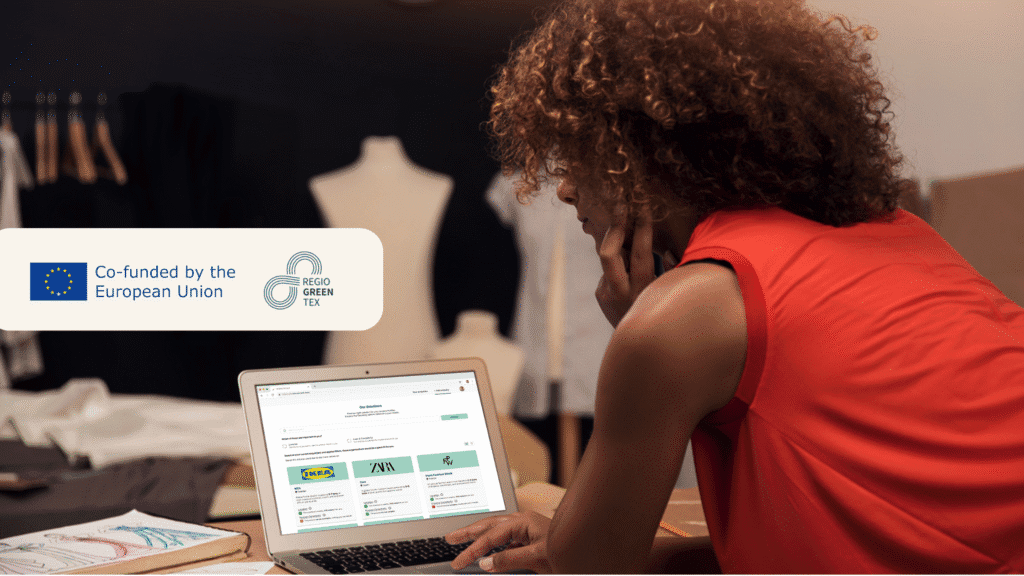
    As part of the European RegioGreenTex initiative, Quest took part in The Waste Wizard project.

    Vlaamse Overheid

    Setting up a Green Deal on Sustainable Supply Chains in Flanders

    Mapping, engaging, and aligning stakeholders around a common framework.

    RegioGreenTex

    Developing the blueprint for a Circular Garment and Value Circle

    As part of the European RegioGreenTex initiative, Quest led The Circular Garment project.

    Trusted by

    RegioGreenTex
    Vlaamse Overheid
    Studio AMA
    Cool Chain Association

    Relevant content

    Tackling Scope 3: Your supply chain climate priority

    FAQ

    Contact us

    Let’s turn your compliance burden into a roadmap for systemic leadership.

      Supply chain readiness for suppliers

      Our sustainability experts are at your disposal, ready to help your business understand, prepare for, and respond to the sustainability demands coming from your customers and partners.

      Why is it a strategic opportunity?

      Sustainability demands from larger companies are no longer a nice-to-have: they are becoming a condition of doing business. Legislation like CSRD and CSDDD is pushing large corporations to scrutinise their entire supply chain, which means their suppliers, regardless of size, are increasingly expected to demonstrate sustainability performance.

      But this pressure can be more than just a burden to manage. It is an opportunity to get ahead.

      • Protect and grow your customer relationships
        Being able to respond confidently to sustainability questionnaires and due diligence requests makes you a more reliable, future-proof partner. More than ever you have to be ready Be ready for demands of scope 3 decarbonisation. Companies that can’t respond risk losing contracts to suppliers who can.

      • Build a stronger business from the inside out
        Understanding your own environmental and social footprint isn’t just about satisfying customers — it often reveals inefficiencies, cost savings, and risks you weren’t aware of. Sustainability readiness and business resilience go hand in hand.

      • Get ahead of the curve
        The demands coming to you today from one customer will likely be coming from all of them tomorrow. Building your sustainability foundations now means you won’t be scrambling to catch up when the pressure intensifies.

      • Communicate your efforts with confidence
        Many SMEs are already doing good things — they just don’t know how to articulate or evidence them. We help you tell your sustainability story in a way that resonates with buyers, partners, and stakeholders.

      How we can help

      We work with SMEs and mid-sized suppliers across sectors to build practical, proportionate sustainability readiness without jargon, without unnecessary complexity, and without pretending to be auditors or compliance checkers.

      • Understanding what is being asked of you
        We help you decode the sustainability questionnaires, frameworks, and due diligence requests you are receiving, translating what buyers actually need from you into clear, actionable priorities.

      • Assessing your current sustainability baseline
        We take stock of where you stand today — what data you have, what practices are already in place, and where the most significant gaps are relative to what your customers are asking for.

      • Building your sustainability foundations
        We help you put the right building blocks in place from understanding your carbon footprint and key environmental impacts to mapping social risks in your own operations in a way that is manageable for a smaller organisation.

      • Developing your sustainability story and data
        We help you structure and communicate your sustainability performance clearly, so you can respond to questionnaires and due diligence requests with confidence, and make a positive impression rather than just avoiding a negative one.

      • Creating a roadmap for continuous improvement
        Sustainability readiness isn’t a one-time exercise. We help you build a practical improvement roadmap so that as demands evolve, you are always moving forward, not starting from scratch.

      • Building internal awareness and capability
        We run accessible workshops and training sessions to help your team understand why sustainability matters and what their role is in it, so that readiness becomes part of how your business operates, not just a reporting task.

      Key outcomes

      Stronger supplier engagement

      Respond to due diligence requests with confidence and position your business as a trusted, future-ready supply chain partner.

      A clearer picture of your own business

      Understand your environmental and social footprint in a way that is genuinely useful, not just for external reporting, but for making better decisions internally such nature positive procurement.

      Practical foundations for the future

      Build the data, processes, and awareness you need to keep pace with evolving sustainability expectations without being overwhelmed by them.

      Client results

      Vlaamse Overheid

      Setting up a Green Deal on Sustainable Supply Chains in Flanders

      Mapping, engaging, and aligning stakeholders around a common framework.

      RegioGreenTex

      Developing the blueprint for a Circular Garment and Value Circle

      As part of the European RegioGreenTex initiative, Quest led The Circular Garment project.

      What about training?

      Our capacity building sessions are typically delivered by subject matter experts and trainers from the Quest team. With expertise across a range of disciplines, our team can deliver tailored training to match your organisation’s sustainability maturity level and operational requirements.

      What exactly are you looking for? Please reach out to us with more information and we would be happy to inspire and empower your team, on-site or remote.

      food waste experts at your disposal

      Contact us

      Ready to measure, communicate & maximize your impact? We can’t wait to drive positive change forward together. Fill out the form or

        Digital Product Passports & Traceability

        Your customers, buyers, and regulators are asking a simple question: where did this come from, and what is it made of? Digital Product Passports make that question answerable, turning supply chain complexity into transparent, verifiable, and commercially valuable information. Unlike most consultancies, Quest designs the full journey: from data strategy and supplier engagement to the UX, interface, and storytelling that makes your DPP something people actually want to engage with.

        Why is it a strategic opportunity?

        Traceability has historically been treated as a back-office problem: something to manage quietly and hope nobody looks too closely at. Today, the regulatory and commercial pressure to demonstrate exactly what your products are made of, where they come from, and what happens to them at end of life is arriving faster than most businesses have prepared for.The organisations that build traceability infrastructure now will have a significant advantage over those that are forced to build it under pressure.

        • Get ahead of ESPR and the Green Claims Directive
          The EU’s Ecodesign for Sustainable Products Regulation is introducing mandatory Digital Product Passports across a growing list of product categories (starting with batteries and textiles and expanding rapidly). The Green Claims Directive is simultaneously raising the bar on what sustainability claims require to be substantiated.

        • Turn compliance into a brand asset
          Transparency is not just a regulatory requirement but also increasingly a commercial differentiator. Brands that can demonstrate the provenance, composition, and end-of-life potential of their products with genuine evidence are building a form of trust with consumers and B2B customers that generic sustainability claims cannot replicate.

        • Strengthen your CSRD reporting
          CSRD requires companies to disclose the environmental and social impacts of their full value chain. A well-designed DPP infrastructure gives you the product-level data foundation that makes that disclosure credible, consistent, and far less painful to produce each year.

        How we can help

        We guide businesses through the full Digital Product Passport journey from understanding what is required and designing the right approach to supporting implementation. We bridge the gap between sustainability strategy and technical execution, ensuring your DPP delivers value beyond compliance.

        • DPP strategy & roadmap
          We help you understand exactly what a Digital Product Passport means for your business, which regulations apply, which product categories to prioritise, what data you need to collect, and how to sequence your approach in a way that is manageable and builds lasting infrastructure rather than one-off compliance fixes.

        • Data architecture & technical scoping
          A DPP is only as good as the data that feeds it. We help you define what data needs to be captured at each stage of your product’s lifecycle, how it should be structured and stored, and what technical requirements your DPP system needs to meet.

        • UX/UI design & storytelling
          A Digital Product Passport is a communication tool. We design the full user experience of your DPP, from the information architecture and visual interface to the narrative flow that guides a customer, buyer, or regulator through your product’s story. The result is a passport that does not just contain the right information but presents it in a way that builds understanding, trust, and genuine engagement with what makes your product different.

        • Supplier data collection & engagement
          Getting reliable, structured data from suppliers across multiple tiers is consistently the hardest part of building a DPP. We design supplier engagement strategies and data collection processes that make it as straightforward as possible for your suppliers to provide what you need, building the collaborative relationships that traceability requires to actually work in practice.

        Key outcomes

        A DPP that communicates, not just complies

        A user experience designed from the ground up to tell your product's story clearly and compellingly to the customer scanning a QR code, the buyer conducting due diligence, and the regulator checking compliance.

        Compliance that converts into commercial value

        Meet ESPR, Green Claims Directive, and CSRD requirements while simultaneously building a transparency capability that strengthens buyer relationships, supports brand differentiation, and gives your sustainability claims the evidence base they need to hold up.

        A traceability infrastructure built to last

        A DPP strategy and data architecture designed not just for today's regulatory requirements but for the expanding expectations that are already coming.

        Client results

        Vlaamse Overheid

        Setting up a Green Deal on Sustainable Supply Chains in Flanders

        Mapping, engaging, and aligning stakeholders around a common framework.

        RegioGreenTex

        Developing the blueprint for a Circular Garment and Value Circle

        As part of the European RegioGreenTex initiative, Quest led The Circular Garment project.

        What about training?

        Our capacity building sessions are typically delivered by subject matter experts and trainers from the Quest team. With expertise across a range of disciplines, our team can deliver tailored training to match your organisation’s sustainability maturity level and operational requirements.

        What exactly are you looking for? Please reach out to us with more information and we would be happy to inspire and empower your team, on-site or remote.

        food waste experts at your disposal

        Contact us

        Ready to measure, communicate & maximize your impact? We can’t wait to drive positive change forward together. Fill out the form or

          Circular Fashion & Textile Recovery

          Our fashion circularity experts are at your disposal, ready to guide you on your journey to understand, measure, and reduce textile waste. Quest helps you unlock the value hidden in your materials.

          Why is it a strategic opportunity?

          Regulatory pressure is mounting, consumer expectations are shifting, and the business case for circularity has never been clearer. Companies that embrace circular models are already seeing tangible benefits. Are you next?

          • Recover value from what used to be waste
            Unsold stock, offcuts, deadstock fabric, and end-of-life garments all represent embedded costs that can be recovered. Circular business models from take-back schemes to material recovery partnerships turn these losses into assets.

          • Build supply chain resilience
            Dependence on virgin raw materials exposes your business to price volatility, resource scarcity, and reputational risk. Circularity reduces that exposure by closing material loops and diversifying your sourcing model.

          • Get ahead of regulation
            The EU’s Extended Producer Responsibility for textiles, Ecodesign Regulation, and Green Claims Directive are reshaping what is expected of fashion businesses. Companies that build circular foundations now will be far better positioned when compliance becomes mandatory.

          • Tell a more credible sustainability story
            Circularity is one of the most visible and tangible ways to demonstrate genuine sustainability commitment to customers, investors, and regulators alike. No to greenwashing.

          How we can help

          We create tailored circularity strategies for fashion brands, retailers, textile manufacturers, and garment suppliers by combining strategic thinking with practical implementation support.

          • Understanding your circularity baseline
            We help you understand your current position on circularity by looking at where materials come from, where waste is generated, and where the biggest opportunities and risks lie across your value chain.

          • Circular design support
            We work with your product and design teams to identify how products can be redesigned for longevity, repairability, disassembly, and end-of-life recovery without compromising on aesthetics or commercial viability.

          • Take-back and recovery strategy
            We help you identify and develop the right take-back, resale, rental, repair, or material recovery models for your business. We will research for solution providers in your area and connect you with partners that can make them work in practice.

          • Supplier engagement and value chain collaboration
            Circularity cannot happen in isolation. We design engagement strategies that bring your suppliers along on the journey, building shared accountability for material flows and waste reduction across the chain.

          • Circularity reporting and communication
            We support your efforts to report on circularity credibly, whether for CSRD, ESRS E5, voluntary frameworks, or customer-facing communication, helping you make claims that are honest, substantiated, and compelling.

          • Building internal awareness and capability
            We design and run workshops and training sessions that build genuine understanding of circularity across your organisation from design and sourcing teams to leadership so that circular thinking becomes part of how you work, not just a project.

          Key outcomes

          Reduced waste and recovered value

          Minimise textile waste, improve material efficiency, and unlock new revenue streams by turning surplus and end-of-life materials into opportunities rather than costs.

          A more resilient and future-proof business

          Reduce your dependence on virgin materials, get ahead of regulatory requirements, and build the circular foundations that will define competitive advantage in fashion over the next decade.

          Credible circularity communication

          Communicate your circular strategy and progress with confidence backed by data, grounded in science, and aligned with the frameworks your stakeholders care about.

          Client results

          RegioGreenTex

          Developing the blueprint for a Circular Garment and Value Circle

          As part of the European RegioGreenTex initiative, Quest led The Circular Garment project.

          RegioGreenTex

          Designing and building a matchmaking tool for textile surplus

          As part of the European RegioGreenTex initiative, Quest took part in The Waste Wizard project.

          Trusted by

          Fashion For Good
          Allshoes
          Cascale
          RegioGreenTex
          T-Rex
          Studio AMA
          Organic Cotton Accelerator
          Global Fashion Agenda

          What about training?

          Our capacity building sessions are typically delivered by subject matter experts and trainers from the Quest team. With expertise across a range of disciplines, our team can deliver tailored training to match your organisation’s sustainability maturity level and operational requirements.

          What exactly are you looking for? Please reach out to us with more information and we would be happy to inspire and empower your team, on-site or remote.

          food waste experts at your disposal

          Relevant Content

          From waste to value: Why circularity is a business imperative

          Contact us

          Ready to measure, communicate & maximize your impact? We can’t wait to drive positive change forward together. Fill out the form or

            Circular Business Models and Value Chains

            Waste is not just an environmental issue — it is a missed opportunity. Our circularity experts are at your disposal, ready to help your business transition from linear thinking to circular systems that keep materials in use, unlock new value, and build long-term resilience.

            Why is it a strategic opportunity?

            The linear economy — take, make, dispose — is running out of road. Resource scarcity, waste regulation, and growing pressure from investors and customers are making it increasingly costly to operate as if materials have no value beyond their first use. It is time to unlock new revenue streams, stronger supplier relationships, and more resilient operations.

            • Recover value from waste and by-products
              Every discarded material, unsold product, or inefficient process represents embedded cost that never had to leave. Circular models turn those losses into opportunities and create new sources of revenue that did not exist before.

            • Reduce exposure to resource risk
              Dependence on virgin raw materials leaves businesses vulnerable to price volatility, supply disruption, and regulatory change. Designing circularity into your value chain reduces that exposure and makes your operations more predictable and resilient over time.

            • Get ahead of regulation
              The EU’s Waste Framework Directive, Extended Producer Responsibility schemes, Ecodesign Regulation, and CSRD reporting requirements are all tightening the rules around how companies manage materials and waste. Building circular foundations now means you are prepared when compliance becomes unavoidable.

            • Strengthen stakeholder relationships
              Circularity requires collaboration with suppliers, customers, and partners. Companies that build circular ecosystems across their value chain often find that the process itself deepens relationships, surfaces shared efficiencies, and creates the kind of alignment that linear supply chains rarely produce.

            How we can help

            We support businesses in shifting from waste management to resource optimisation, embedding circularity into their operations, products, and value chains. Our approach combines data-driven insight, circular design thinking, and practical implementation support to help you turn waste into value.

            • Waste identification and material flow mapping
              We map and analyse your waste streams and material flows, identify inefficiencies and circular potential, and benchmark your performance against industry best practices, giving you a clear picture of where to act first.

            • Circular business model design
              We help you explore and develop circular business models suited to your sector and context from product-as-a-service and leasing models to remanufacturing, upcycling, and closed-loop systems. We stress-test ideas for commercial viability, not just environmental ambition.

            • Identifying new revenue streams from waste and by-products
              We help you see your waste differently by mapping what can be recovered, repurposed, or sold, and connecting you with the solution providers, partners, and markets that can make those opportunities real.

            • Stakeholder engagement and value chain collaboration
              Circularity cannot happen in isolation. We design engagement strategies that bring your suppliers, customers, and partners into the circular model, building shared accountability for material flows and unlocking collaboration that creates value for everyone in the chain.

            • Regulatory alignment 
              We ensure your circular strategy is aligned with existing and upcoming regulations, and support your reporting requirements under CSRD (ESRS E5), EPR schemes, and other relevant frameworks, helping you communicate progress in a way that is credible, consistent, and audit-ready.

            • Capacity building and internal awareness
              If you are making a significant shift in how your business operates, your team needs to understand why and how. We design and deliver tailored training and capacity-building sessions that build genuine circular literacy across your organisation.

            Key outcomes

            Lower waste, higher efficiency

            Reduce waste generation, improve material recovery, and strengthen financial performance by identifying and acting on the circular opportunities already present in your operations.

            Turn waste into value

            Unlock new revenue streams and business opportunities from materials that previously went to landfill or were written off as cost and ensure circular ideas translate into solutions that are desirable, viable, and feasible.

            Stronger stakeholder relationships

            Build circular ecosystems with suppliers and partners, creating the kind of value chain collaboration that makes your business more resilient, more competitive, and more aligned with where markets and regulation are heading.

            Client results

            RegioGreenTex

            Developing the blueprint for a Circular Garment and Value Circle

            As part of the European RegioGreenTex initiative, Quest led The Circular Garment project.

            RegioGreenTex

            Designing and building a matchmaking tool for textile surplus

            As part of the European RegioGreenTex initiative, Quest took part in The Waste Wizard project.

            Trusted by

            Fashion For Good
            Allshoes
            Cascale
            RegioGreenTex
            T-Rex
            Studio AMA
            Organic Cotton Accelerator
            Global Fashion Agenda

            What about training?

            Our capacity building sessions are typically delivered by subject matter experts and trainers from the Quest team. With expertise across a range of disciplines, our team can deliver tailored training to match your organisation’s sustainability maturity level and operational requirements.

            What exactly are you looking for? Please reach out to us with more information and we would be happy to inspire and empower your team, on-site or remote.

            food waste experts at your disposal

            Relevant Content

            From waste to value: Why circularity is a business imperative

            Contact us

            Ready to measure, communicate & maximize your impact? We can’t wait to drive positive change forward together. Fill out the form or

              Food Loss and Waste Management

              Our food waste experts are at your disposal, ready to guide you on your journey to understand, measure, report and reduce food loss and waste across your entire value chain.

              Why is it a strategic opportunity?

              Food waste is not just a cost, it’s a systems failure. Every year, about one-third of the food produced for human consumption is lost or wasted. At the same time, companies with food waste programs typically see a 14:1 return on investment.

              • Recover lost margin, not just food
                Every unsold, unused, or discarded item is a sunk cost—from sourcing to storage to staff time. Tackling food waste is one of the fastest ways to recover margin without touching pricing. In some sectors, this can outperform marketing ROI.

              • Tell a better supply chain story
                Food waste reveals where overproduction, poor forecasting, or misaligned incentives exist. By surfacing these issues, you strengthen supplier relationships, avoid reputational risks, and build resilience.

              • Create value from what used to be waste
                Surplus doesn’t have to go to landfill or charity. It can be reimagined as a product, a partnership, or a platform for innovation. Upcycled ingredients, secondary markets, and food-tech collabs are all growing spaces.

              • Make climate action tangible
                Food waste contributes to 8-10% of global GHG emissions but it’s one of the few climate levers companies can act on immediately. No offsets. No waiting on tech. Real reductions, right now.

              How we can help

              We create tailored food loss and waste solutions for hospitality, manufacturers and retailers across the globe.

              • Understanding your food waste baseline
                We help you understand your current position in managing food loss and waste and how this connects with broader sustainability and climate goals.

              • Gathering and Structuring Food  Waste Data
                We help define what counts as food loss, waste, and surplus within your operations, and establish reliable methods for collecting and managing relevant data.

              • Building Internal Awareness
                We design and set up internal capacity-building and educational programs that highlight the urgency of food waste reduction and the practical steps your team can take to act on it.

              • Co-developing Food Waste Reduction Strategies
                We identify easy wins and high-impact waste hotspots in your operations and co-develop reduction strategies, including implementation roadmaps and pilot initiatives.

              • Engaging Stakeholders across the Value Chain
                Getting everyone on board can be a complex task. We design stakeholder engagement strategies that enable you to measure and reduce food waste upstream in your supply chain.

              • Reporting on Food Waste and Loss
                We support your food waste reporting efforts, whether to comply with regional or industry regulations or to align with voluntary reporting frameworks and sustainability commitments.

              • Reporting on Food Waste and Loss
                We support your food waste reporting efforts, whether to comply with regional or industry regulations or to align with voluntary reporting frameworks and sustainability commitments.

              Key outcomes

              Reduced waste & cost savings

              Minimize food loss, improve resource efficiency and strengthen financial performance by implementing targeted interventions

              Enhanced circularity

              Shift from waste disposal to food recovery and valorization, adding value to your business and opening up new business opportunities

              Stakeholder engagement & impact

              Build a culture of food waste reduction across supply chains and consumers, strengthening brand reputation and and fostering long-term stakeholder relationships.

              Relevant Content

              Food waste: The untapped sustainability priority to act on

              The EU’s bold move against food waste: Will It be enough?

              Our Lead Food Waste Consultant

              Philippe Schuler

              We want to make sure that we have the right food waste consulting services and solutions for you. Our food waste expert Philippe Schuler has more than 8 years experience in the food waste space, where he took a leading role as the Global Impact Manager of Too Good to Go and helped several hospitality brands, airlines and airports reduce their food waste as a consultant.

              Contact us

              Ready to measure, communicate & maximize your impact? We can’t wait to drive positive change forward together. Fill out the form or

                Supply Chain Due Diligence

                Regulatory frameworks like the Corporate Sustainability Due Diligence Directive (CSDDD) and the EU Deforestation Regulation (EUDR) are pushing businesses to go beyond transparency and actively manage risks in their supply chains. Companies must identify, assess, and mitigate environmental and human rights risks while ensuring compliance and improving supply chain resilience.

                We guide businesses in embedding due diligence processes into their supply chains, focusing on risk identification, compliance alignment, and continuous improvement.

                Why is it a strategic opportunity?

                Due diligence is often framed as a compliance obligation — something to get done and tick off. But the companies that approach it that way tend to miss the bigger picture. Done well, supply chain due diligence gives you something far more valuable than regulatory coverage: a genuine understanding of where your risks and opportunities lie, and a foundation for building a more resilient, credible, and competitive business.

                • Turn risk into resilience
                  Identifying human rights and environmental risks in your supply chain before they materialise is not just good governance but it protects you from the disruptions, reputational damage, and legal exposure that come with being caught off guard. Companies that know their supply chains are the ones best positioned to manage them.

                • Get ahead of regulators and buyers alike
                  CSDDD, EUDR, and an expanding set of procurement requirements are reshaping what customers and regulators expect. Companies that build their due diligence processes now will spend far less time and money on compliance later. They will also be more attractive partner for buyers who are increasingly choosing on this basis.

                • Strengthen supplier relationships
                  Due diligence done right is not about policing your suppliers, it is about building more transparent, collaborative, and durable relationships across your value chain. That kind of supply chain depth is hard to replicate and increasingly valuable.

                • Demonstrate credibility you can stand behind
                  In a market full of sustainability claims, companies that can show structured, evidence-based due diligence stand out. Whether it is for investors, enterprise customers, or reporting frameworks, a rigorous approach to your supply chain is one of the most credible signals you can send.

                How we can help

                Our approach is practical and risk-based, combining regulatory expertise with hands-on implementation support so that due diligence becomes a strategic asset rather than a compliance burden

                • Mapping your supply chain and identifying risks
                  Before you can manage risks, you need to know where they are. We help you map your suppliers and value chain, identify the environmental and human rights risks most relevant to your sector and sourcing geography, and prioritise where to focus your due diligence effort.

                • Understanding your regulatory obligations
                  CSDDD, EUDR, and other frameworks each have different scope, timelines, and requirements. We help you understand exactly what applies to your business, what you need to have in place, and how to sequence your efforts in a way that is manageable and proportionate.

                • Engaging your suppliers
                  Getting meaningful data and commitment from suppliers is often the hardest part. We design supplier engagement strategies that go beyond questionnaires by building genuine understanding, shared accountability, and the kind of relationships that make due diligence actually work in practice.

                • Developing action plans for improvement
                  Identifying a risk is only the first step. We help you develop concrete action plans to address the most significant issues in your supply chain,  prioritising by impact, feasibility, and strategic importance.

                Key outcomes

                Turn risk into competitive advantage

                A clear, structured view of the risks and impacts across your supply chain, so you can act on what matters most, before it becomes a problem.

                Stay ahead of regulation

                Build the due diligence processes and documentation you need to meet CSDDD, EUDR, and other frameworks with confidence without scrambling every time requirements evolve.

                A supply chain you can stand behind

                Stronger supplier relationships, more credible sustainability reporting, and a value chain that holds up to scrutiny from customers, investors, and regulators alike.

                Already trusted by:

                Vlaamse Overheid
                RegioGreenTex
                Studio AMA

                What about training?

                Our capacity building sessions are typically delivered by subject matter experts and trainers from the Quest team. With expertise across a range of disciplines, our team can deliver tailored training to match your organisation’s sustainability maturity level and operational requirements.

                What exactly are you looking for? Please reach out to us with more information and we would be happy to inspire and empower your team, on-site or remote.

                food waste experts at your disposal

                Relevant Content

                Tackling Scope 3: Your supply chain climate priority

                Contact us

                Ready to measure, communicate & maximize your impact? We can’t wait to drive positive change forward together. Fill out the form or

                  Research & Blueprints

                  Some of the most important sustainability work is not done inside a single organization: it is done at the level of a sector, a system, or a policy landscape.

                  We work with governments, NGOs, industry associations, and EU-funded consortia to produce the research, frameworks, and blueprints that move entire fields forward.

                  The hardest sustainability challenges are not solved by one organisation working alone.

                  Systemic change requires systemic thinking. It needs research that maps what is actually happening across a sector, feasibility studies that test what is genuinely possible, and blueprints that give practitioners a replicable model to build from rather than starting from scratch every time. It is grounded in evidence, designed for real-world application, and built to outlast the project that produced it.

                  Quest brings the combination of sustainability expertise, sector knowledge, and communication craft needed to produce outputs that do not just inform but shift conversations, shape policy, and give organizations the tools to act. We focus on the following deliverables:

                  • Industry & sector research: We synthesize existing evidence, identifying gaps, and produce a clear, referenced picture of the current landscape that gives decision-makers the context they need to act with both primary and secondary data
                  • Feasibility studies: We assess what is genuinely possible by testing the technical, commercial, regulatory, and organizational conditions for a proposed initiative, model, or intervention before significant investment is committed.
                  • Blueprints & frameworks: We design open frameworks and replicable models built to be adopted, adapted, and scaled by others.
                  • White papers & reports: We produce white papers and reports that are research-backed, accessibly written, and positioned to move the conversation in a meaningful direction.
                  Circular garment blueprint

                  Why this work matters

                  The gap between what we know and what we do on sustainability is not primarily a knowledge problem: it is a translation problem. The research exists and the science is clear, but what is missing, too often, is the work of turning that knowledge into something that practitioners, policymakers, and organisations can actually use at scale and across their operations.

                  • Move a sector, not just a single organization
                    When the challenge is systemic, the leverage point is shared frameworks and common tools, not individual projects. Research and blueprints that are genuinely replicable create the conditions for change at a scale no single consultancy engagement can reach.

                  • Strengthen the evidence base for policy and investment
                    Governments, funders, and industry associations need robust, independent research to make the case for regulatory change, direct investment, and sector-wide initiatives. Quest produces work that is rigorous enough to withstand scrutiny and accessible enough to land with the audiences that matter.

                  • Create assets that compound in value over time
                    A well-designed blueprint, white paper, or feasibility study does not expire when the project ends. It becomes a reference point that is cited, adapted, and built upon by others, continuing to shape insights years after delivery.

                  • Position your organization at the frontier
                    For the organisations that commission this work, the output is not just a deliverable but a signal. Publishing rigorous, original research and frameworks positions governments, NGOs, and associations as genuine leaders in their field, not just participants in a conversation others are driving.

                  Key outcomes

                  Outputs that outlast the project

                  Research, blueprints, and frameworks that continue to shape practice, inform policy, and guide investment long after delivery

                  A field moved forward

                  Work that operates at the level of a sector or system, creating the shared tools, common frameworks, and evidenced arguments that give an entire field a better foundation to act from.

                  A clear signal of leadership

                  A body of published, rigorous, original work that positions commissioning organisations at the frontier of their field, defining an entire industry.

                  Client results

                  RegioGreenTex

                  Developing the blueprint for a Circular Garment and Value Circle

                  As part of the European RegioGreenTex initiative, Quest led The Circular Garment project.

                  Cool Chain Association

                  Writing a report on food loss in the perishable cold chain

                  Investigating where the perishable supply chain is losing food and what the industry needs to do about it.

                  RegioGreenTex

                  Designing and building a matchmaking tool for textile surplus

                  As part of the European RegioGreenTex initiative, Quest took part in The Waste Wizard project.

                  Ready to make a difference?

                  Tell us what you are trying to change and we will show you how we can help make it stick.

                    Sustainable business models

                    Move beyond business as usual. Quest helps you design and implement sustainable business models that balance profit with planetary health and social equity.

                    Designing sustainable business models for the regenerative era

                    Innovation isn’t just about new products; it’s about new ways of creating value.
                    For decades, the standard operating procedure for business has been linear: take, make, waste. But as resource scarcity increases and regulations like CSRD and CSDDD tighten, these legacy structures are becoming financial liabilities. At Quest, we help you pivot toward sustainable business models that are resilient, regenerative, and radically scalable.

                    We don’t just “green” your existing operations; we help you redesign your core value proposition for sustainability. Whether you are a startup looking for an incubation partner or an established corporate leader seeking a circular economy strategy, we provide the blueprint for the next generation of business.

                    Presenting the circular garment

                    Why transition to a sustainable business model?

                    The shift to sustainable business models is driven by more than ethics—it is driven by market survival. Companies that embrace regenerative business design outperform their peers by:

                    • Decoupling growth from resource use
                      Creating more value with fewer virgin materials.

                    • Future-proofing against regulation
                      Meeting the requirements of the EU Green Deal before they become mandatory.

                    • Attracting impact capital
                      Positioning your brand for the trillions of euros flowing into ESG business transformation.

                    • Building brand loyalty
                      Engaging a new generation of consumers who demand a Triple Bottom Line strategy (People, Planet, Profit)

                    Our approach to business model innovation

                    Circular Economy Strategy

                    We help you close the loop and make sure your build a circular strategy that can move beyond pilot projects. This can go from moving to Product-as-a-Service (PaaS) to identifying how waste in your supply chain can be captured as a high-value input for new revenue streams.

                    Regenerative business design

                    We help you design business activities that actively restore the ecosystems and communities they touch, aligning your operations with a.o. the Science Based Targets for Nature (SBTN).

                    Triple Bottom Line integration

                    We facilitate workshops to align your leadership team around a Triple Bottom Line strategy, ensuring that social equity and environmental health are tracked with the same rigor as quarterly profits.

                    Client results

                    RegioGreenTex

                    Developing the blueprint for a Circular Garment and Value Circle

                    As part of the European RegioGreenTex initiative, Quest led The Circular Garment project.

                    RegioGreenTex

                    Designing and building a matchmaking tool for textile surplus

                    As part of the European RegioGreenTex initiative, Quest took part in The Waste Wizard project.

                    modulyss

                    Launching The limit your footprint programme

                    Creating a clear strategy and programme to position modulyss accurately in the field of sustainability

                    Relevant content

                    From waste to value: Why circularity is a business imperative

                    Price parity in sustainability: key challenge or unfair battle?

                    Contact us

                    Business as usual is no longer an option. Let’s build a model that thrives within the boundaries of our planet.