Page content
Why is it a strategic opportunity?
Development decisions shape much more than your digital presence. They influence how smoothly your teams work, how well your systems communicate, how secure your data is, and how quickly you can adapt when your business changes. When the technical foundation is right, your digital product becomes an asset that supports growth instead of a bottleneck that slows everything down.
- Build around your business, not around the limits of a generic template or platform
- Reduce manual work through smart integrations and better digital workflows
- Strengthen trust through speed, stability, accessibility and careful data handling
- Create room to grow with a codebase and setup that can evolve over time
- Use AI where it truly adds value, not where it adds noise, risk or unnecessary complexity

How we can help
We do not offshore development projects or hand them off into a black box. The people you speak with are closely involved in thinking, building, testing and improving the product. Our role is not just to ship something that works today, but to build something your team can rely on tomorrow as well.
-
Custom websites & platforms
We build complex custom websites and content platforms that go far beyond off-the-shelf themes. Depending on the project, we work with technologies such as PHP, WordPress, JavaScript, TypeScript and frameworks like Next.js to create digital experiences that are flexible, scalable and easy to manage. -
ERP, CRM & third-party integrations
A website should not sit on an island. We connect digital platforms with CRM systems, ERP tools, payment providers, marketing tools, analytics setups and other operational software so data flows where it needs to and your team spends less time doing manual work. -
E-commerce development
We build solid e-commerce environments that are designed for performance, conversion and day-to-day usability. From product structures and checkout flows to payment integrations and operational back-end connections, we focus on creating setups that work for both your customers and your internal team. -
Custom web applications
When off-the-shelf tools are too rigid, we design and develop custom web applications tailored to your workflows, users and goals. We focus on sustainable architecture, clear code structure and decisions that make sense in the long run, not just at launch. -
Responsible AI solutions
We build AI-supported and agentic solutions where they have a clear role to play: automating repetitive tasks, improving internal workflows, supporting decision-making or enhancing user experiences. We stay critical about where AI belongs, keep humans in the loop where judgment matters, and avoid using AI as a gimmick.
The process
We believe good development should feel structured, transparent and collaborative. That means no black box, no unnecessary complexity and no throwing something over the fence at launch. We work in clear phases so your team always knows what is being built, why it matters and how it supports the bigger picture.
-
1
Discover
Every project starts with understanding. We take time to learn about your goals, users, internal workflows, technical context and business constraints. This helps us define what really needs to be built, where the risks are and what success should look like.
-
2
Architect
Once the foundation is clear, we map out the technical approach. We define the scope, structure, integrations and stack choices in a way that fits the project — not the other way around. At this stage, we also think about scalability, maintainability, performance and security from the start.
-
3
Design & build
This is where strategy becomes something real. We bring together UX, frontend, backend and content structure to build a digital product that is both usable and technically solid. We work pragmatically, keep communication open and make sure decisions stay aligned with your goals throughout the process.
-
4
Test
Before anything goes live, we test thoroughly. That includes functionality, usability, responsiveness, accessibility, performance and security. We look beyond the ideal scenario and pay attention to edge cases, so the final product feels reliable in real-world use.
-
5
Launch
A launch should feel controlled, not chaotic. We handle deployment carefully, run final checks and support the go-live process to make sure everything works as expected. We also make sure your team is prepared for handover, content updates or day-to-day use after launch.
-
6
Maintain
Launch is not the finish line. Digital products need care to stay secure, stable and useful over time. We can continue to support with updates, monitoring, improvements and technical maintenance so your platform keeps evolving with your organisation.
All Items
How we build
The right stack for the job
We are comfortable working with proven and modern technologies, but we stay pragmatic. The best stack is not the trendiest one. It is the one that fits your goals, your content needs, your expected scale and the people who will maintain it after launch. We aim for solutions that are lean, clear and built with purpose.
Security and maintenance from day one
Good development does not stop at launch. We think about version control, staging environments, dependency management, updates, backups, monitoring and long-term maintainability from the start. Security is part of the development process, not something to bolt on afterwards.
Ethical coding and responsible AI
We care about how digital products behave in the real world. That means no dark patterns, no unnecessary data collection and no bloated features that add complexity without adding value. It also means being thoughtful about accessibility, performance and digital sustainability. When AI is involved, we take a careful approach around bias, explainability, privacy and appropriate use.
Client data security
We treat client and user data with care. We work with the principle of least privilege, limit access to the people who actually need it, and think carefully about where data is stored, processed and shared. We do not see client data as material for careless experimentation. When AI tools are part of a solution, clear boundaries and explicit agreements matter.
All Items
Key outcomes
A digital product that fits your reality
A website, platform or application built around your actual workflows, users and ambitions instead of the constraints of a generic setup.
A stronger technical foundation
A cleaner, more maintainable codebase, clearer integrations and a setup that is easier to improve, scale and support over time.
More trust, less friction
Better performance, stronger security, responsible use of AI and a digital experience your users and your team can rely on.
All Cases
Selected results

Global Fashion Agenda
A dynamic new website for Global Fashion Agenda
Matching user needs and organizational goals in a new user experience for this thought leader in sustainable fashion
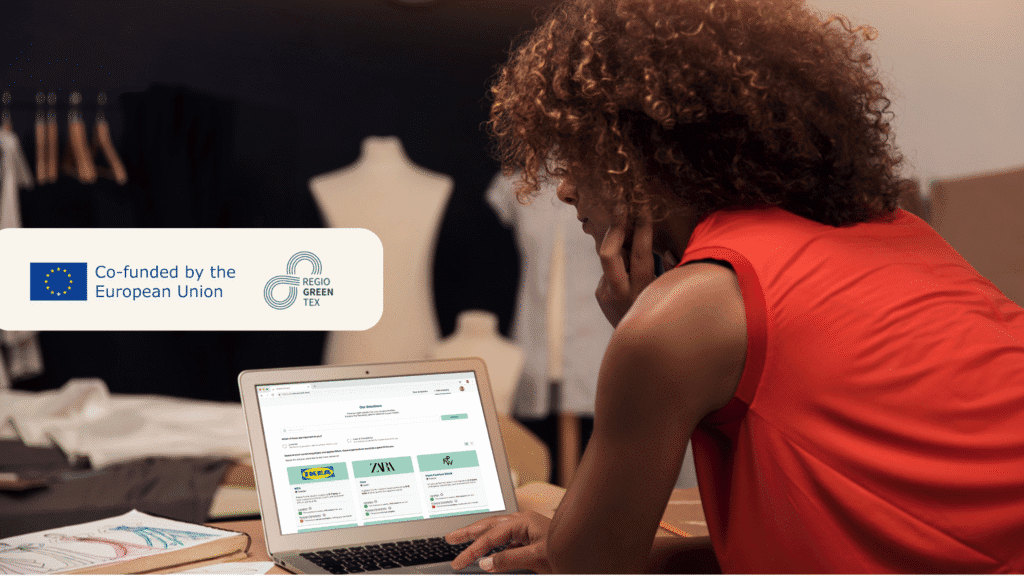
RegioGreenTex
Designing and building a matchmaking tool for textile surplus
As part of the European RegioGreenTex initiative, Quest took part in The Waste Wizard project.

Cascale
A strategic digital experience for the apparel industry
Creating a new website for the organization behind the Higg Index and one of the global leaders in sustainable apparel
Contact us
Need a secure, scalable digital solution? Let’s shape it together.
Climate
Move from climate ambition to audit-ready action. Quest provides expert consultancy for Net Zero roadmaps, Scope 1-3 carbon accounting, and habitat-based compensation.

Page content
Climate strategy: engineering the path to Net Zero
Decarbonization: a fundamental requirement for market access
The climate crisis represents the greatest systemic risk to the global economy, but it also offers the greatest opportunity for innovation. At Quest, we help organizations move beyond vague “2050 pledges” toward immediate, scientifically grounded action through a robust Climate Strategy & Net Zero Roadmap.
We blend deep technical carbon accounting with strategic business logic to help you identify your carbon hotspots and perform a rigorous climate risk assessment.

All Items
Our climate services

Comprehensive Scope 1, 2, 3 carbon footprint
We move you away from industry averages toward primary, verifiable data for your Scope 1 2 3 carbon footprint.

Net zero strategy & roadmap
We help build net zero strategies and roadmaps for companies that are grounded in science, aligned with the frameworks that matter, and designed to be implemented.

Voluntary compensation
When absolute reductions reach their limit, we help you address your residual footprint through habitat-based compensation & restoration via our own non-profit.
Why work with Quest for your climate challenges?
- Strategic and scientific depth: Our team includes experts in sustainable supply chains, nature and carbon who ensure your data and strategy are technically sound and grounded in reality. We can guide you from conducting a carbon footprint measurement to a Net Zero or even nature-positve strategy, and actually helping you communicate authentically about all of this.
- Systemic thinking: We don’t treat carbon in a vacuum. We understand the link between biodiversity, social innovation, and climate. Our roadmaps ensure that your decarbonization efforts don’t inadvertently harm other ecosystems or communities.
- We walk the talk: with Habitats, we’ve founded our own hyper ambitious non-profit organization focused on nature restoration and conservation. With projects across the world in tropical rainforest conservation, coral reef restoration, mangrove planting and endangered species protection, we’re just getting started. This also means we can help you voluntarily compensate for any nature pollution in your value chain, using our own validated projects.
- Digital dashboard: Thanks to our digital for good department, we centralize all your data in action-focused dashboards, making decision making and impact reporting a walk in the park.

All Cases
Case Studies and Results

Rubenshuis
Measuring the carbon footprint of Rubenshuis
Building a multi-year GHG Protocol footprint across Rubens’ historic house, research institute and visitor centre, so climate action can be steered by evidence.

FOMU
Measuring the carbon footprint of the FOMU
Building a credible GHG Protocol baseline so Antwerp’s photography museum can track and reduce its climate impact year on year.

modulyss
Launching The limit your footprint programme
Creating a clear strategy and programme to position modulyss accurately in the field of sustainability
All Cases
Relevant content

Is Net Zero the right goal to set?

Tackling Scope 3: Your supply chain climate priority

The EU’s Omnibus Proposal: Setback or a step forward?
All Cases
FAQ
Carbon Neutrality often relies heavily on offsetting current emissions. Net Zero requires deep reductions (typically 90% or more) across the entire value chain, with only the final, unavoidable emissions being neutralized by permanent carbon removals.
While Net Zero focuses on balancing greenhouse gas emissions, Nature-Positive is a broader goal. It refers to a state where nature —species richness, healthy soil, and clean water— is being restored rather than depleted. By 2030, a nature-positive business must ensure there is more nature in the world than there was in 2020. We help you align these two strategies so your climate actions don’t inadvertently harm biodiversity.
Not directly. While some carbon projects have biodiversity co-benefits, many generic offsets (like monoculture tree plantations) can actually harm local ecosystems. We advocate for High-Integrity Habitat Restoration. Through our partnership with Habitats, we help you invest in nature-based solutions that prioritize species recovery and ecosystem resilience alongside carbon sequestration.
We use a combination of primary supplier engagement and secondary spend-based modeling to create a credible picture of your value chain. We then help you design supplier engagement programs to drive reductions at the source.
Yes. Our climate strategies are designed to meet the requirements of ESRS E1 (Climate Change), ensuring you are prepared for the mandatory reporting requirements of the CSRD.
Contact us
Let’s build a strategy that protects your business while protecting the planet.
Biodiversity & ecosystem services
Quest provides science-based consultancy for biodiversity and ecosystem services. From eDNA baselines to nature-positive strategies, we help you measure, manage, and restore natural capital.

Page content
Beyond carbon: integrating nature into the core of your business
Biodiversity: not a metric to be offset, but a complex system to be understood, managed and restored.
For decades, corporate sustainability has focused almost exclusively on carbon. But climate change and biodiversity loss are two sides of the same coin. At Quest, we help organizations transition to a nature-positive model by treating biodiversity as a critical business asset.
Led by our topnotch nature experts, we provide the scientific rigor to establish baseline measurements, the strategic insight to assess nature-related dependencies, the technical capability to implement restoration that lasts, and the skills to turn all of that into a credible, authentic story.

All Items
Our biodiversity services

Nature-positive strategy
We build your nature strategy and roadmap and help you communicate it to all stakeholders.

Biodiversity baseline measurement
We assess your biodiversity footprint across operations and supply chains, conduct site-level surveys and eDNA analysis where precision is needed, and value the ecosystem services your business depends on, giving you a rigorous, decision-ready biodiversity baseline.

Nature materiality & risk assessment (TNFD and LEAP alignment)
We guide you through the TNFD’s LEAP approach and the RODI framework to identify, assess, and disclose your nature-related risks and dependencies with the rigor that investors, regulators, and stakeholders expect.

Regenerative business models & nature-based solutions
We help businesses and financial institutions design the models, strategies, and partnerships that make regeneration not just possible, but commercially viable.
Our approach: the ACT-D and LEAP framework
We can align your organization with the TNFD framework to identify where your value chain is most vulnerable to ecosystem collapse. To do so we follow the ACT-D and LEAP frameworks for the following:
- Impact and dependencies mapping: identifying which ecosystem services your business impacts and relies on, across your entire value chain
- Identifying nature risks and opportunities
- Nature materiality matrix
- Commit: setting clear targets and KPIs and develop the roadmap to get there
- Disclose: helping you communicate clearly and authentically about your progress

Why work with Quest for nature?
- Strategic and scientific depth: Our team includes experts in sustainable supply chains, nature and carbon who ensure your data and strategy are technically sound and grounded in reality. We can guide you from conducting a boots-on-the-ground biodiversity baseline measurement to a nature-positve strategy, and actually helping you communicate authentically about all of this.
- We walk the talk: with Habitats, we’ve founded our own hyper ambitious non-profit organization focused on nature restoration and conservation. With projects across the world in tropical rainforest conservation, coral reef restoration, mangrove planting and endangered species protection, we’re just getting started. This also means we can help you voluntarily compensate for any nature pollution in your value chain, using our own validated projects.
- Digital dashboard: Thanks to our agency for good department, we centralize all your data in action-focused dashboards, making decision making and impact reporting a walk in the park.

All Cases
Case Studies and Results

IMS
Helping 9 organizations (Caceis, Novotel, European Investment Bank, ...) on their nature journey
Inspiring and engaging 9 organisations around a common framework for Nature

Habitats
Building and growing a biodiversity nonprofit
Discover how we built Habitats from the ground up, from composing the team to full organizational development.
All Cases
Trusted by








All Cases
Relevant content

Quest joins Luxembourg Task Force on Finance for Biodiversity

TNFD: the next big thing in sustainability reporting. Here's why.

Nature loss is officially a business risk
All Cases
FAQ
While Net Zero focuses on balancing greenhouse gas emissions, Nature-Positive is a broader goal. It refers to a state where nature —species richness, healthy soil, and clean water— is being restored rather than depleted. By 2030, a nature-positive business must ensure there is more nature in the world than there was in 2020. We help you align these two strategies so your climate actions don’t inadvertently harm biodiversity.
Yes, if your company falls under the scope of the Corporate Sustainability Reporting Directive (CSRD). Specifically, ESRS E4 (Biodiversity and Ecosystems) requires companies to disclose their impacts, risks, and opportunities related to the living world. We specialize in the double materiality assessments required to determine exactly which ecological factors are material to your financial and impact performance.
Not directly. While some carbon projects have biodiversity co-benefits, many generic offsets (like monoculture tree plantations) can actually harm local ecosystems. We advocate for High-Integrity Habitat Restoration. Through our partnership with Habitats, we help you invest in nature-based solutions that prioritize species recovery and ecosystem resilience alongside carbon sequestration.
The LEAP approach is a structured process to manage nature-related risks.
- Locate: Mapping your assets and supply chain against priority ecosystems.
- Evaluate: Identifying your dependencies (e.g. “Do we depend on this watershed?”).
- Assess: Quantifying the financial and physical risks of ecosystem decline.
- Prepare: Designing the strategic response and disclosure.
Quest guides you through every letter of this acronym to ensure your TNFD disclosure is technically sound.
Absolutely. While your direct office footprint may be small, your Scope 3 (supply chain) and your investment portfolio likely have significant nature dependencies. From the materials in your hardware to the land use associated with your employees’ food or your company’s real estate, every business is embedded in nature. We help service-based firms identify these hidden ecological links.
Most companies start with our Impact Scan. We use secondary data and sector-specific heatmaps to identify your most likely Nature Hotspots. From there, we move to targeted primary data collection in your most material locations. You don’t need to measure everything at once; you need to measure what matters most.
PS: If you’ve already gathered data for a carbon footprint, this is a very good start for your biodiversity footprint as well!
Contact us
The transition to a nature-positive economy is the greatest design challenge of our time. Let’s build a business that gives back more than it takes.
Sustainable Supply Chains
Your supply chain is where your sustainability ambitions meet reality. We help businesses build supply chains that are transparent, resilient, and future-ready –from understanding your own footprint to engaging every link in the chain.

Page content
Why you should focus on it
For most businesses, the supply chain is where the vast majority of their environmental and social impact occurs. It is also where the greatest risks lie and where the greatest opportunities for improvement are hiding. But a sustainable supply chain is not just about risk management. The companies that are building truly sustainable supply chains are also building more efficient, more resilient, and more competitive businesses — ones that are better prepared for the disruptions and demands of the decade ahead.
Getting it right is no longer optional. Investors are scrutinising and customers as well as partners increasingly expect transparency as a baseline condition of doing business. Most important of all: The regulatory landscape is shifting fast.
- CSRD requires large companies to disclose the social and environmental impacts of their full value chain.
- CSDDD goes further, placing a legal duty of care on companies to identify and address human rights and environmental risks throughout their supply chain.
- Extended Producer Responsibility schemes are expanding across sectors, and procurement requirements from major buyers are increasingly including sustainability as a selection criterion.

All Cases
Our Services

Supply Chain Readiness for Suppliers
Our sustainability experts are at your disposal, ready to help your business understand, prepare for, and respond to the sustainability demands coming from your customers and partners.

Supply Chain Due Diligence
It is time for you to take the lead and improve your own operations and supply chain to become more sustainable

Circular Business Models and Value Chains
Waste is not just an environmental issue — it is a missed opportunity. Our circularity experts are at your disposal, ready to help your business transition from linear thinking to circular systems that keep materials in use, unlock new value, and build long-term resilience.
Our sector-specific expertise
Supply chain sustainability is never one-size-fits-all. Quest brings deep, hands-on experience in two of the most complex and scrutinised sectors: fashion and food.
- Fashion & Textiles: Quest works with brands, retailers, manufacturers, and suppliers to build more transparent, circular, and resilient value chains from mapping material flows to redesigning products for end-of-life recovery. Our work is grounded in real projects within projects such as RegioGreenTex and organisations including Fashion For Good, Cascale, and the Organic Cotton Accelerator.
- Food & Agriculture: Quest’s food practice is led by Philippe Schuler, who brings over eight years of experience including as Global Impact Manager at Too Good To Go. We help food businesses identify where loss is happening, develop reduction strategies, and find ways to valorise surplus rather than write it off.


All Cases

Food Loss and Waste Management
Our food waste experts are at your disposal, ready to help hospitality businesses measure and reduce food loss and waste

Circular Fashion & Textile Recovery
Our fashion circularity experts are at your disposal, ready to guide you on your journey to understand, measure, and reduce textile waste. Quest helps you unlock the value hidden in your materials and develop circular fashion solutions.
Our Approach
- Start with visibility: You can’t manage what you can’t see. We map your suppliers first — who they are, where they operate, and what they produce.
- Assess your risks and impacts: We now assess them against environmental and social risk factors such as geography, commodity type, labour conditions. This tells you where to focus your effort.
- Engage your suppliers: We work collaboratively rather than just pushing requirements down the chain. Through interviews and capacity-building we dive into the needs and requirements.
- Measure your Scope 3 emissions Your supply chain is almost certainly where most of your carbon footprint sits. We have the in-house knowledge to help you with this.
- Address the hotspots: We don’t try to fix everything at once but instead identify the highest-impact areas and build your action plan from there.
- Build circularity in with our Value Circle: We look for opportunities to reduce waste, recover materials, and extend product lifespans.
Whether you are a large company looking to meet your due diligence obligations or a supplier looking to respond to the demands coming from your customers, the right approach will depend on your sector, your size, your position in the value chain, and where you are on your sustainability journey.

The Value Circle
The value circle goes beyond the traditional supply chain. Where a supply chain moves in one linear direction from raw material to finished product, a value circle closes the loop, ensuring that materials are recovered, reused, and reintroduced at the end of a product’s first life.
To demonstrate what this looks like in practice, Quest developed a replicable blueprint for a circular garment as part of the European RegioGreenTex initiative. By aligning stakeholders across every stage from design and production to communication and recovery, we turned a fragmented process into a cohesive, open framework that any fashion business can use to accelerate their own transition. The result is not just one garment. It is proof that circular fashion is achievable, scalable, and worth pursuing.

All Cases
Case Studies and Results
RegioGreenTex
Designing and building a matchmaking tool for textile surplus
As part of the European RegioGreenTex initiative, Quest took part in The Waste Wizard project.

Vlaamse Overheid
Setting up a Green Deal on Sustainable Supply Chains in Flanders
Mapping, engaging, and aligning stakeholders around a common framework.

RegioGreenTex
Developing the blueprint for a Circular Garment and Value Circle
As part of the European RegioGreenTex initiative, Quest led The Circular Garment project.
All Cases
Trusted by



All Cases
Relevant content
Tackling Scope 3: Your supply chain climate priority

The hidden risks lurking in your supply chain

Why supply chain due diligence matters
All Cases
FAQ
Supply chain due diligence is the process of identifying, assessing, and addressing risks — both environmental and human rights related — across your value chain. It is not a one-off exercise but an ongoing process of mapping, engaging suppliers, monitoring performance, and taking action where problems are found.
The best place to start is with clarity by understanding what is actually happening in your supply chain before jumping to solutions. That means mapping your suppliers, assessing risk by geography and sector, and identifying the areas that need the most attention.
The Corporate Sustainability Due Diligence Directive (CSDDD) is an EU law that places a legal duty of care on companies to identify and address actual and potential adverse human rights and environmental impacts, not just in their own operations, but across their supply chains.
The CSDDD applies to EU companies with more than 5,000 employees and €1.5 billion in revenue, and to non-EU companies with more than €1.5 billion in EU revenue. The first wave of companies will need to comply from 2029. Companies must focus on their own operations, subsidiaries, and direct business partners. Indirect value chain assessments are only required where there is objective and verifiable information indicating a specific risk
Supply chain risk is shaped by a combination of factors: where your suppliers are located, what sector they operate in, what materials or commodities are involved, and how deep your supply chain goes.
The starting point is always mapping: understanding who your suppliers are, where they operate, and what the risk profile of those locations and sectors looks like. From there, you can prioritise where to focus your due diligence effort. Quest can help you build that map and make sense of what it means for your business.
A sustainable supply chain is one where environmental, social, and governance considerations are integrated at every stage — from raw material sourcing to end-of-life product management. It means knowing where your materials come from, how they are produced, and what happens to them when their first life is over.
Contact us
Let’s turn your compliance burden into a roadmap for systemic leadership.
Research & Blueprints
Some of the most important sustainability work is not done inside a single organization: it is done at the level of a sector, a system, or a policy landscape.
We work with governments, NGOs, industry associations, and EU-funded consortia to produce the research, frameworks, and blueprints that move entire fields forward.
Page content
The hardest sustainability challenges are not solved by one organisation working alone.
Systemic change requires systemic thinking. It needs research that maps what is actually happening across a sector, feasibility studies that test what is genuinely possible, and blueprints that give practitioners a replicable model to build from rather than starting from scratch every time. It is grounded in evidence, designed for real-world application, and built to outlast the project that produced it.
Quest brings the combination of sustainability expertise, sector knowledge, and communication craft needed to produce outputs that do not just inform but shift conversations, shape policy, and give organizations the tools to act. We focus on the following deliverables:
- Industry & sector research: We synthesize existing evidence, identifying gaps, and produce a clear, referenced picture of the current landscape that gives decision-makers the context they need to act with both primary and secondary data
- Feasibility studies: We assess what is genuinely possible by testing the technical, commercial, regulatory, and organizational conditions for a proposed initiative, model, or intervention before significant investment is committed.
- Blueprints & frameworks: We design open frameworks and replicable models built to be adopted, adapted, and scaled by others.
- White papers & reports: We produce white papers and reports that are research-backed, accessibly written, and positioned to move the conversation in a meaningful direction.

Why this work matters
The gap between what we know and what we do on sustainability is not primarily a knowledge problem: it is a translation problem. The research exists and the science is clear, but what is missing, too often, is the work of turning that knowledge into something that practitioners, policymakers, and organisations can actually use at scale and across their operations.
-
Move a sector, not just a single organization
When the challenge is systemic, the leverage point is shared frameworks and common tools, not individual projects. Research and blueprints that are genuinely replicable create the conditions for change at a scale no single consultancy engagement can reach. -
Strengthen the evidence base for policy and investment
Governments, funders, and industry associations need robust, independent research to make the case for regulatory change, direct investment, and sector-wide initiatives. Quest produces work that is rigorous enough to withstand scrutiny and accessible enough to land with the audiences that matter. -
Create assets that compound in value over time
A well-designed blueprint, white paper, or feasibility study does not expire when the project ends. It becomes a reference point that is cited, adapted, and built upon by others, continuing to shape insights years after delivery. -
Position your organization at the frontier
For the organisations that commission this work, the output is not just a deliverable but a signal. Publishing rigorous, original research and frameworks positions governments, NGOs, and associations as genuine leaders in their field, not just participants in a conversation others are driving.
All Items
Key outcomes
Outputs that outlast the project
Research, blueprints, and frameworks that continue to shape practice, inform policy, and guide investment long after delivery
A field moved forward
Work that operates at the level of a sector or system, creating the shared tools, common frameworks, and evidenced arguments that give an entire field a better foundation to act from.
A clear signal of leadership
A body of published, rigorous, original work that positions commissioning organisations at the frontier of their field, defining an entire industry.
All Cases
Client results
RegioGreenTex
Developing the blueprint for a Circular Garment and Value Circle
As part of the European RegioGreenTex initiative, Quest led The Circular Garment project.

Cool Chain Association
Writing a report on food loss in the perishable cold chain
Investigating where the perishable supply chain is losing food and what the industry needs to do about it.
RegioGreenTex
Designing and building a matchmaking tool for textile surplus
As part of the European RegioGreenTex initiative, Quest took part in The Waste Wizard project.
Ready to make a difference?
Tell us what you are trying to change and we will show you how we can help make it stick.
Sustainable business models
Move beyond business as usual. Quest helps you design and implement sustainable business models that balance profit with planetary health and social equity.

Page content
Designing sustainable business models for the regenerative era
Innovation isn’t just about new products; it’s about new ways of creating value.
For decades, the standard operating procedure for business has been linear: take, make, waste. But as resource scarcity increases and regulations like CSRD and CSDDD tighten, these legacy structures are becoming financial liabilities. At Quest, we help you pivot toward sustainable business models that are resilient, regenerative, and radically scalable.
We don’t just “green” your existing operations; we help you redesign your core value proposition for sustainability. Whether you are a startup looking for an incubation partner or an established corporate leader seeking a circular economy strategy, we provide the blueprint for the next generation of business.

Why transition to a sustainable business model?
The shift to sustainable business models is driven by more than ethics—it is driven by market survival. Companies that embrace regenerative business design outperform their peers by:
-
Decoupling growth from resource use
Creating more value with fewer virgin materials. -
Future-proofing against regulation
Meeting the requirements of the EU Green Deal before they become mandatory. -
Attracting impact capital
Positioning your brand for the trillions of euros flowing into ESG business transformation. -
Building brand loyalty
Engaging a new generation of consumers who demand a Triple Bottom Line strategy (People, Planet, Profit)
All Items
Our approach to business model innovation
Circular Economy Strategy
We help you close the loop and make sure your build a circular strategy that can move beyond pilot projects. This can go from moving to Product-as-a-Service (PaaS) to identifying how waste in your supply chain can be captured as a high-value input for new revenue streams.
Regenerative business design
We help you design business activities that actively restore the ecosystems and communities they touch, aligning your operations with a.o. the Science Based Targets for Nature (SBTN).
Triple Bottom Line integration
We facilitate workshops to align your leadership team around a Triple Bottom Line strategy, ensuring that social equity and environmental health are tracked with the same rigor as quarterly profits.
All Cases
Client results
RegioGreenTex
Developing the blueprint for a Circular Garment and Value Circle
As part of the European RegioGreenTex initiative, Quest led The Circular Garment project.
RegioGreenTex
Designing and building a matchmaking tool for textile surplus
As part of the European RegioGreenTex initiative, Quest took part in The Waste Wizard project.
modulyss
Launching The limit your footprint programme
Creating a clear strategy and programme to position modulyss accurately in the field of sustainability
All Cases
Relevant content

From waste to value: Why circularity is a business imperative

Circular by design: Rethinking business models

Price parity in sustainability: key challenge or unfair battle?
Contact us
Business as usual is no longer an option. Let’s build a model that thrives within the boundaries of our planet.
Compliance & certifications
We help you comply with the following frameworks: TNFD, CSRD, GRI, B Corp, Ecovadis, SBTN

Page content
Turning regulation into resilience
The voluntary phase of sustainability is over. Radical transparency is now the global standard.
At Quest, we help you navigate the complexity of global frameworks to identify risks, uncover efficiencies, and prove your impact. We provide the technical rigor to gather the data and the strategic insight to tell a credible story to investors, regulators, and customers. Sustainability / ESG compliance for companies made easy.
All Items
Navigating the regulatory tsunami
We ensure your organization is not just compliant, but a leader in the new regulatory landscape. We can help with the following frameworks:

Corporate Sustainability Reporting Directive (CSRD)
We help large and mid-sized firms meet the mandatory ESRS (European Sustainability Reporting Standards)

Science Based Targets Network (SBTN)
While SBTi handles climate, the Science Based Targets Network (SBTN) ensures your nature goals are ecologically relevant.

Taskforce on Nature-related Financial Disclosures (TNFD)
As a nature-first consultancy, we are leaders in the TNFD and the associated LEAP approach.
B Corp
We help you become a certified B Corp.

Ecovadis
Move from Bronze to Silver or Gold by identifying specific improvements in your sustainable procurement policies.

Global Reporting Initiative (GRI)
Structure your report in accordance with the renowned GRI disclosures.
The Corporate Sustainability Reporting Directive (CSRD)
We help large and mid-sized firms meet the mandatory ESRS (European Sustainability Reporting Standards).
- Double materiality assessments: We identify which sustainability matters are material from both a financial and an impact perspective.
- ESRS E4 (Biodiversity & Ecosystems): Leveraging our deep nature expertise to handle the most technical chapter of the CSRD.
- Gap analysis & audit readiness: Ensuring your data collection processes are robust enough to pass limited and reasonable assurance audits.

Taskforce on Nature-related Financial Disclosures (TNFD)
As a nature-first consultancy, we are leaders in the TNFD.
- The LEAP methodology: We guide you through the Locate, Evaluate, Assess, and Prepare process to map your dependencies on the biosphere.
- Risk & Opportunity mapping: Translating ecological degradation into financial risk for your board and investors.

B Corp certification
Being a B Corp ourselves, with a sound 122.7 score, we guide you through your full B Corp certification journey:
- Guiding you through the new B Corp standards
- Helping you recertify efficiently
- Helping you convince the rest of your team B Corp is the way to go, and getting you your first B Corp certification
All Cases
Relevant cases

Allshoes
Walking the talk with the B Corp Certification
Helping safety shoes company Allshoes become B Corp certified with a 99.2 score

KeyPharm
Becoming a B Corp as a multi-brand organization with a complex supply chain
Helping healthcare company KeyPharm become B Corp certified with a 94.3 score
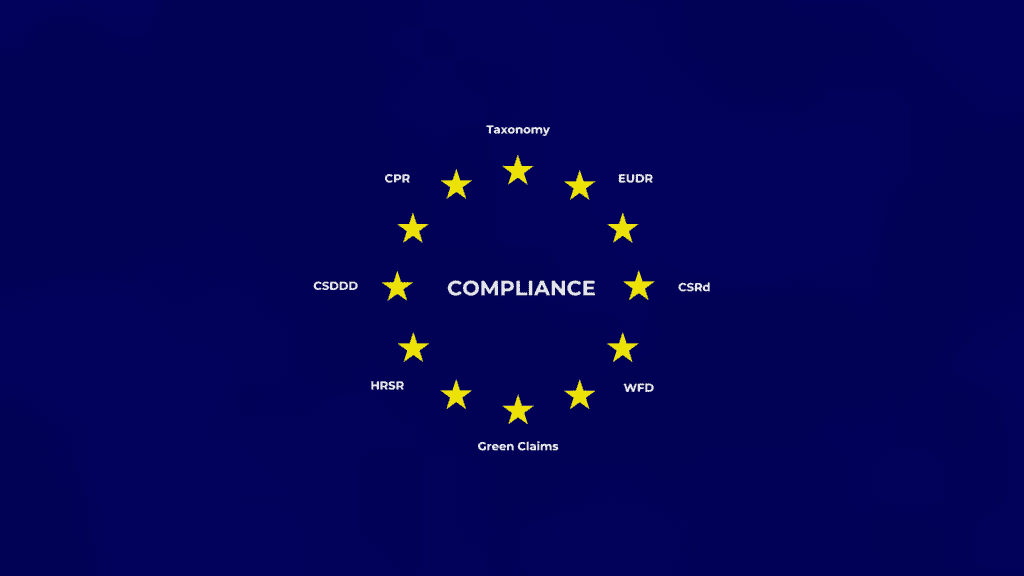
IKO
An insightful, inspiring training on ESG compliance
Training C-level executives on the requirements of ESG compliance in line with EU legislation
All Cases
Relevant content

How to prepare for B Corp Certification in 2026
TNFD: the next big thing in sustainability reporting. Here's why.

EcoVadis: From scorecard to impact
All Cases
FAQ
As always, it depends on the framework and where you operate. Some certifications have no legal deadline but are increasingly required by clients, partners, or insurers. EU legislation such as CSRD, EUDR, and CSDDD is also moving ahead — when you need to comply will depend on your size and sector. We help you identify which obligations apply to your organisation and build a realistic roadmap to meet them.
It depends on your industry, the markets you operate in, and what you want to achieve. B Corp is well recognised for companies wanting to signal overall social and environmental responsibility. EcoVadis is widely used in supply chain contexts where customers request it. We help you assess which certification adds the most value for your specific situation, and avoid investing in one that doesn’t move the needle for your stakeholders.
Yes. We guide you through the full audit preparation process — from gap analysis and documentation to internal pre-audits and remediation. We work alongside your team so that by the time the external auditor arrives, there are no surprises.
We work with organisations of all sizes — from growing SMEs taking their first compliance steps to larger enterprises managing complex, multi-framework requirements. Our approach is tailored to your context, not a one-size-fits-all template.
It varies by framework and your current maturity level. Some can take months, while others can be completed in a matter of weeks. We always start with a clear timeline so you know what to expect.
Contact us
Let’s turn your compliance burden into a roadmap for systemic leadership.
Taskforce on Nature-related Disclosures (TNFD)
Navigate the complexity of nature-related financial risks with Quest. We provide expert TNFD alignment using the LEAP approach to help your business transition from nature-blind to nature-positive.
Page content
The TNFD Framework
Nature risk is financial risk. Is your organization ready to disclose?
The TNFD, built on the foundations of the TCFD, provides a specialized risk management and disclosure framework, empowering corporate and financial organizations to identify, report, and —most importantly— act on their nature-related risks.
As investors and regulators increasingly demand transparency on how businesses impact and depend on natural capital, TNFD alignment is considered the best practice to deliver this.
At Quest, we bridge the gap between complex ecological data and boardroom-ready financial reporting.

The TNFD advantage
Aligning with TNFD isn’t just about compliance; it’s about strategic foresight. We help you navigate the four core pillars of the framework:
- Governance: Embedding nature-related oversight into your board and management structures.
- Strategy: Identifying the effects of nature-related risks and opportunities on your business model.
- Risk & impact management: Integrating nature into your existing risk management processes.
- Metrics & targets: Selecting the right science-based indicators to track your progress.
Our specialized TNFD alignment process
We don’t believe in “box-ticking.” We use the TNFD’s recommended LEAP approach to provide deep, actionable insights.
-
Locate your interface with nature
We map your direct operations and supply chain to specific ecosystems, identifying “priority locations” where nature-related issues are most acute. -
Evaluate your dependencies and impacts
Using state-of-the-art tools and ecological expertise, we measure how your business relies on ecosystem services (like clean water or pollination) and how your activities impact them. -
Assess your risks and opportunities
We translate ecological findings into financial language, identifying physical, transition, and systemic risks, alongside the opportunities for nature-positive innovation. -
Prepare to respond and report
We help you draft disclosures that meet TNFD standards and align seamlessly with CSRD (ESRS E4) and GRI, ensuring your data is consistent across all platforms.
Why Quest for TNFD?
TNFD requires a rare mix of data science and deep ecology. We provide both:
- Ecological authority: Our nature experts bring scientific rigor to every assessment.
- Reporting synergy: We ensure your TNFD journey supports your SBTN (Science Based Targets for Nature), GRI, but also B Corp or Ecovadis goals, creating a unified reporting ecosystem.
- Digital intelligence: Our digital team sets up the rights dashboards, tools and automations for you, so complex nature and supply data can be interpreted and communicated easily.

All Cases
Client results
IMS
Helping 9 organizations (Caceis, Novotel, European Investment Bank, ...) on their nature journey
Inspiring and engaging 9 organisations around a common framework for Nature
Vlaamse Overheid
Setting up a Green Deal on Sustainable Supply Chains in Flanders
Mapping, engaging, and aligning stakeholders around a common framework.
All Cases
Relevant content
TNFD: the next big thing in sustainability reporting. Here's why.
Quest joins Luxembourg Task Force on Finance for Biodiversity
Nature loss is officially a business risk
Contact us
Ready to measure, communicate & maximize your impact? We can’t wait to drive positive change forward together. Fill out the form or
Science Based Targets Network (SBTN)
Navigate the complexity of science-based targets for nature with Quest. We guide your business through the full SBTN methodology from assessing your biodiversity footprint to setting verified, science-led targets that drive real action.

Page content
The SBTN Framework
Nature risk is business risk. Is your organisation ready to act?
The Science Based Targets Network (SBTN) provides a rigorous, science-led framework for companies to set quantified targets for nature, going beyond carbon to address biodiversity loss, freshwater use, land conversion, and more.
The SBTN is part of the Global Commons Alliance and works alongside the Science Based Targets initiative (SBTi), expanding the scope of science-based target setting to cover the full range of pressures on the natural world. SBTN is compatible with other corporate sustainability frameworks including CSRD and TNFD. The same underlying assessment and prioritisation steps support alignment across all three frameworks simultaneously.
At Quest, we guide you through every stage of the SBTN journey, from initial assessment to public target disclosure..

The SBTN advantage
Aligning with SBTN isn’t just about compliance — it’s about strategic foresight and long-term resilience. Key benefits include:
- Scientific credibility: SBTN provides quantified targets grounded in the best available science, giving companies an evidence-based understanding of what they must collectively achieve to stay within planetary boundaries.
- Enhanced credibility & recognition: SBTN offers a validation service, allowing companies to gain external recognition for their target ambition and progress, building trust with investors, regulators, and customers.
- Risk management: By aligning with nature-positive goals, businesses proactively manage nature-related financial and reputational risks before they materialise.
- Framework interoperability: SBTN targets are compatible with CSRD, TNFD, and GRI (meaning a single assessment process supports multiple reporting obligations).
- Nature-positive economy: Setting SBTs for nature positions your business as a leader in the transition to a nature-positive economy (a growing expectation from institutional investors and global regulators).

Our specialized SBTN alignment process
We don’t believe in “box-ticking.” We use the SBTN’s recommended AR3T Framework to provide deep, actionable insights.
-
Assess your nature footprint
We quantify your company’s pressures on nature across your full value chain. Using sector-appropriate metrics and best-in-class tools, we build a clear picture of where and how your business impacts nature. -
Prioritise on specific sites and pressures
We identify priority locations and pressure types where nature is most sensitive and your company has the greatest impact, ensuring that actions are focused where they will make the most meaningful difference. -
Set targets
We translate scientific thresholds and global goals into concrete, measurable targets for your business. Targets are ambitious, achievable, and aligned with earth system boundaries. -
Identify actions and define mitigation hierarchy
We help identify the right actions to achieve your targets, applying the AR3T mitigation hierarchy both within your operations and across your value chain. -
Track, disclose and report
We support preparation of SBTN-aligned public disclosures, ensuring consistency with CSRD (ESRS E4), TNFD, and GRI standards.
Why Quest for SBTN?
SBTN target setting requires a rare combination of deep ecology and strategic business expertise. We provide both.
- Ecological authority: Our nature experts bring scientific rigour to every assessment, ensuring your targets are credible and defensible.
- Reporting synergy: We ensure your SBTN journey supports your TNFD, CSRD, GRI, B Corp, and EcoVadis goals, creating a unified reporting ecosystem.
- Digital intelligence: Our digital team sets up the right dashboards, tools, and automations so complex nature and supply chain data can be interpreted and communicated with ease.
- Sector expertise: We bring industry-specific knowledge to ensure the correct balance of pragmatism and rigour in your target setting process.
All Cases
Client results
IMS
Helping 9 organizations (Caceis, Novotel, European Investment Bank, ...) on their nature journey
Inspiring and engaging 9 organisations around a common framework for Nature
Vlaamse Overheid
Setting up a Green Deal on Sustainable Supply Chains in Flanders
Mapping, engaging, and aligning stakeholders around a common framework.
All Cases
Relevant content
TNFD: the next big thing in sustainability reporting. Here's why.
Quest joins Luxembourg Task Force on Finance for Biodiversity
Nature loss is officially a business risk
Contact us
Ready to measure, communicate & maximize your impact? We can’t wait to drive positive change forward together. Fill out the form or
Digital sustainability reporting tool
Quest provides a high-end, reusable digital sustainability reporting tool designed for CSRD, TNFD, and GRI compliance
Page content
Our Sustainability Reporting tool
Stop paying for reports that expire. Start investing in a digital asset.
For many organizations, sustainability reporting is an annual cycle of stress: expensive agencies, static PDFs that nobody reads, and data that becomes obsolete the moment it’s published. At Quest, we’ve pioneered a different path. We build digital sustainability reporting ecosystems that give you full ownership of your narrative and your data.
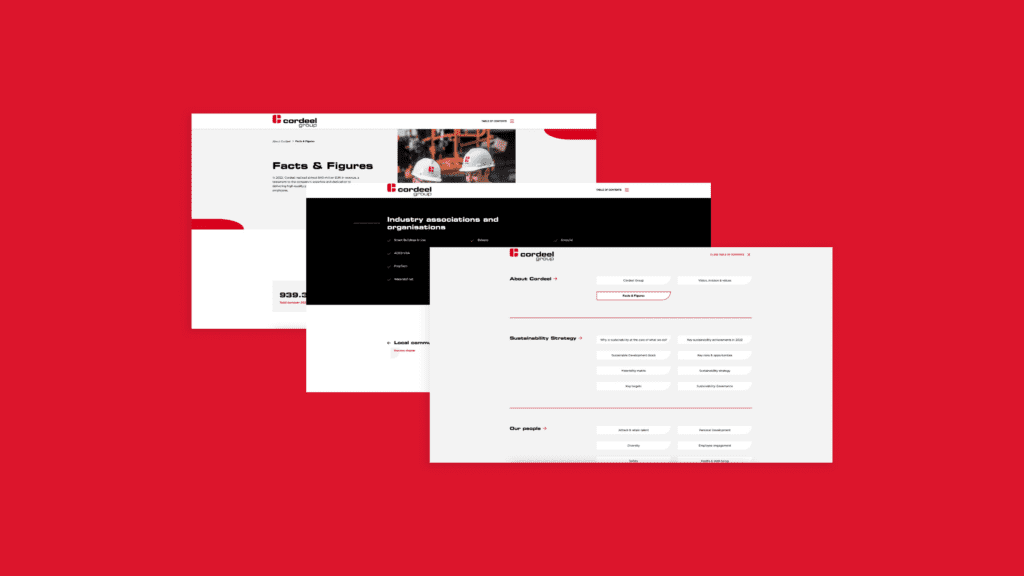
Leveraging our custom-built WordPress infrastructure – successfully deployed for industry leaders like Cordeel – we provide a high-end, interactive reporting template that you buy once and reuse indefinitely.

The Quest tool: professional, interactive, reusable
Our reporting tool is designed for the modern Sustainability Lead who needs to balance compliance with communication.
- One investment, multiple cycles: Unlike SaaS tools with high monthly fees, our template is an asset you own. Some of our customers are currently in their 3rd reporting cycle with minimal additional investment.
- Full content control: Your team can easily adapt text, swap images, and update data points via a user-friendly CMS — no developer required for the yearly update.
- Interactive data visualization: We bring your “Alphabet Soup” to life. From interactive double materiality matrices to dynamic graphs, we make your GRI and CSRD data digestible and engaging.

All Items
Built for Global Frameworks: CSRD, TNFD, and GRI
The latest regulatory requirements are integrated directly into our template architecture:

CSRD ready
Structured to handle the rigorous data requirements of the European Sustainability Reporting Standards (ESRS).

TNFD integration
Dedicated modules for nature-related financial disclosures, bridging the gap between your supply chain and your biodiversity impact.
GRI Standards
Ensuring your universal disclosures are presented with the clarity and transparency investors demand.
Why a digital sustainability report is the way to go
Moving your report to a web-based ecosystem isn’t just about looking better, it’s about performance:
-
Searchability (SEO/GEO)
A PDF is a black hole for search engines. A digital report allows your impact stories to rank on Google, reaching talent, investors, and partners. -
Accessibility (WCAG 2.2)
We ensure your report meets global accessibility standards, making your impact data available to everyone, regardless of ability. -
Real-time engagement and performance tracking
Track which sections of your report are actually being read. Use those insights to refine your sustainability strategy and stakeholder communication. -
Save time and money
You invest once and you can reuse the template a much as you want. You can change texts, pictures, pages, …yourself. No coding experience required.

All Cases
Relevant content
TNFD: the next big thing in sustainability reporting. Here's why.

Tips to improve your (first) impact report

Understanding double materiality and complying with CSRd
Take control of your reporting cycle
Don’t let your impact get lost in a 100-page document. Let’s build a digital home for your sustainability journey.